Cloud Storage
Object storage for companies of all sizes
Cloud Storage is a managed service for storing unstructured data. Store any amount of data and retrieve it as often as you like.
New customers get $300 in free credits. All customers get 5 GiB of standard storage, 55,000 operations, 100 GiB of data transfer, and more for free each month.
Looking for something else? Check out personal, team, and block storage options.

Features
Take action with Storage Intelligence
Simplify management of your Cloud Storage at scale with Storage Intelligence. Storage Intelligence eliminates manual storage management practices. This unified management product offers multiple powerful features to analyze large storage estates and easily take actions. Analyze object and bucket metadata to derive cost and security insights about your data through Insights Datasets. Use Gemini Cloud Assist to generate insights with natural language conversations. Perform actions at-scale on millions of objects with zero or no code with Batch Operations and minimize application downtime by moving entire buckets with just two commands, while preserving bucket name with Bucket Relocation.

Accelerate your data access
Enhance the performance of demanding applications with Rapid Cache , a fully managed, intelligent SSD-backed read cache for Region, Dual-region, or Multi-region buckets. Combined with Multi-region buckets, Rapid Cache brings your data closer to compute resources in any zone where your TPUs/GPUs are available, giving you low latency and high throughput of up to 20 Tbps for AI/ML and data analytics workloads. Benefit from minimizing your network egress costs when accessing data across a continent without the need for provisioning or managing a separate storage tier.
Object- and bucket-level permissions
Cloud Identity and Access Management (IAM) allows you to control who has access to your buckets and objects.
Leading analytics and ML/AI tools
Once your data is stored in Cloud Storage, easily plug into Google Cloud’s powerful tools to create your data warehouse with BigQuery, run open source analytics with Managed Service for Apache Spark, or build and deploy machine learning (ML) models with Gemini platform. The Data Agent Kit streamlines your workflows by bundling secure Model Context Protocol (MCP) tools, native IDE plugins, and pre-codified data engineering, data science, and data app developer skills into a single, open-source package.

Automatic storage class transitions
With features like Object Lifecycle Management (OLM) and Autoclass you can easily optimize costs with object placement across storage classes. You can enable, at the bucket level, policy-based automatic object movement to colder storage classes based on the last access time. There are no early deletion or retrieval fees, nor class transition charges for object access in colder storage classes.

Continental-scale and SLA-backed replication
Industry leading dual-region buckets support an expansive number of regions. A single, continental-scale bucket offers nine regions across three continents, providing a Recovery Time Objective (RTO) of zero. In the event of an outage, applications seamlessly access the data in the alternate region. There is no failover and failback process. For organizations requiring ultra availability, turbo replication with dual-region buckets offers a 15 minute Recovery Point Objective (RPO) SLA.
Use Cloud Storage as a local filesystem
Cloud Storage is a common choice for storing training data, models, and checkpoints for machine learning projects in Cloud Storage buckets. With Cloud Storage FUSE, you can take advantage of the scale, affordability, throughput, and simplicity that Cloud Storage provides, while maintaining compatibility with applications that use or require filesystem semantics. Cloud Storage FUSE also now offers caching, which provides up to 2.2x faster time to train and 2.9x higher training throughput, compared to native ML framework dataloaders.

Fast and flexible transfer services
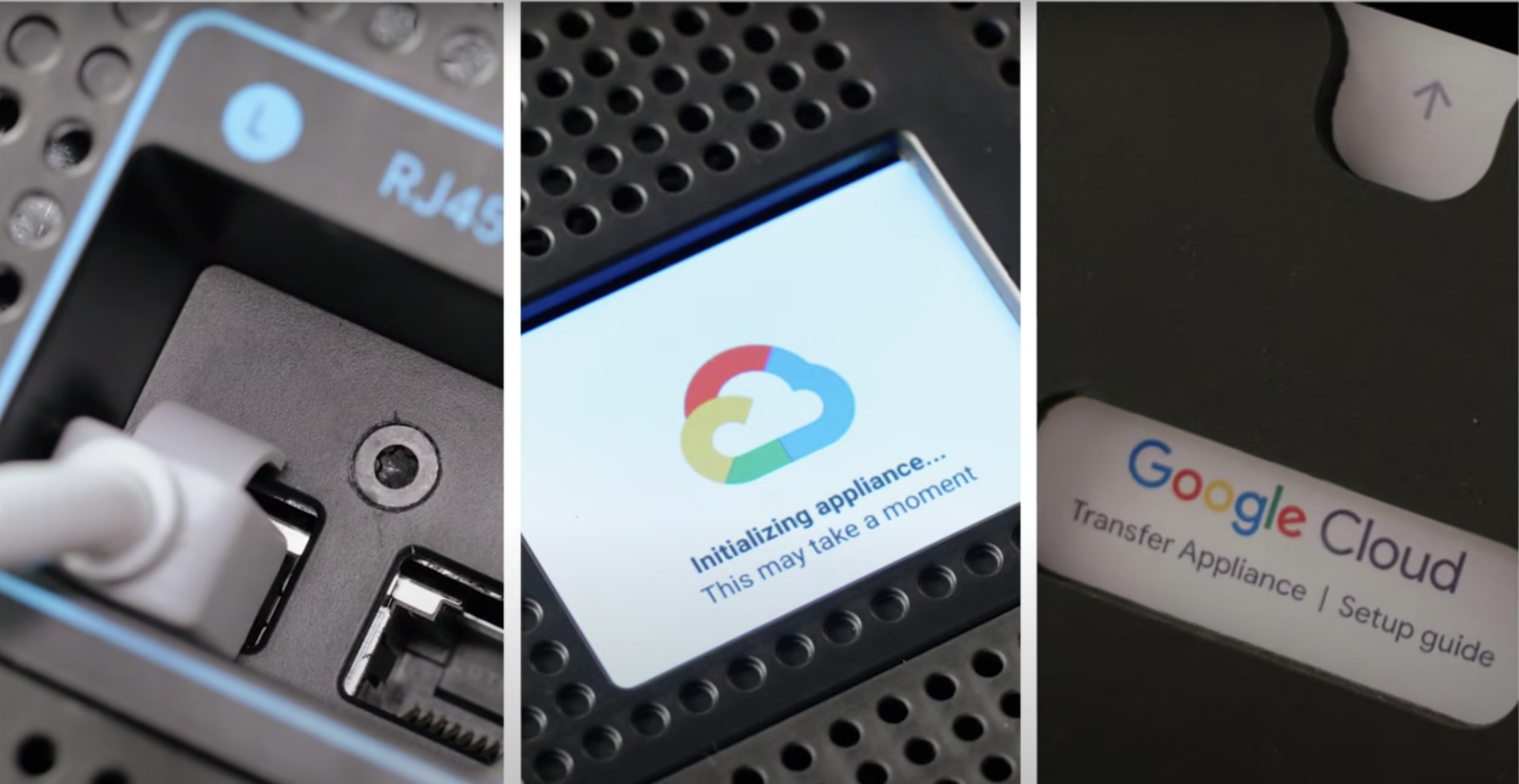
Storage Transfer Service offers a highly performant, online pathway to Cloud Storage—both with the scalability and speed you need to simplify the data transfer process. For offline data transfer our Transfer Appliance is a shippable storage server that sits in your datacenter and then ships to an ingest location where the data is uploaded to Cloud Storage.
You can now transfer data to and from Google Cloud Storage using Cloud FTP. Cloud FTP provides a managed, cloud-based solution to securely move data in and out of Google Cloud by using SSH File Transfer Protocol (SFTP).
Default and configurable data security
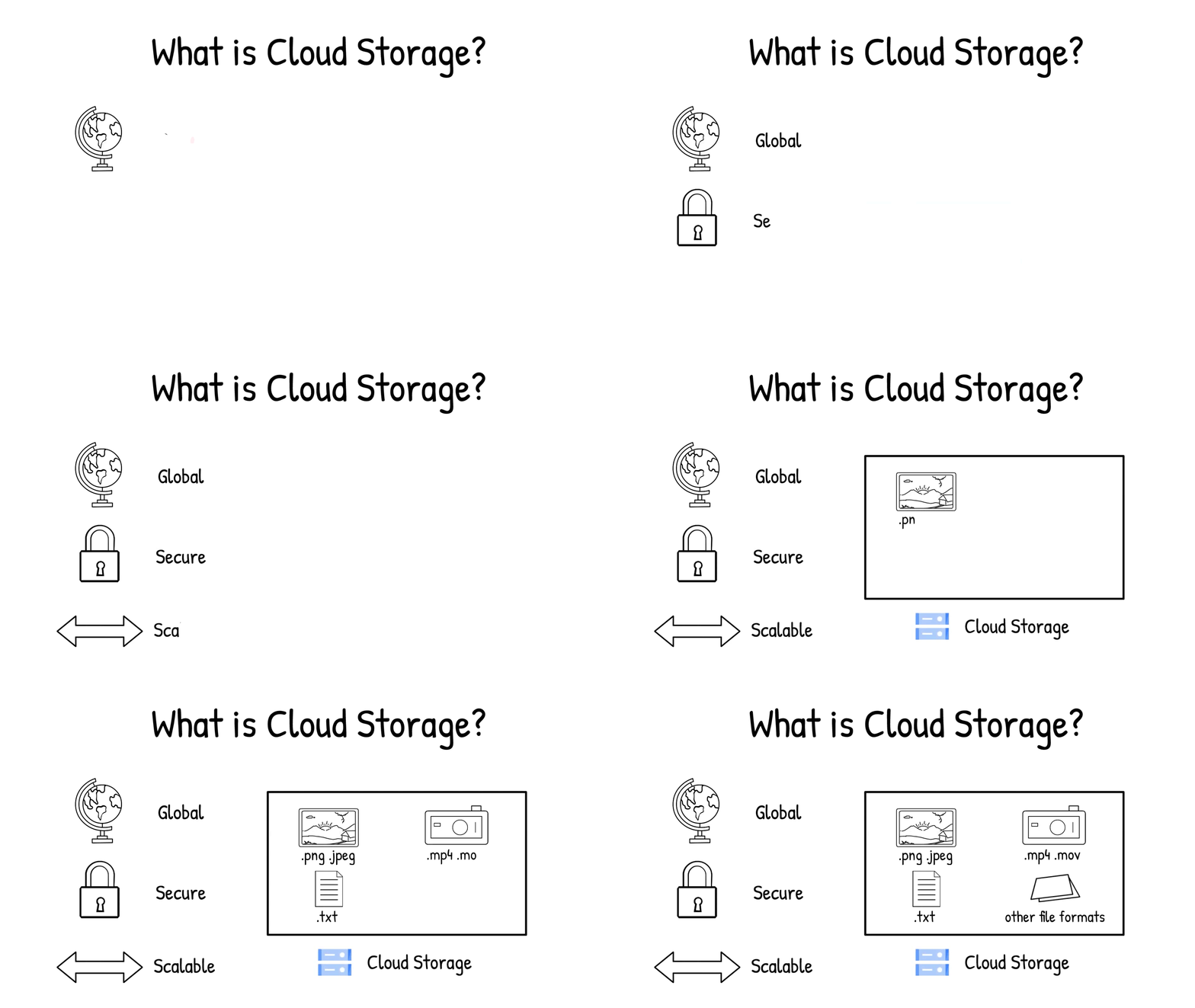
Cloud Storage offers secure-by-design features to protect your data and advanced controls and capabilities to keep your data private and secure against leaks or compromises. Security features include access control policies, data encryption, retention policies, retention policy locks, and signed URLs.
Object lifecycle management
Define conditions that trigger data deletion or transition to a cheaper storage class.
Object Versioning
Continue to store old copies of objects when they are deleted or overwritten.
Soft delete
Soft delete offers improved protection against accidental and malicious data deletion by providing you with a way to retain and restore recently deleted data.
Retention policies
Define minimum retention periods that objects must be stored for before they’re deletable.
Object holds
Place a hold on an object to prevent its deletion.
Customer-managed encryption keys
Encrypt object data with encryption keys stored by the Cloud Key Management Service and managed by you.
Customer-supplied encryption keys
Encrypt object data with encryption keys created and managed by you.
Uniform bucket-level access
Uniformly control access to your Cloud Storage resources by disabling object ACLs.
Requester pays
Require accessors of your data to include a project ID to bill for network charges, operation charges, and retrieval fees.
Bucket Lock
Bucket Lock allows you to configure a data retention policy for a Cloud Storage bucket that governs how long objects in the bucket must be retained.
Pub/Sub notifications for Cloud Storage
Send notifications to Pub/Sub when objects are created, updated, or deleted.
Cloud Audit Logs with Cloud Storage
Maintain admin activity logs and data access logs for your Cloud Storage resources.
| Storage type | Description | Best for |
|---|---|---|
Storage for data that is frequently accessed ("hot" data) and/or stored for only brief periods of time. | "Hot" data, including websites, streaming videos, and mobile apps. | |
Low cost, highly durable storage service for storing infrequently accessed data. | Data that can be stored for 30 days. | |
A very low cost, highly durable storage service for storing infrequently accessed data. | Data that can be stored for 90 days. | |
The lowest cost, highly durable storage service for data archiving, online backup, and disaster recovery. | Data that can be stored for 365 days. |
Learn more about storage classes.
Storage for data that is frequently accessed ("hot" data) and/or stored for only brief periods of time.
"Hot" data, including websites, streaming videos, and mobile apps.
Low cost, highly durable storage service for storing infrequently accessed data.
Data that can be stored for 30 days.
A very low cost, highly durable storage service for storing infrequently accessed data.
Data that can be stored for 90 days.
The lowest cost, highly durable storage service for data archiving, online backup, and disaster recovery.
Data that can be stored for 365 days.
Learn more about storage classes.
Backups and archives
Use Cloud Storage for backup, archives, and recovery
Use Cloud Storage for backup, archives, and recovery
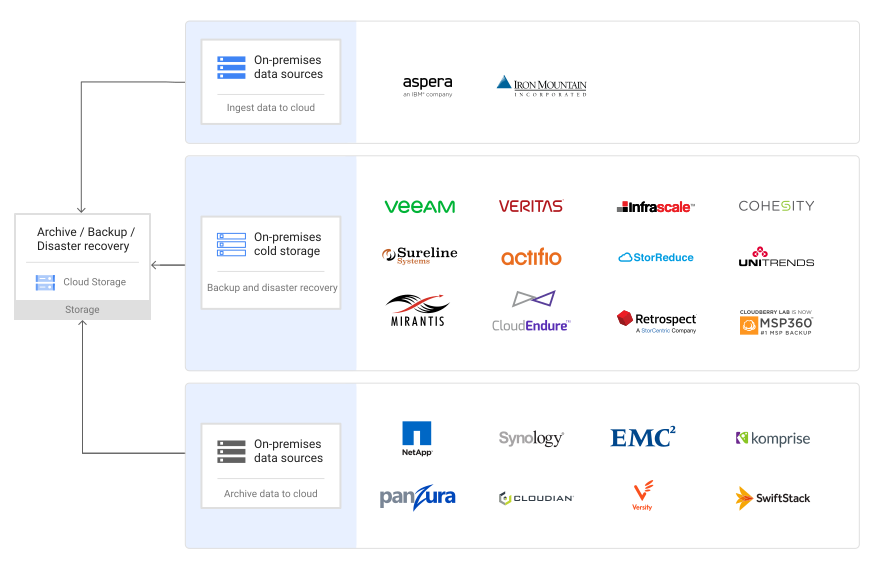
Cloud Storage's nearline storage provides fast, low-cost, highly durable storage for data accessed less than once a month, reducing the cost of backups and archives while still retaining immediate access. Backup data in Cloud Storage can be used for more than just recovery because all storage classes have ms latency and are accessed through a single API.

Tutorials, quickstarts, & labs
Use Cloud Storage for backup, archives, and recovery
Use Cloud Storage for backup, archives, and recovery
Cloud Storage's nearline storage provides fast, low-cost, highly durable storage for data accessed less than once a month, reducing the cost of backups and archives while still retaining immediate access. Backup data in Cloud Storage can be used for more than just recovery because all storage classes have ms latency and are accessed through a single API.
Media content storage and delivery
Store data to stream audio or video
Store data to stream audio or video
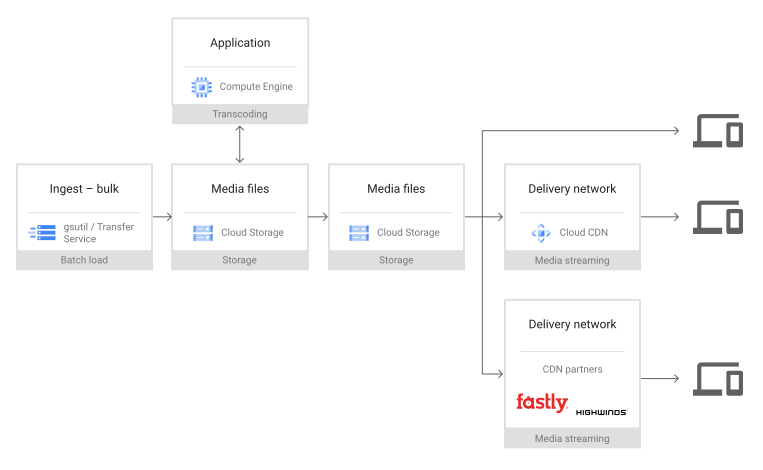
Stream audio or video directly to apps or websites with Cloud Storage’s geo-redundant capabilities. Geo-redundant storage with the highest level of availability and performance is ideal for low-latency, high-QPS content serving to users distributed across geographic regions.
Unlock infinite capacity and innovation
Tutorials, quickstarts, & labs
Store data to stream audio or video
Store data to stream audio or video
Stream audio or video directly to apps or websites with Cloud Storage’s geo-redundant capabilities. Geo-redundant storage with the highest level of availability and performance is ideal for low-latency, high-QPS content serving to users distributed across geographic regions.

Learning resources
Unlock infinite capacity and innovation
Data lakes and big data analytics
Create a data lake for analytics
Create a data lake for analytics
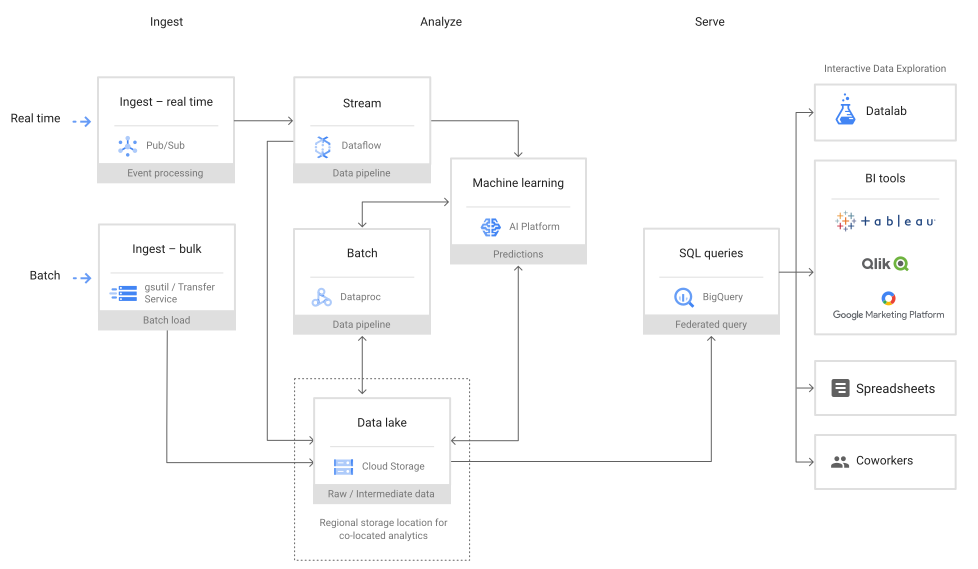
Develop and deploy data pipelines and storage to analyze large amounts of data. Cloud Storage offers high availability and performance while being strongly consistent, giving you confidence and accuracy in analytics workloads.
Tutorials, quickstarts, & labs
Create a data lake for analytics
Create a data lake for analytics
Develop and deploy data pipelines and storage to analyze large amounts of data. Cloud Storage offers high availability and performance while being strongly consistent, giving you confidence and accuracy in analytics workloads.
Machine learning and AI
Deploy an AI summarization solution in the Google Cloud console
Deploy an AI summarization solution in the Google Cloud console
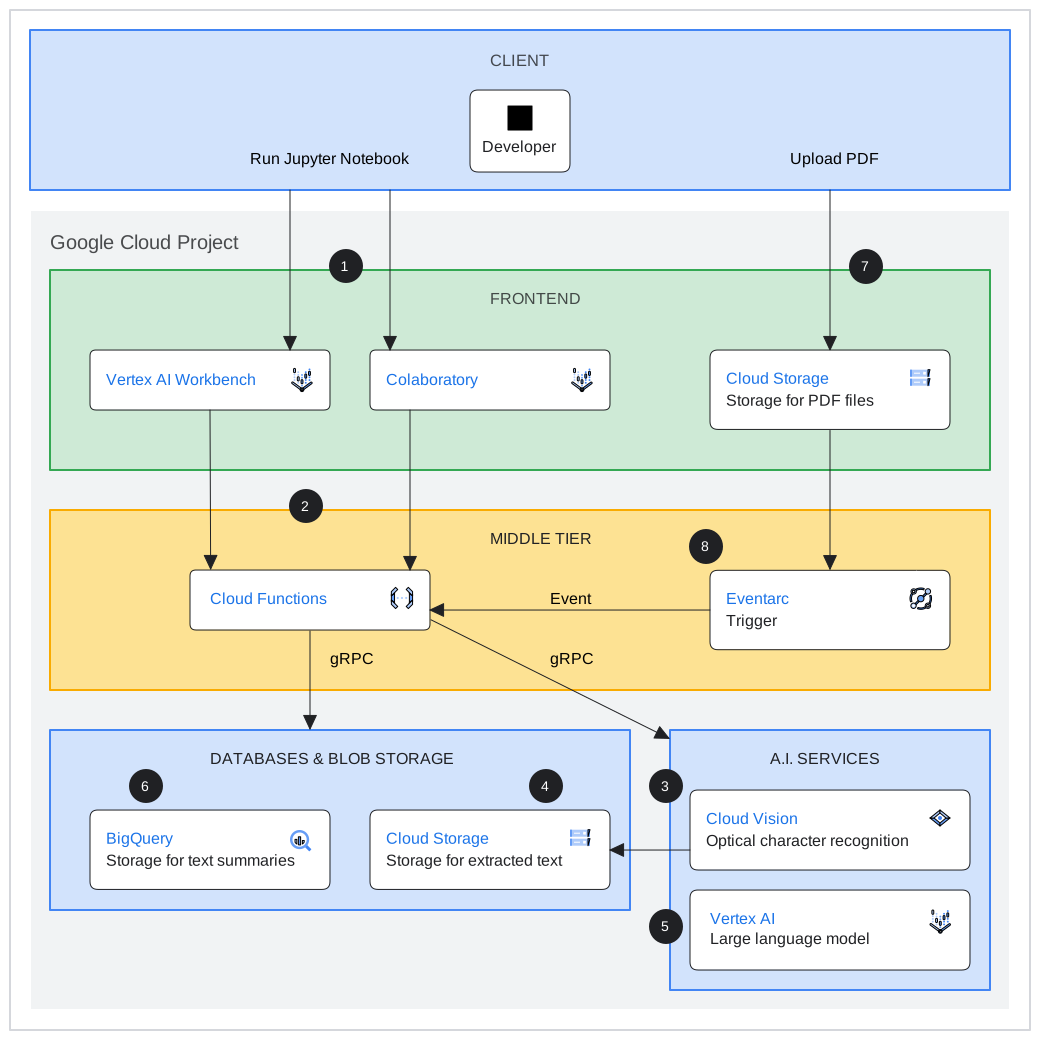
Launch a Google-recommended, preconfigured solution that uses generative AI to quickly extract text and summarize large documents stored in Cloud Storage.
Tutorials, quickstarts, & labs
Deploy an AI summarization solution in the Google Cloud console
Deploy an AI summarization solution in the Google Cloud console
Launch a Google-recommended, preconfigured solution that uses generative AI to quickly extract text and summarize large documents stored in Cloud Storage.
Host a website
Build, host, and run dynamic websites in the Google Cloud console
Build, host, and run dynamic websites in the Google Cloud console
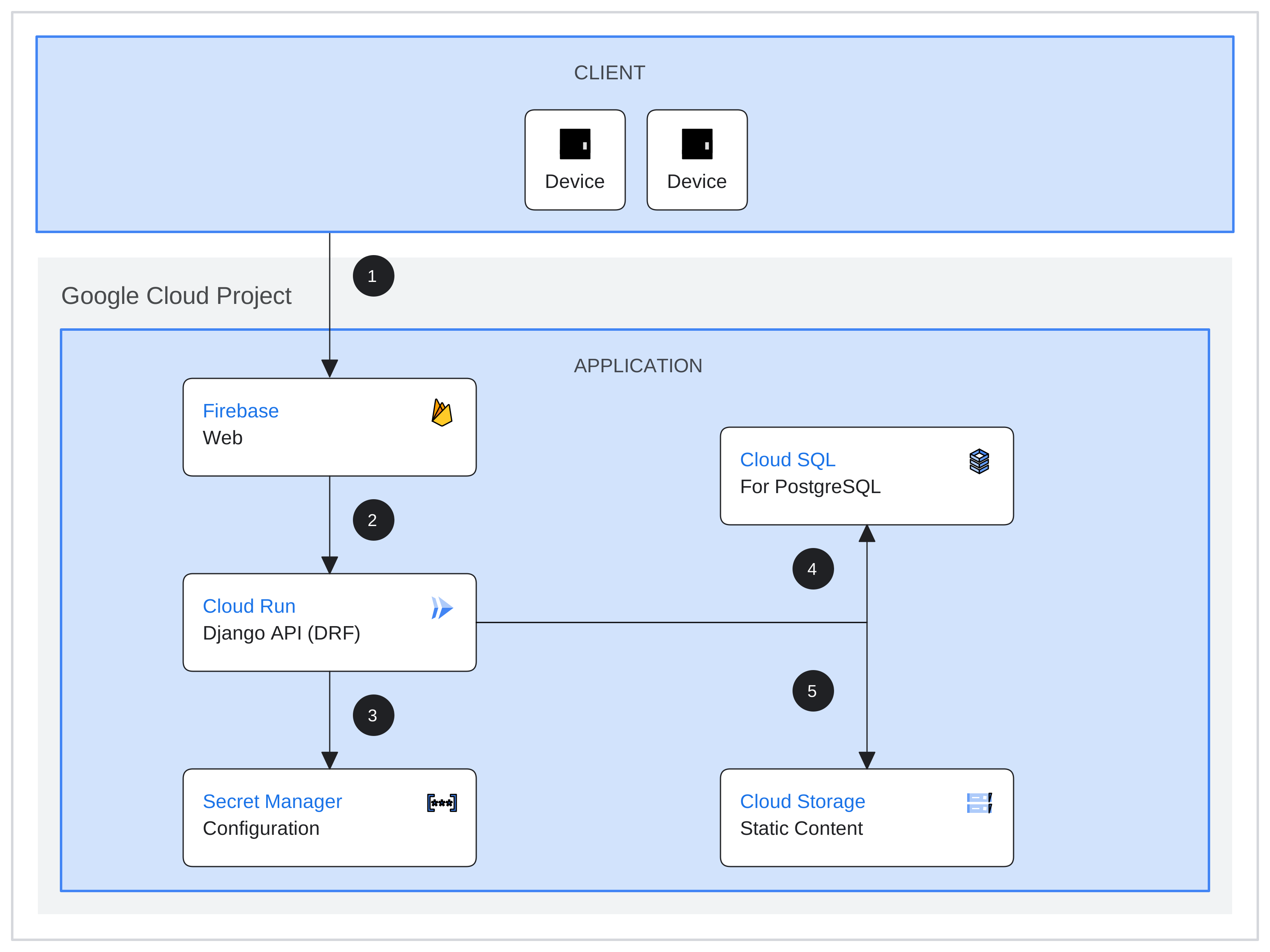
Launch a sample drop-ship retail product website that’s publicly accessible and customizable, leveraging Python and JavaScript.
Tutorials, quickstarts, & labs
Build, host, and run dynamic websites in the Google Cloud console
Build, host, and run dynamic websites in the Google Cloud console
Launch a sample drop-ship retail product website that’s publicly accessible and customizable, leveraging Python and JavaScript.
Pricing
| How Cloud Storage pricing works | Pricing is largely based on data storage, data processing, network usage and optional caching. | |
|---|---|---|
| Pricing components | Description | Price (USD) |
Free tier | Data storage 5 GiB of standard storage. | Free |
Data processing 5,000 Class A operations. 50,000 Class B operations. Unlimited free operations. No retrieval fee for standard storage. | Free | |
Network usage 100 GiB of Data transfer from North America to each Google Cloud Data transfer destination (Australia and China excluded). Unlimited inbound data transfer. Unlimited data transfer within the same location. | Free | |
Data storage The amount of data stored in your buckets. | Standard storage Best for frequently accessed ("hot" data), including websites, streaming videos, and mobile apps. | Starting at $0.02 per GiB per month |
Nearline storage Best for data that can be stored for 30 days. | Starting at $0.01 per GiB per month | |
Coldline storage Best for data that can be stored for 90 days. | Starting at $0.004 per GiB per month | |
Archive storage Best for data that can be stored for 365 days | Starting at $0.0012 per GiB per month | |
Data processing The processing done by Cloud Storage. | Operation charges For all requests made to Cloud Storage. | Starting at $0.0004 per 1,000 operations |
Retrieval fees For reading data stored in Nearline, Coldline and Archive storage classes. | Starting at $0.01 per GiB | |
Inter-region replication charges For data written to dual-regions and multi-regions. | Starting at $0.02 per GiB | |
Autoclass management charges For buckets with Autoclass enabled. | $0.0025 per 1000 objects per 30 days | |
Storage Intelligence charges For buckets with Storage Intelligence configured. | See pricing details. | |
Network usage The amount of data read from or moved between your buckets. | Data transfer within Google Cloud When data transfer is to other Cloud Storage buckets or to Google Cloud services. | Starting at $0.02 per GiB |
Specialty network services When data transfer uses certain Google Cloud network products. | Check your network product for pricing information. | |
General data transfer When data transfer is out of Google Cloud or between continents. | Starting at $0.08 per GiB | |
Rapid Cache An optional feature to accelerate read performance for your buckets. | Cache storage The amount of data stored in cache. | Starting at $0.0001233 per GiB per hour |
Cache ingest The amount of data written into the cache. | $0.0032 per GiB | |
Cache data transfer out The amount of data read from the cache. | $0.0006 per GiB | |
Cache operations Requests entirely served by the cache. | $0.0002 per 1,000 operations | |
Learn more about Cloud Storage pricing. View all pricing details.
How Cloud Storage pricing works
Pricing is largely based on data storage, data processing, network usage and optional caching.
Free tier
Data storage
5 GiB of standard storage.
Free
Data processing
5,000 Class A operations.
50,000 Class B operations.
Unlimited free operations.
No retrieval fee for standard storage.
Free
Network usage
100 GiB of Data transfer from North America to each Google Cloud Data transfer destination (Australia and China excluded).
Unlimited inbound data transfer.
Unlimited data transfer within the same location.
Free
Data storage
The amount of data stored in your buckets.
Standard storage
Best for frequently accessed ("hot" data), including websites, streaming videos, and mobile apps.
Starting at
$0.02
per GiB per month
Nearline storage
Best for data that can be stored for 30 days.
Starting at
$0.01
per GiB per month
Coldline storage
Best for data that can be stored for 90 days.
Starting at
$0.004
per GiB per month
Archive storage
Best for data that can be stored for 365 days
Starting at
$0.0012
per GiB per month
Data processing
The processing done by Cloud Storage.
Operation charges
For all requests made to Cloud Storage.
Starting at
$0.0004
per 1,000 operations
Retrieval fees
For reading data stored in Nearline, Coldline and Archive storage classes.
Starting at
$0.01
per GiB
Inter-region replication charges
For data written to dual-regions and multi-regions.
Starting at
$0.02
per GiB
Autoclass management charges
For buckets with Autoclass enabled.
$0.0025
per 1000 objects per 30 days
Storage Intelligence charges
For buckets with Storage Intelligence configured.
See pricing details.
Network usage
The amount of data read from or moved between your buckets.
Data transfer within Google Cloud
When data transfer is to other Cloud Storage buckets or to Google Cloud services.
Starting at
$0.02
per GiB
Specialty network services
When data transfer uses certain Google Cloud network products.
Check your network product for pricing information.
General data transfer
When data transfer is out of Google Cloud or between continents.
Starting at
$0.08
per GiB
Rapid Cache
An optional feature to accelerate read performance for your buckets.
Cache storage
The amount of data stored in cache.
Starting at
$0.0001233
per GiB per hour
Cache ingest
The amount of data written into the cache.
$0.0032
per GiB
Cache data transfer out
The amount of data read from the cache.
$0.0006
per GiB
Cache operations
Requests entirely served by the cache.
$0.0002
per 1,000 operations
Learn more about Cloud Storage pricing. View all pricing details.


Business Case
Explore how companies are using Cloud Storage

Vimeo is delivering more high-quality videos than ever while reducing costs.
Vimeo replaced its servers for accepting video uploads with Cloud Storage, fronted by the Fastly edge cloud to help ensure regional routing and low-latency, high-throughput connections for Vimeo’s publishers. Multi-regional Cloud Storage offers fast, resumable upload capability that helps make for better user experience.
Related content

Mixpanel maintains excellent performance and reliability while keeping its engineers focused on innovation

Robust building blocks that exist on top of core data storage, computing, and network services help take away much of the backend hassle on the way to new product creation

RedSalud meets telemedicine challenges by implementing SAP for Google Cloud








FAQ
Does Cloud Storage work for personal photos, videos, and files?
No. For personal storage options, including photos, device backup, VPN, and more, visit Google One.
How does Cloud Storage differ from other types of storage?
Cloud Storage is a service for storing objects in Google Cloud. An object is an immutable piece of data consisting of a file of any format. You store objects in containers called buckets. All buckets are associated with a project, and you can group your projects under an organization. Learn more about other Google Cloud storage products, including block storage, data transfer, and file storage.