Time to insights cut from weeks to seconds
<93% reduction in CO2 emissions during clothing prototyping
Slashed design process costs by up to 87% for customers
Cut time-to-market from 40 weeks to just 9
Boosted sell-through rates by 40-50% using AI
yoona.ai migrated to Google Cloud to power its AI platform helping designers predict trends and reduce their environmental impact.
yoona.ai migrated to Google Cloud to power its AI platform helping designers predict trends and reduce their environmental impact.
Finding a cloud provider committed to startups’ success
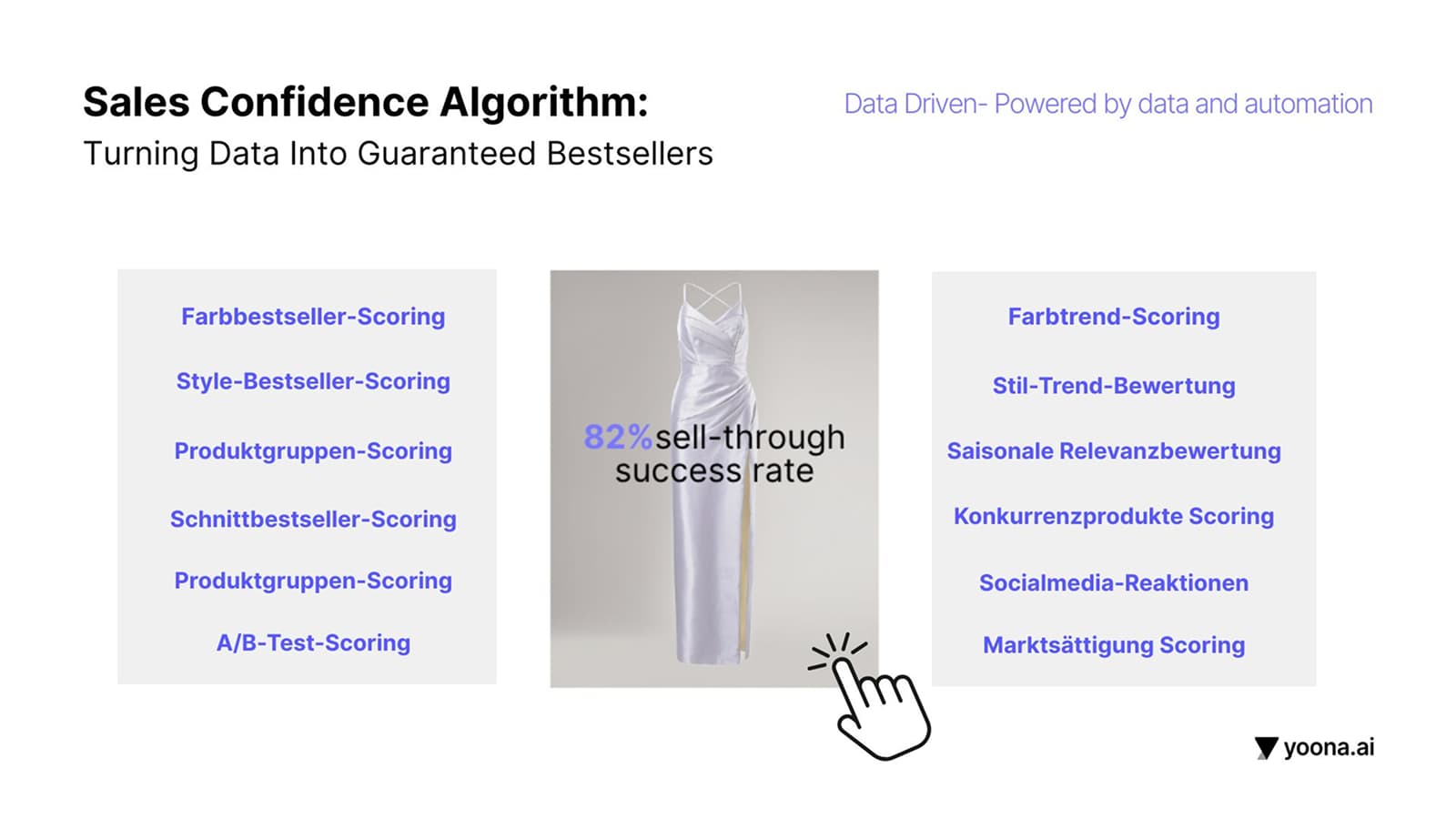
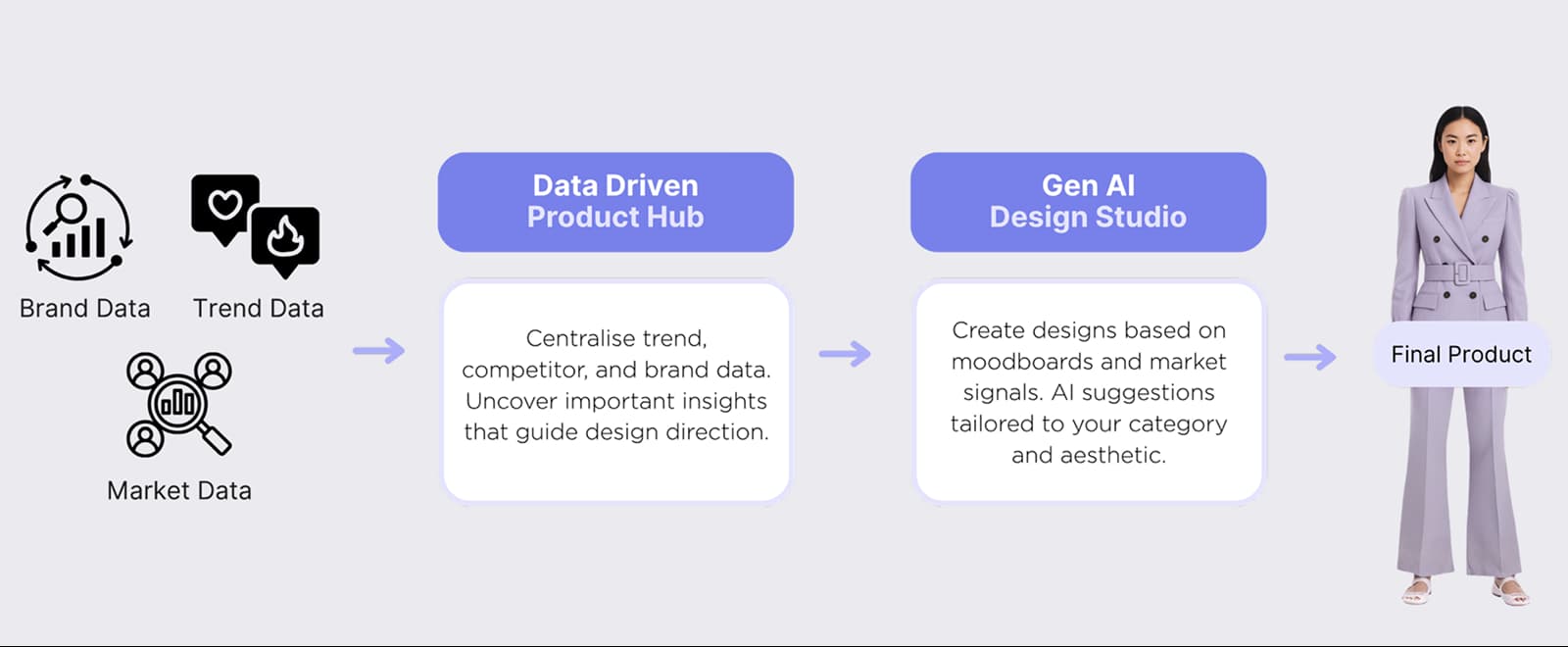
The fashion industry moves at a rapid pace, and brands are under pressure to stay ahead of trends. Designers often spend weeks on data analysis, trend forecasting, and creating countless sketches. This manual, often intuitive, process leads to wasted time, money, and materials. It also has a significant environmental footprint, with the textile industry causing around 1.2 billion tons of CO2 emissions annually. That’s the challenge German startup yoona.ai aims to solve with its intelligent fashion tech platform. Using artificial intelligence, yoona.ai enables brands to make data-backed design decisions in seconds, speeding up the design process and reducing waste from the outset.
To power this vision, yoona.ai needs a cloud infrastructure that can handle the immense computational demands of its AI models. Initially, the team turned to a third-party cloud provider, but as the costs of training their custom AI models rose, the lack of a dedicated account manager made it difficult to get the technical support they needed to configure their infrastructure in a cost-efficient way. This, combined with a lack of a comprehensive startup program, led yoona.ai to realize it needed a new cloud provider — one with a strong foundation in AI, along with a commitment to helping startups succeed.
At this time, Anna Franziska Michel, CEO and co-founder of yoona.ai, was participating in the Google for Startups Accelerator: Women Founders program.
The accelerator was the best we've ever done. The support and the mentors were amazing. It brought us closer to Google Cloud and showed us it was not just a technology provider, but a team we could work with for long-term success.
Anna Franziska Michel
CEO and Co-founder, yoona.ai
This not only gave Michel access to a powerful support network to help the company grow, it also persuaded Michel that Google Cloud was the right provider for yoona.ai.
“The accelerator was the best we've ever done,” says Michel. “The support and the mentors were amazing. It brought us closer to Google Cloud and showed us it was not just a technology provider, but a team we could work with for long-term success.”
Powering custom AI models with state-of-the-art cloud GPUs
yoonai.ai migrated to Google Cloud in 2024. With credits to invest in its infrastructure, and the support of Google Cloud partner Seibert Group GmbH, the company built a modern, flexible architecture to manage everything from data storage to complex AI workloads.
Very few cloud platforms can provide these GPUs. Google Cloud gives us access to several hundred, meaning we can maintain our services even if something goes wrong. With the Google Cloud team we had the expertise to help us configure the system to run our models efficiently.
Volker Ißbrücker
Co-CEO and Co-founder, yoona.ai
At the core of yoona.ai are the custom AI models it trains to predict trends and generate designs. This process is computationally intensive, requiring significant resources. yoona.ai relies on Compute Engine and Google Kubernetes Engine (GKE) to access high-performance GPUs, including state-of-the-art Nvidia A100 GPUs. These powerful processors are essential for training the proprietary models and AI agents yoona.ai’s customers need to make data-driven design decisions.
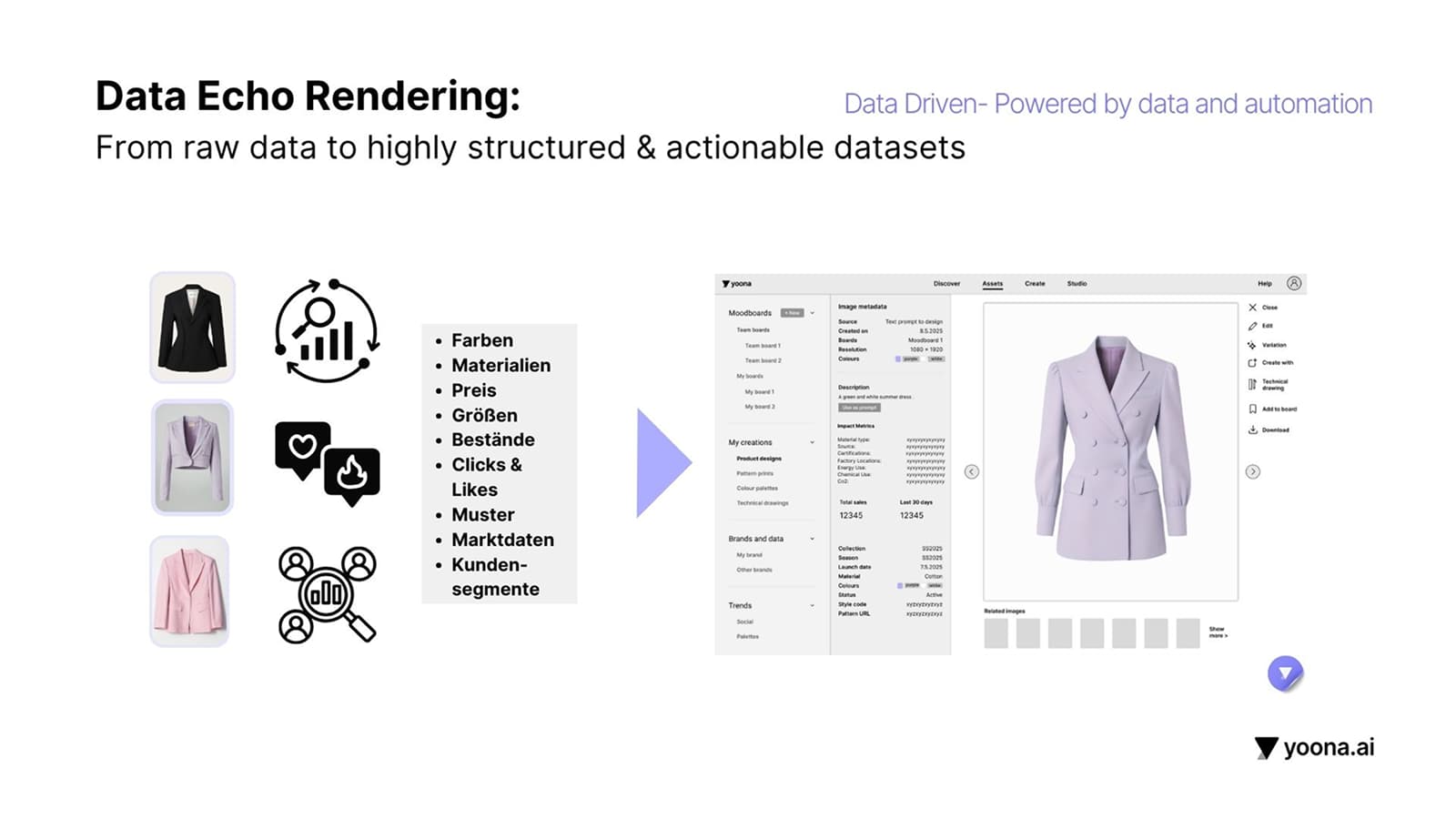
yoona.ai can now handle massive datasets and complex queries with ease, providing designers with accurate, data-backed insights in a matter of seconds — something that previously took weeks of manual work. With these processors powering yoona.ai’s AI agents, designers can use the platform to automate the time-consuming process of data analysis and trend identification.
For example, a designer can tell the agent to find the bestselling products from a previous season for a specific target market. The agent automatically analyzes the data and presents the designer with a report and even streams the information into an image generator to suggest new designs. This allows designers to spend less time on manual research and more time on creativity, resulting in designs that are more likely to sell.
Using such a large amount of compute power can be expensive. yoona.ai received a 20% discount on Google Cloud services, and it also worked closely with the Google Cloud team to understand how to use resources efficiently to optimize costs. Following the team’s advice, yoona.ai resolved to use powerful A100 GPUs for computationally intensive training, while using more cost-effective machines for day-to-day operations and inference.
“The A100 GPU is essential for what we do,” says Volker Ißbrücker, co-CEO and co-founder of yoona.ai. “Very few cloud platforms can provide these GPUs. Google Cloud gives us access to several hundred, meaning we can maintain our services even if something goes wrong. With the Google Cloud team we had the expertise to help us configure the system to run our models efficiently.”
Beyond compute power, yoona.ai is also very careful about data security, as its customers share highly sensitive proprietary information, including bestselling products and brand identity. With Cloud Storage, yoona.ai can ensure all that raw data is securely stored. Google Cloud’s commitment to European GDPR regulations and data sovereignty are also key to keeping designers’ intellectual property safe and secure, helping the company to build trust with customers.


A scalable platform for future growth
By helping designers make smarter, data-backed decisions from the start of the creative process, yoona.ai is tackling the problem of waste head-on. The company calculates that by enabling designers to reduce the number of design sketches and product prototypes, it can help companies reduce carbon dioxide emissions in the development of their clothing collections by up to 93%.
As yoona.ai continues to train more specialized AI agents to meet the evolving needs of its customers and improve the fashion industry’s sustainability, it’s confident that with Google Cloud it has the reliable, scalable platform to expand its reach and help more fashion brands design the future.
“As a startup, before using Google Cloud, it was tough to manage our business model efficiently,” says Ißbrücker. “Google Cloud infrastructure, and the support of the team, have enabled us to reach many more customers.”
Michel agrees, “Our main goal is to provide the best service and make our customers happy. With Google Cloud, that’s exactly what we’re doing.”
Our main goal is to provide the best service and make our customers happy. With Google Cloud, that’s exactly what we’re doing.
Anna Franziska Michel
CEO and Co-founder, yoona.ai
yoona.ai is the all-in-one AI fashion design platform helping the industry reduce its environmental impact. Its platform enables designers to make data-driven design decisions in seconds.
Industries: Technology, Startup
Location: Germany
Products: Google Cloud, Cloud Storage, Compute Engine, Google Kubernetes Engine (GKE)
About Google Cloud partner — Seibert Group
As experts in modern work, agile scaling, and IT service management, Seibert Group provides companies with everything they need for a successful transformation and smooth teamwork.