How to build an app with AI
Last updated: 10/14/2026
Thanks to AI, the barrier between a creative idea and a functional app is thinner than ever. In the past, building custom software often required a deep understanding of complex code and technical structures. Today, you can use simple, natural language to prompt AI to help build an app, a method some call "vibe coding."
By using an AI app builder like Google AI Studio, creators can move from writing every line of code manually to describing their vision in plain language. This allows you to create an app that integrates complex reasoning and autonomous agents with less technical overhead than traditional development.
Whether you’re a beginner wanting to make your first app or a student looking to prototype a social impact tool, AI-powered tools provide a streamlined path from a simple "vibe" to a live application. With AI Studio's direct deployment properties, bringing that vibe to life is completely frictionless. You can now deploy up to two apps from AI Studio to Google Cloud Run absolutely free, no credit card or Google Cloud billing account required, while instantly gaining enterprise-grade infrastructure, security, and global scale.
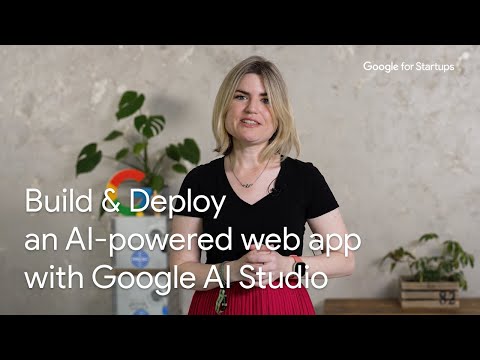
AI-assisted application development defined
AI-assisted application development is the practice of using artificial intelligence models, coding agents, and natural language prompts to design, generate, test, and deploy software applications. It enables both professional software engineers and non-technical builders to turn ideas into working applications faster.
By integrating large language models (LLMs) across the software development life cycle—from rapid prototyping and "vibe coding" with natural language to automated code generation, debugging, and cloud deployment—AI application development reduces boilerplate work and accelerates time to production.
Understanding the AI development loop
Building an app with AI operates through a conversational and iterative cycle that handles both the low-level logic and the high-level deployment.
Conversational: The "ideation partner"
For many innovators, the hardest part is the "blank page." AI Studio can be used for brainstorming and concept exploration before you even write your first line of code. You can have a conversation with the AI to list potential features, define your user base, or even create a one-page "pitch" for your project.
Iterative: The development loop
This is the tight loop used to create and perfect specific features.
- Describe the goal: You start with a high-level prompt, such as "Create a dashboard for tracking weather data."
- AI generates code: The AI app builder interprets the request and produces the initial code and UI.
- Preview and interact: Launch a live preview of your working prototype to test the features and ensure the app’s "vibe" and functionality align with your vision.
- Refine: You provide feedback, like "Change the theme to dark mode," and the AI updates the application immediately.
- Deploy and scale: Use Google AI Studio direct deployment properties to transition your working prototype from a simple "vibe" to a live application. With a single click, your app is launched onto a fully supported infrastructure powered by Google Cloud Run, ensuring it automatically scales to handle production traffic.
Choosing your AI development tool
Selecting the right tool depends on whether you are looking for rapid prototyping, terminal-based automation, or custom agent architecture.
Tool | Best for | Starting point | Primary use case | Key feature |
Beginners and non-coders for rapid text-to-app prototyping without setup. | A concept or prompt | Rapid prototyping and vibe coding | One-click to share. Go from prompt to web app | |
Developers and teams for deploying and scaling live apps with free hosting. | A prototype ready to go live | Frictionless web deployment and scaling | Free live hosting for 2 apps with no credit card required | |
Advanced developers for complex, AI-native applications managed with a full IDE. | The code editor | Integrated development | A cloud-native IDE for writing and managing AI application code |
How to vibe code, build, and deploy with Google AI Studio
Google AI Studio is the fastest path for students and innovators to create an app and host it on the web without needing a credit card or a complex setup.
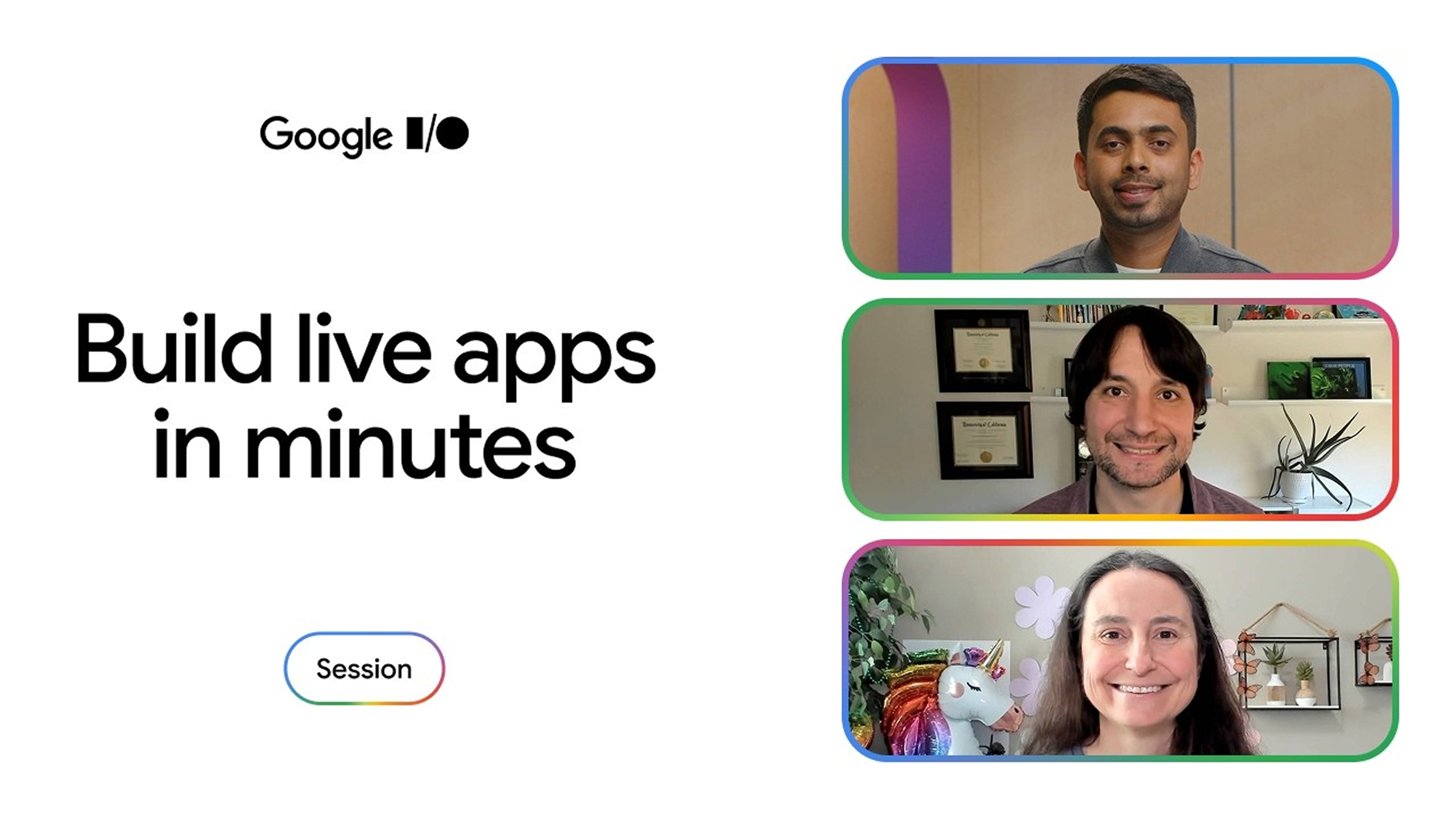
Step 1: Define your application prompt
Navigate to the Build apps section in Google AI Studio. Enter a natural language description of the app you want to create.
For example: "Build a tool that helps my classmates track study group sessions and sends a reminder when we have an upcoming exam." |
Step 2: From a single file to a "digital workshop"
As your app grows, you will graduate from simple one-file scripts to more complex projects. Think of it like building a house:
|
Step 3: Refine and test locally
Interact with the preview to test the application's logic. If it doesn’t feel right, use the chat interface to provide iterative feedback until the "vibe" and functionality match your requirements.
Step 4: Share for feedback
Before deploying, you can share a "full-tab view" of your app with friends or mentors by adding &fullscreenApplet=true to your project URL. This allows others to test your prototype in their browser immediately.
Step 5: Deploy to Cloud Run
Once you're happy with your app, just hit "Deploy to Cloud Run." Google AI Studio takes care of the heavy lifting like containerization and hosting, so you get a live URL right away. It also automates database setup and public deployment, making it easy to manage things like user profiles or industry lists without any manual hassle.
Learn how to deploy to Cloud Run from AI Studio in this Codelab.
Advanced building for next-gen developers
For those who want more control than a web-based builder, Antigravity in Gemini platform provides a powerful code-first alternative to elevate your application.
Antigravity in Gemini platform: Move beyond simple prompts into sophisticated, multi-step application architectures. Antigravity allows you to build and manage complex AI environments, orchestrate advanced tasks, and streamline your deployments with deep developer control. |
Learn how to build an app with Antigravity in this Codelab.
Related Google Cloud products and services
 Google AI StudioA web-based prototyping environment for generative AI.
 Cloud RunA fully managed platform to deploy and scale your AI-integrated applications.
 Antigravity in Gemini platformA code-first tool designed for next-gen developers to build, orchestrate, and manage complex, multi-step AI application architectures.
Take the next step
Start building on Google Cloud with $300 in free credits and 20+ always free products.
Need help getting started?
Contact salesWork with a trusted partner
Find a partnerContinue browsing
See all products