Using AI in the Software Development Life Cycle (SDLC)
Last updated: 9/21/2026
Artificial intelligence changes how software engineering teams work every day. Rather than replacing development teams, AI tools, particularly now with the introduction of AI agents, can lift the manual weight of routine work across the entire software development life cycle, helping developers spend less time writing repetitive boilerplate and more time solving complex architectural problems.
What is the SDLC?
The SDLC, or software development life cycle, is the standard process teams use to design, build, test, and release software. It breaks down large projects into manageable phases. These steps guide a project from an initial idea in a product meeting all the way to updates running in production.
The standard SDLC includes the following phases:
- Planning and requirements
- Design and architecture
- Coding and building
- Testing and quality assurance
- Deployment and maintenance
Bringing artificial intelligence into this cycle means using machine learning models and intelligent tools to assist with tasks at every step of development. AI in the SDLC acts as a partner that helps handle the more tedious work, catches edge cases early, and keeps pipelines moving smoothly.
How do you incorporate AI in the SDLC?
Bringing artificial intelligence into your workflows helps streamline specific tasks in every phase of development. Here is how modern teams can integrate AI capabilities into their daily pipelines using tools, including those like Google Antigravity in Gemini Enterprise, which helps developers to build and scale agentic workflows.
Planning and requirements: moving from vague ideas to clear specs
During the early planning phase, product managers and developers gather user feedback, feature requests, and support tickets. Natural language processing models can read through thousands of customer support notes to find recurring themes, helping teams synthesize unstructured data into structured requirements documents without missing critical user pain points.
Design and architecture: drafting blueprints with intelligent insights
System architecture, data models, and component structures most often take shape during the design phase. AI models can help analyze your project specifications to recommend proven design patterns, like microservices or event-driven setups, that match your target cloud scale. These systems can also check configurations against security compliance standards and architectural frameworks, ensuring your cloud environment stays secure from day one. Developers can use specific tools like architecture copilots integrated into IDEs, and cloud-native diagramming assistants to generate infrastructure blueprints and spot potential security gaps before writing any code.
Coding and building: writing code with intelligent assistants
Core development involves writing, reviewing, and refactoring code. Intelligent assistants help scaffold components, handle tedious boilerplate code, and refactor functions using short, active sentences.
For example, compare a repetitive boilerplate task with an AI-generated solution block. The task demonstrated below involves connecting to a database to fetch user records by ID, which requires manual connection setup, error handling, and manual cleanup. In contrast, the AI-generated solution focuses purely on cloud storage file uploads using Cloud Storage, handling client initialization and blob transfers cleanly without manual connection boilerplate.
Manual boilerplate task:
- Python
AI-generated solution block:
- Python
Testing and quality assurance: catching bugs before production
Testing code takes significant time before any release. Automated analysis can generate edge cases, regression suites, and unit tests based on your codebase. These tests catch bugs early, helping teams ship reliable software faster.
Deployment and maintenance: automating CI/CD pipelines and monitoring
Release management and operational monitoring keep applications running smoothly in production. The introduction of AI can help streamline this phase by automating repetitive release tasks and monitoring system health. Cloud Deploy uses automation to manage targeted rollouts and generate release notes, while Cloud Logging and Cloud Monitoring rely on machine learning capabilities to detect anomaly patterns in logs, trigger automated rollback plans when health metrics dip, and verify infrastructure configuration compliance.
FAQs
Navigating the shift toward AI-driven engineering raises common questions around team productivity and tool adoption.
How does AI impact daily developer workflows?
AI handles repetitive coding tasks, generates unit tests, and summarizes documentation. This leaves developers more time to focus on creative problem-solving and system architecture.
What parts of the SDLC benefit most from AI tools?
Coding and testing see the most immediate gains because AI assistants can write boilerplate code and generate test cases quickly. Planning and maintenance also benefit from automated data synthesis and log analysis.
Benefits of using AI in the SDLC
Teams using AI in their development cycles see a variety of potential advantages, including:
Reduced boilerplate overhead
Reduced boilerplate overhead
Developers spend less time writing repetitive boilerplate code and more time building features.
Early bug detection
Early bug detection
Automated testing tools catch edge cases and bugs early, which can help improve overall software reliability.
Streamlined planning
Streamlined planning
Natural language models help product teams synthesize large volumes of user feedback into clear requirements.
Automated documentation
Automated documentation
Intelligent assistants accelerate documentation generation to keep project wikis up to date.
Optimized releases
Optimized releases
Automated CI/CD pipelines streamline release management and infrastructure configuration compliance.
Faster onboarding
Faster onboarding
Junior developers ramp up faster by learning from inline code suggestions and explanatory comments.
Challenges of using AI in the SDLC
While often advantageous, adopting AI tools can also introduce new operational and technical considerations for engineering teams.
- Potential security flaws: Generated code can occasionally contain subtle security vulnerabilities or logic flaws that require careful human code review
- Stronger reviews needed: Teams must manage data privacy carefully to ensure proprietary source code is not exposed to external training sets
- Possible knowledge erosion: Over-reliance on automated tools can lead to skill degradation if developers stop understanding the underlying mechanics of their code
Best practices for implementing AI in the SDLC
Getting the most out of automated tools requires deliberate setup and structured oversight. Beyond basic code reviews, teams can follow these practices to secure their pipelines:
- Map out custom model contexts using internal documentation libraries so that code suggestions match your specific enterprise architecture style guides.
- Audit generated dependencies and package imports regularly to protect your supply chain against hallucinated package names or outdated libraries.
- Track prompt performance metrics across sprints to measure how much time assistants save on repetitive maintenance tasks.
- Establish a clear internal review policy where every piece of AI-suggested code goes through standard peer review and security scanning before entering production branches.
- Provide clear guidelines to your team on data privacy and proper prompt usage.
What AI tools can be used in the SDLC?
When incorporating AI in the SDLC, modern engineering teams may rely on specialized platforms designed to handle complex coding and orchestration tasks. Google Cloud offers several solutions, and organizes its developer tools around unified platforms that support code generation, environment automation, and multi-agent systems:
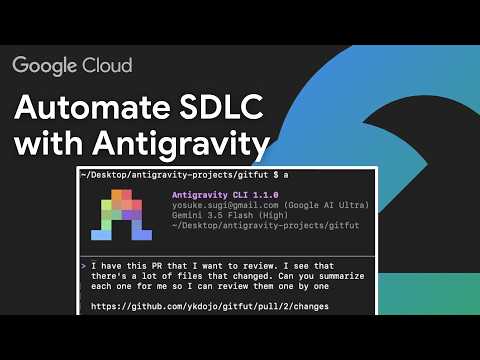
Google Antigravity for Gemini Enterprise is a suite of agent-first developer tools that enables technical teams to build and run agentic workflows. Developers can offload coding tasks to AI agents that run in parallel, and enable multiple subagents to take proactive, defined actions to autonomously plan and execute complex, end-to-end software tasks.
Gemini Enterprise Agent Platform provides the underlying foundation for building, running, and scaling custom agents and automated routines across cloud services. Developers use its developer kits and managed runtimes to embed intelligence directly into cloud services and pipelines.
Google AI Studio is a web-based prototyping environment for experimenting with Gemini models. It assists in the design phase by allowing developers to test prompt logic, integrate multimodal inputs like wireframes, and iterate on application logic before full implementation.
Google Colab is a cloud-based environment for running Python notebooks. It assists in the coding and testing phases by natively integrating AI to generate data analysis pipelines, explain syntax errors, and autocomplete expressions.
Take the next step
Start building on Google Cloud with $300 in free credits and more than 20 always free products.
Need help getting started?
Contact salesWork with a trusted partner
Find a partnerContinue browsing
See all products