Keputusan tepercaya secepat percakapan
Keputusan tepercaya secepat percakapan

Keharusan strategis Analisis Percakapan
Selama bertahun-tahun, setiap perusahaan telah mengejar visi untuk menjadi "berbasis data", dan Anda telah berinvestasi sesuai dengan visi tersebut. Anda telah berhasil mengumpulkan informasi dalam jumlah besar, dan yakin bahwa jawaban atas pertanyaan bisnis paling penting Anda ada di dalamnya.
Masalahnya, bagi sebagian besar organisasi Anda, data tersebut masih tidak dapat diakses.
Untuk mendapatkan jawaban sederhana, seorang eksekutif atau anggota tim terpaksa mengirimkan tiket, menunggu analis data yang sibuk menjalankan laporan, dan berharap informasi tersebut masih relevan saat akhirnya diterima. Peluang untuk bertindak mungkin sudah hilang saat jawaban diterima.
Hal ini bukan lagi berbasis data, melainkan tertunda data.
Saatnya memperbaiki kondisi ini.
Bayangkan jika setiap orang di perusahaan Anda—mulai dari manajer operasional hingga eksekutif pemasaran—dapat memperoleh jawaban spesifik dan akurat yang mereka butuhkan hanya dengan mengajukan pertanyaan dalam bahasa sehari-hari yang sederhana.
Inilah realitas baru Analisis Percakapan. Fitur ini bukan sekadar alat baru, tetapi juga perubahan mendasar dalam cara bisnis Anda beroperasi. Kita beralih dari laporan statis yang usang ke dunia percakapan yang dinamis dan real-time dengan data. Peralihan ini tidak hanya memungkinkan Anda bereaksi terhadap masa lalu, tetapi juga menciptakan organisasi yang lebih cerdas, lebih cepat, dan lebih ingin tahu yang siap untuk secara aktif menciptakan masa depan.

Jangan meminta AI Anda untuk menebak. Sebagai gantinya, mintalah untuk menghubungkan.
Kesalahan paling fatal yang dapat Anda lakukan dengan analisis berteknologi AI adalah memercayai AI untuk menulis kueri data dari awal.
Model AI yang canggih ini akan mencoba menerjemahkan pertanyaan bahasa alami yang kompleks menjadi kode SQL mentah, tetapi sering kali salah. Model tersebut memerlukan konteks bisnis spesifik Anda untuk hasil yang akurat.
Pertimbangkan pertanyaan yang tampak sederhana:
“Berapa tingkat pembelian berulang 30 hari menurut tingkatan usia untuk tahun lalu?”
Bagi AI, pertanyaan ini penuh dengan potensi masalah:
- "Tingkatan usia": Apakah AI mengetahui apakah perusahaan Anda menentukan tingkatan berdasarkan 10 tahun, 20 tahun, atau pengelompokan khusus? AI harus menebak cara menerapkan logika.
- "Tingkat pembelian berulang 30 hari": Ini adalah metrik kompleks dan multi-langkah yang akan sulit ditulis secara akurat oleh AI dalam SQL mentah.
- "Tahun lalu": Apakah ini berarti tahun kalender terakhir atau 365 hari terakhir? AI akan menafsirkan hal ini secara tidak konsisten.
Inilah alasan mengapa lapisan semantik sangat penting.
Penerjemah universal: lapisan semantik
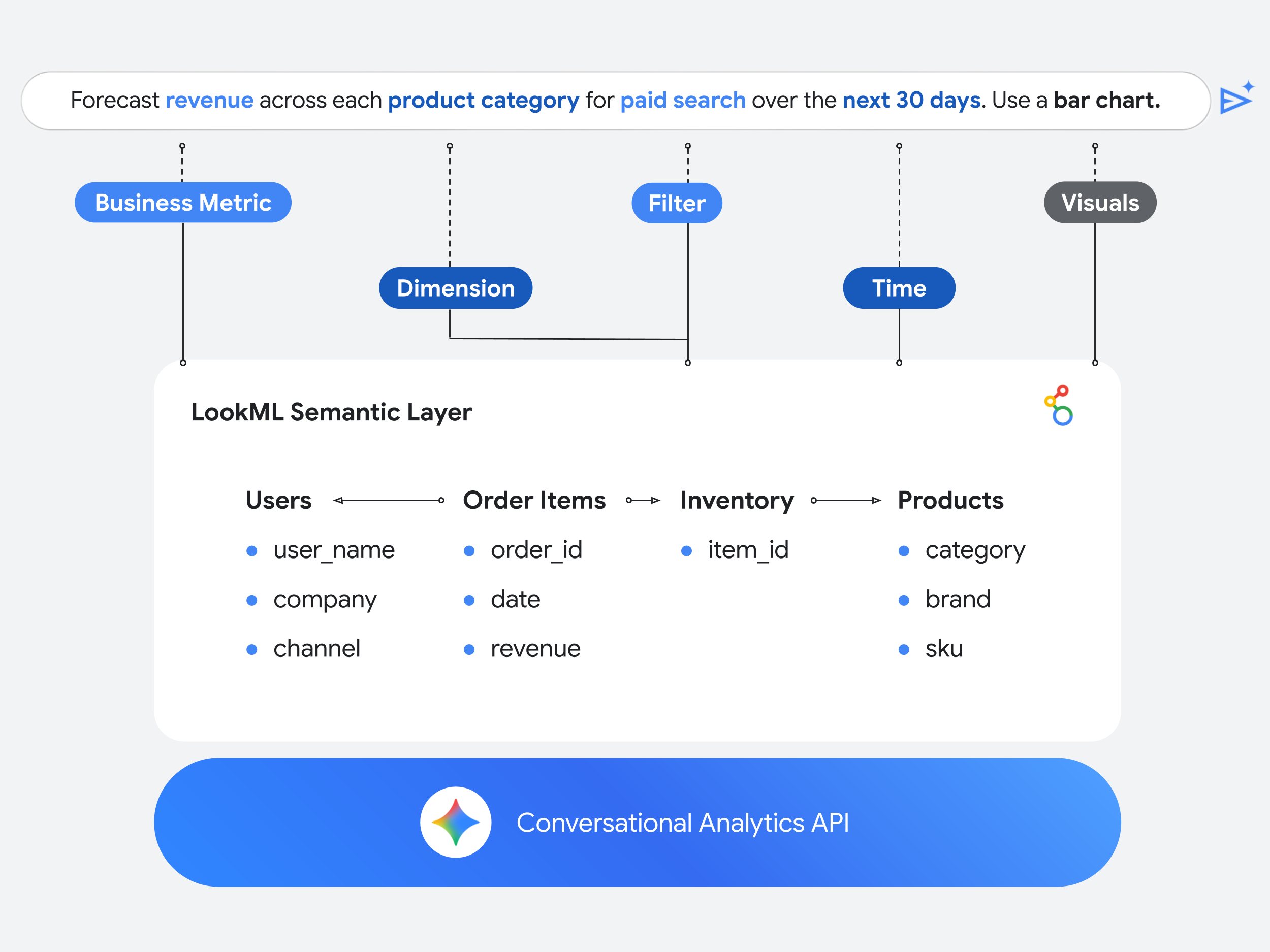
Anggap lapisan semantik sebagai penerjemah universal atau kamus tunggal dan terpusat untuk data Anda. Pakar data menggunakannya untuk mendefinisikan semua logika dan istilah bisnis Anda di satu tempat yang terkelola.

Apa definisi yang disertifikasi dari "pendapatan"? Apa yang sebenarnya merupakan "pelanggan aktif"?
Lapisan semantik menstandarkan definisi ini, sehingga menjamin bahwa setiap orang yang mengajukan pertanyaan akan mendapatkan jawaban yang dikalkulasi dengan cara yang sama, setiap saat.
Dengan fondasi ini, tugas AI berubah sepenuhnya.
AI hanya memahami pertanyaan pengguna dan mencocokkannya dengan definisi yang benar, telah dibuat sebelumnya, dan disertifikasi.
Sistem menjalankan logika yang benar, sehingga memastikan perhitungan identik dan dapat dipercaya. Pendekatan terbaik di kelasnya ini dapat mengurangi error data dalam kueri bahasa alami hingga dua pertiga.
Peralihan strategis untuk tim data Anda
Efek samping dari kemampuan ini adalah perubahan besar dalam cara kerja karyawan Anda. Ketika setiap karyawan dapat menjawab pertanyaan data mereka sendiri, analis data Anda tidak perlu lagi melakukan pekerjaan rutin yang berulang dan bernilai rendah. Mereka dapat berhenti menjadi layanan bantuan reaktif dan berfokus untuk bertindak sebagai partner strategis yang membuat seluruh organisasi Anda lebih cerdas.

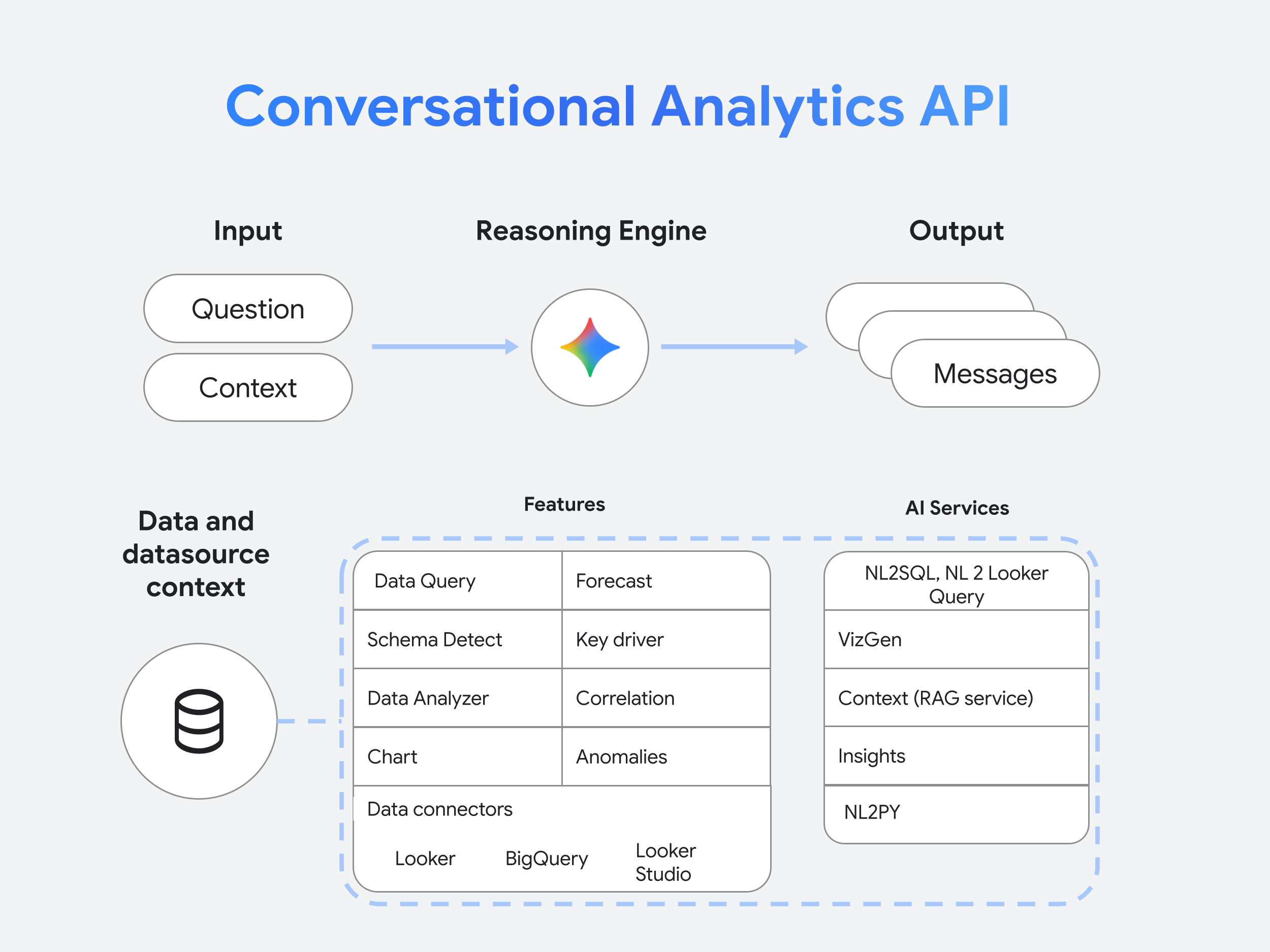
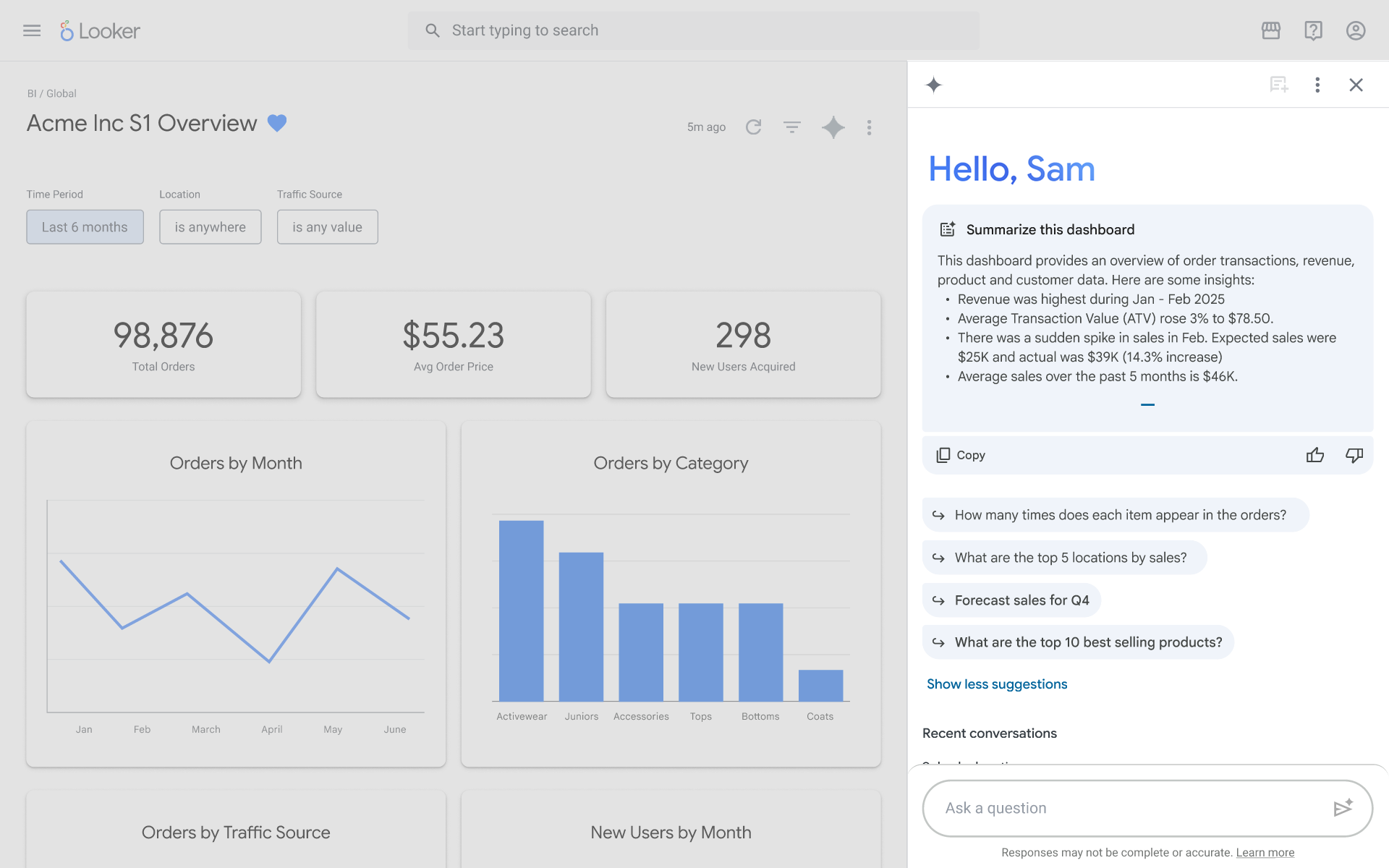
Selain itu, jawaban tidak harus berada di satu alat BI. Dengan integrasi Workspace bawaan, tim dapat mengajukan pertanyaan langsung di dalam alat seperti gChat. Atau, Anda dapat menggunakan Conversational Analytics API untuk menampilkan jawaban tepercaya secara langsung di aplikasi apa pun yang digunakan tim Anda. API ini memungkinkan analis membuat dan mengelola agen yang terhubung ke data, dengan memanfaatkan konteks bisnis dari alat seperti LookML dan Knowledge Catalog (sebelumnya bernama Dataplex) untuk mengambil data, membuat diagram, dan memberikan insight dalam bahasa yang mudah dipahami.
Mesin terpadu untuk kecerdasan tepercaya
Google Cloud menghadirkan solusi lengkap dan terintegrasi untuk mewujudkan visi Analisis Percakapan ini. Ini bukan kumpulan alat yang terhubung secara longgar, melainkan mesin terpadu yang setiap komponennya memainkan peran penting dan canggih untuk memberikan kecepatan dan kepercayaan.

Gemini: antarmuka
AI canggih Google bertindak sebagai antarmuka bahasa alami. AI ini memahami pertanyaan Anda dalam bahasa Inggris yang sederhana, mengetahui maksud Anda, serta memberikan jawaban dalam format yang jelas dan mudah dipahami.
Looker: lapisan kepercayaan
Ini adalah lapisan semantik inti—satu sumber tepercaya untuk bisnis Anda. Platform ini menyimpan semua definisi, perhitungan, dan logika bisnis yang tersertifikasi. Saat memahami pertanyaan, Gemini akan menggunakan Looker untuk mendapatkan metrik tepercaya yang diperlukan untuk memberikan jawaban yang akurat.
BigQuery: mesin berkecepatan tinggi
Ini adalah data warehouse terpadu tempat semua data dasar Anda berada. BigQuery dibuat untuk menangani set data besar dan menjalankan kueri kompleks dalam hitungan detik, sehingga memberikan kecepatan dasar yang mendukung seluruh sistem.
Ketiga komponen ini bersama-sama menciptakan pengalaman yang lancar dan terkelola. Pengguna mengajukan pertanyaan, Gemini menafsirkannya, Looker menyediakan definisi dan data tepercaya, dan BigQuery menjalankan analisis berat. Seluruh proses ini memanfaatkan akses dan izin data pengguna yang ada.
Dari spion hingga sistem navigasi
Sejak dulu, business intelligence berperan seperti spion, yang hanya memberi tahu Anda apa yang sudah terjadi. AI mengubahnya menjadi kaca depan, sehingga membantu Anda melihat apa yang ada di depan dan secara proaktif membentuk masa depan.

Saat Anda menghilangkan hambatan teknis dan membuat data dapat diakses secara instan melalui percakapan, Anda tidak hanya memberdayakan beberapa analis, tetapi juga memicu budaya keingintahuan dan tindakan di seluruh organisasi. Dialog bisnis yang penting beralih dari pertanyaan yang berfokus pada masa lalu, seperti "Berapa penjualan kuartal terakhir?", ke strategi yang berfokus pada masa depan:
"Apa yang dapat kita lakukan untuk meningkatkan performa pada kuartal berikutnya?"
Inilah cara membangun perusahaan yang benar-benar cerdas dan siap memimpin di era AI.
Cara untuk mempelajari lebih lanjut
Temukan detail selengkapnya, studi kasus, dan opini pakar tentang Analisis Percakapan dalam ebook terbaru, Data yang mempercepat pemahaman: Cara Analisis Percakapan melipatgandakan kecerdasan untuk bisnis Anda.
Jika Anda siap mentransformasi pengalaman data dan memberdayakan setiap tim dengan AI percakapan yang tepercaya, hubungi kami untuk uji coba gratis Looker sekarang.