Cuts game creation from weeks to days with Gemini
Scales to 3M+ daily users with Google Kubernetes Engine
Contributes to 40% creator retention with fast Vertex AI tools
Empowers 2,000 creators to build games without code with Vertex AI orchestrating multiple models in concert
Verse8 allows 3,000+ creators to turn text prompts into play and create 8,000+ AI-generated games.
Verse8 allows 3,000+ creators to turn text prompts into play and create 8,000+ AI-generated games.
Removing the technical barriers to creativity
The bottleneck was a lack of unified cloud infrastructure capable of integrating and managing a diverse portfolio of frontier generative AI products. Integrating a single new model took dedicated engineers several weeks.
JC Kim
CEO, Verse8
Verse8 enables anyone, regardless of technical skill, to create a fully immersive video game. The platform replaces complex code and art pipelines with simple natural language, allowing a teacher to build a history Role-Playing Game (RPG) or a teenager to craft a visual novel in minutes. However, delivering this "prompt-to-play" experience required an intricate backend capable of orchestrating the world's best generative models for text, audio, video, and code simultaneously.
To support this vision, the team found themselves wrestling with a disjointed infrastructure: manually stitching together different APIs and frontier models from various providers to get the best performance for each modality.
Integrating a single new AI model — essential for keeping the platform competitive — became a complex engineering ordeal involving tedious server configurations and compatibility checks.
Without a unified environment to rapidly experiment with new alpha models or scale their serving architecture to meet the demands of creators, the engineering team burned cycles on maintenance, taking away time and focus from gameplay features.
Powering 'prompt-to-play' with a one-stop infrastructure
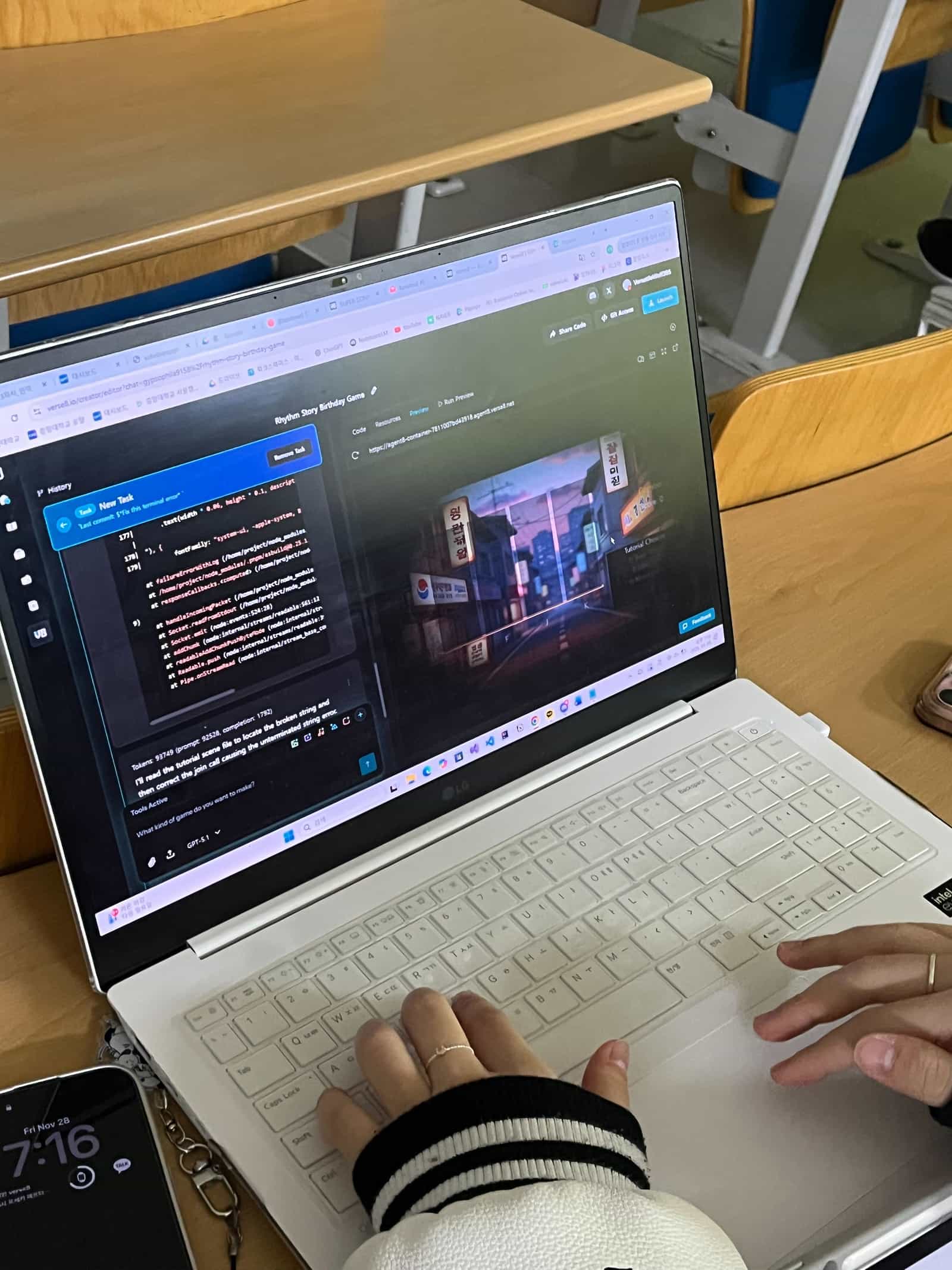
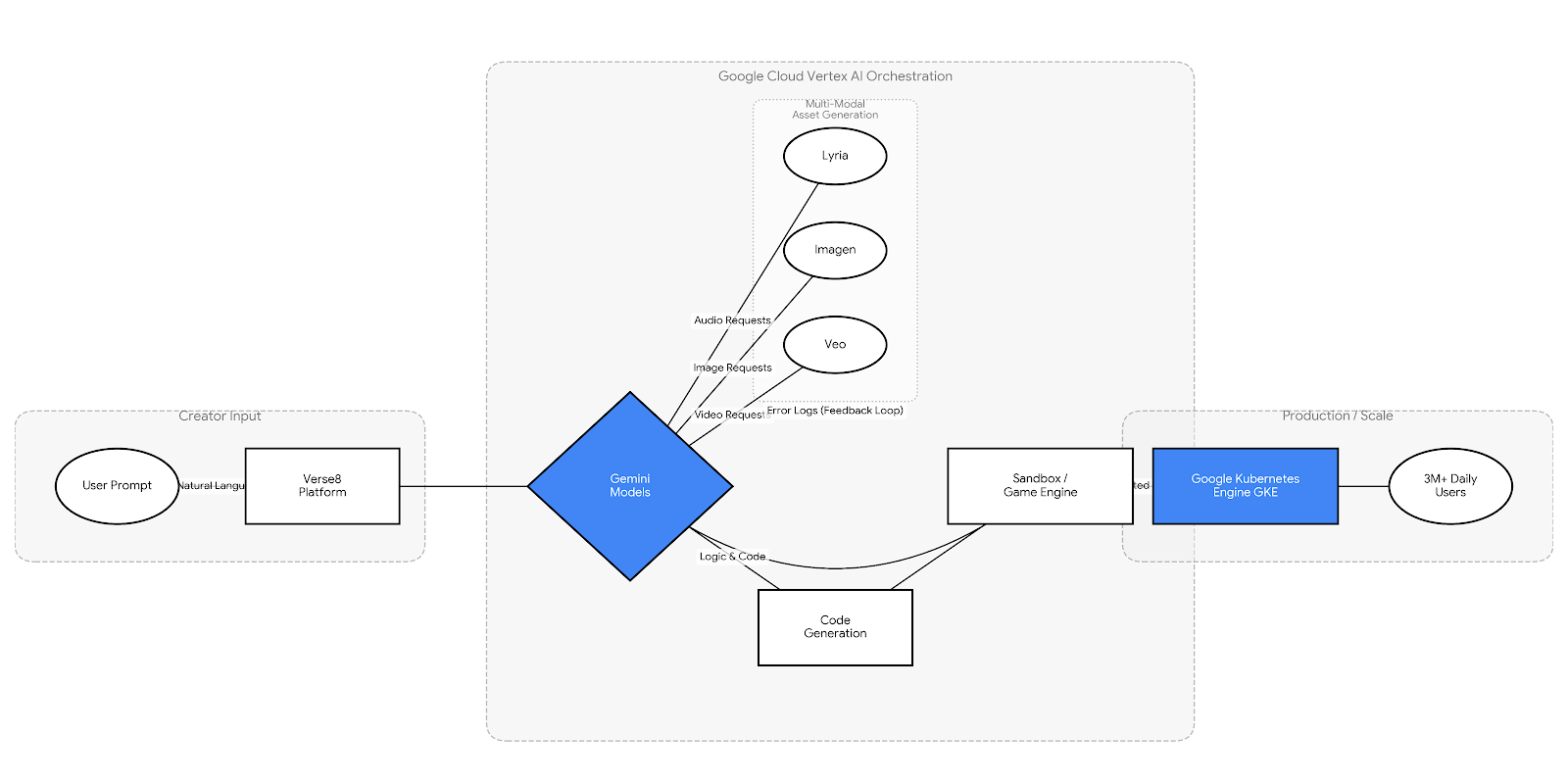
To solve the fragmentation issue, Verse8 consolidated its entire AI and infrastructure stack onto Google Cloud, using Vertex AI to orchestrate multiple models in concert.
Under this new workflow, a creator simply types a prompt — such as, "Create a mystery visual novel set in a cyberpunk city." Behind the scenes, Gemini models act as the logic core, instantly generating the storyline, dialogue, and underlying game code on a virtual machine. Simultaneously, the system calls upon specialized models to build the assets:
Google Cloud is the one-stop infrastructure for our products. It is much easier than using separate generative AI products because the models understand the core context and integrate everything — from code to video — seamlessly.
JC Kim
CEO, Verse8
Crucially, the platform solves the hallucination problem often associated with AI coding. If the generated code contains a bug, the system runs the game in a sandbox, captures the error logs, and feeds them back into the LLM. The model reads the error, self-corrects the code, and redeploys the game automatically. To ensure this resource-intensive orchestration scales for three million daily users, Verse8 relies on Google Kubernetes Engine (GKE) to manage the massive compute load dynamically.
From weeks to days: Accelerating production to unlock creativity

We see a new wave of creative and unconventional game experiences that traditional developers might not have conceived at all. We are empowering non-developers to build things we have never seen before.
JC Kim
CEO, Verse8
By moving to this unified architecture, Verse8 has dramatically shifted the pace and possibilities of game development. Previously, creating a game with integrated assets took weeks of manual effort. Today, Verse8 creators can build complex, multi-modal games in under two days, with many finished in just hours. This rapid idea-to-deployment cycle has driven a creator retention rate of more than 40%.
The most significant outcome, however, is who is creating. The platform has empowered a new demographic of 2,000+ non-technical users. For instance, teachers are now using Verse8 to build historical adventure games and interactive math quizzes to engage their students in the classroom.
By removing the technical barriers, Verse8 has enabled the creation of more than 5,000 AI-generated games, ensuring that the only limit to game development is the user's imagination.
Looking ahead, the team is already experimenting with the next generation of Gemini models to further blur the line between creator and player.
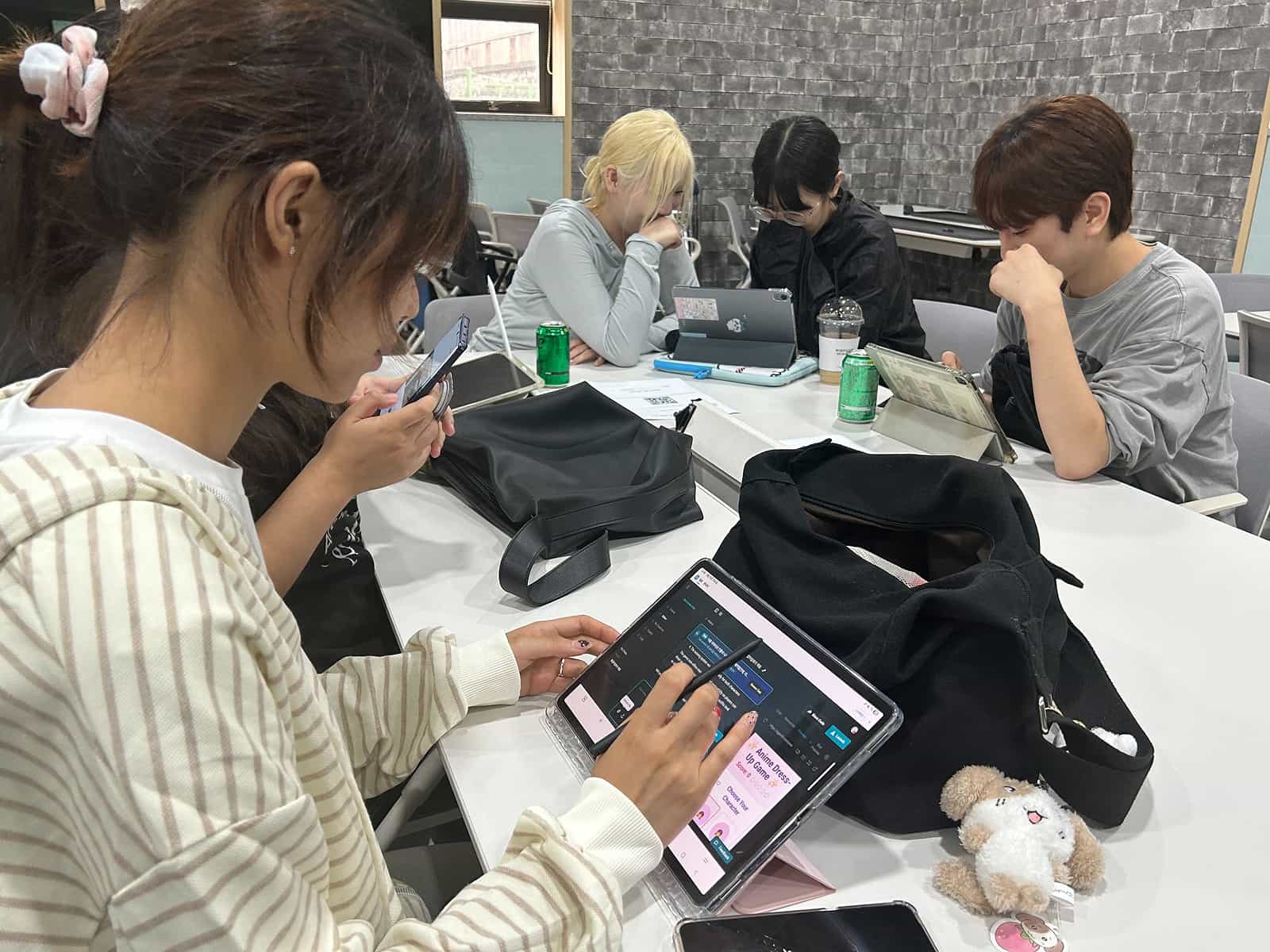
Incubated by Planetarium Labs, Verse8 is an AI-powered gaming platform that allows anyone to create, play, and monetize interactive games using natural language prompts.
Industries: Gaming, Startup
Location: Singapore, United States
Products: Vertex AI, Gemini, Google Kubernetes Engine, Veo, Imagen, Lyria