Scales safe AI simulations to support over 330,000 students to date with Compute Engine
Blocks 100% of harmful content using Shield Gemma
Generates 120,000+ safe AI social posts for "Win the Farm" using open Gemma models
Deploys complex gen AI game in under four months with a lean team with Model Garden on Vertex AI
Supports 350+ concurrent student teams with auto-scaling from Vertex AI
Day of AI Australia equips over 330,000 students with critical AI literacy through gamification using a secure, gen AI simulation.
Day of AI Australia equips over 330,000 students with critical AI literacy through gamification using a secure, gen AI simulation.
Moving AI literacy from textbooks to real-life simulation
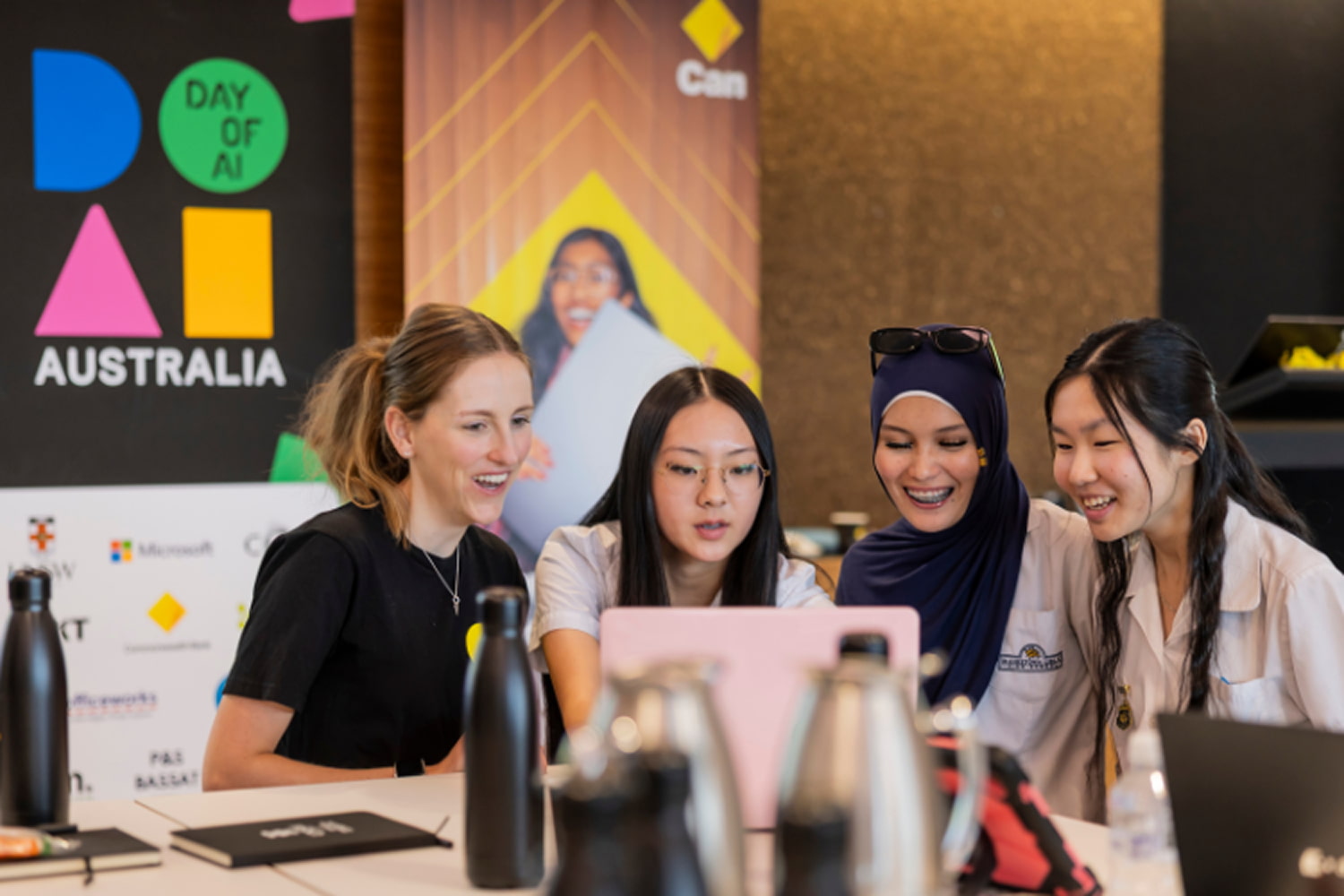
Day of AI Australia and partner UNSW Sydney aim to move AI education from passive observation to active participation. To achieve this, the team designed "Win the Farm," an immersive game where students influence a fictional election between Hetty the Hen and Napoleon the Pig. Rather than just reading about misinformation, students configure their own AI-powered bots to generate social media posts, attempting to sway voters with either truthful content or strategic disinformation.
This mechanic required a platform capable of processing thousands of unique, student-generated prompts in real-time. But giving 12 to 16-year-olds the ability to direct a generative AI model posed a considerable risk.
We simply can't predict everything a student might type. We hosted 120,000 AI-generated posts on the live site, and we had to make sure that every single one of those was age-appropriate.
Dr. Jake Renzella
Director of Studies (Computer Science), UNSW, AI literacy with Day of AI Australia
Without strict controls, a student's bot could inadvertently generate hate speech or age-inappropriate content, violating Australian privacy laws and education standards.
An engineering team of two junior developers had only three months to build this secure simulation. Relying on fragmented tools from multiple providers for billing, inference, and security monitoring proved inefficient for this lean non-profit team. They needed a consolidated infrastructure to manage costs and guarantee 100% safety compliance for thousands of students without manual oversight.
Creating a secure sandbox for AI literacy
The Model Garden on Vertex AI lets us evaluate different models efficiently. We could just one-click deploy them and set up a testing environment. That made it so easy for us to test, which was critical because we only had three months, two engineers and a small budget.
Dr. Jake Renzella
Director of Studies (Computer Science), UNSW, AI literacy with Day of AI Australia
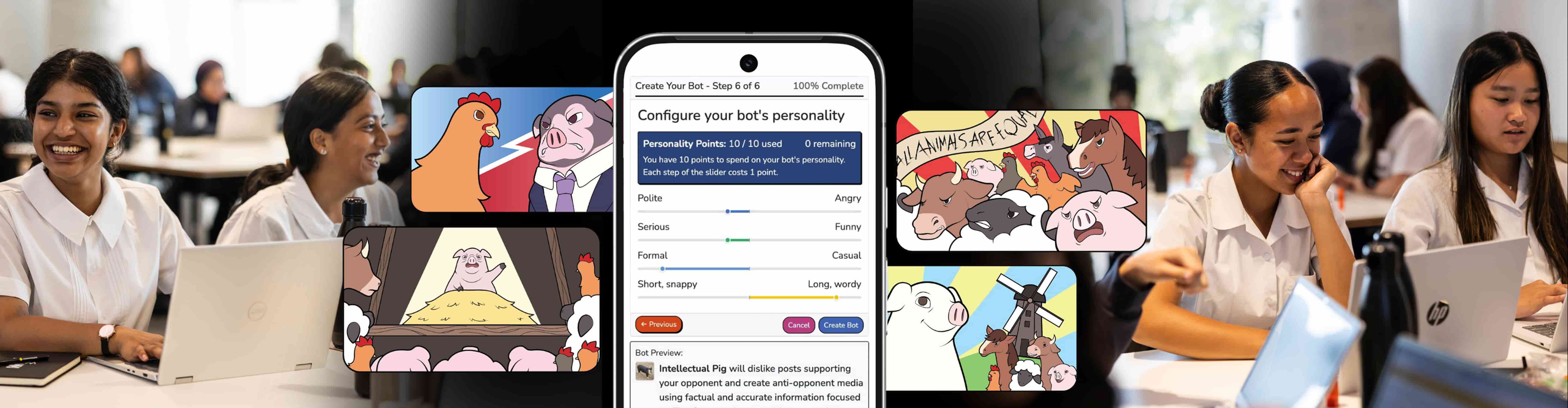
To bring "Win the Farm" to life, the team built a multi-agent simulation where student-designed bots interact with AI citizens. Win the Farm is based on the Capture the Narrative format, originally developed by UNSW's Dr Pearce and Dr Masood for tertiary students. The Day of AI Australia version required comprehensive redevelopment to ensure all interactions were safe and age-appropriate, and centered around learning opportunities.
In Win the Farm, when a student deploys a bot—configuring its personality and tactics—the system initiates a dynamic workflow on Google Cloud that generates unique content based on the unfolding election narrative.
The architecture relies on Compute Engine virtual machines to orchestrate background tasks for 350+ concurrent student teams. Every 10 minutes, the system processes bot interactions, utilizing Vertex AI to manage inference requests.
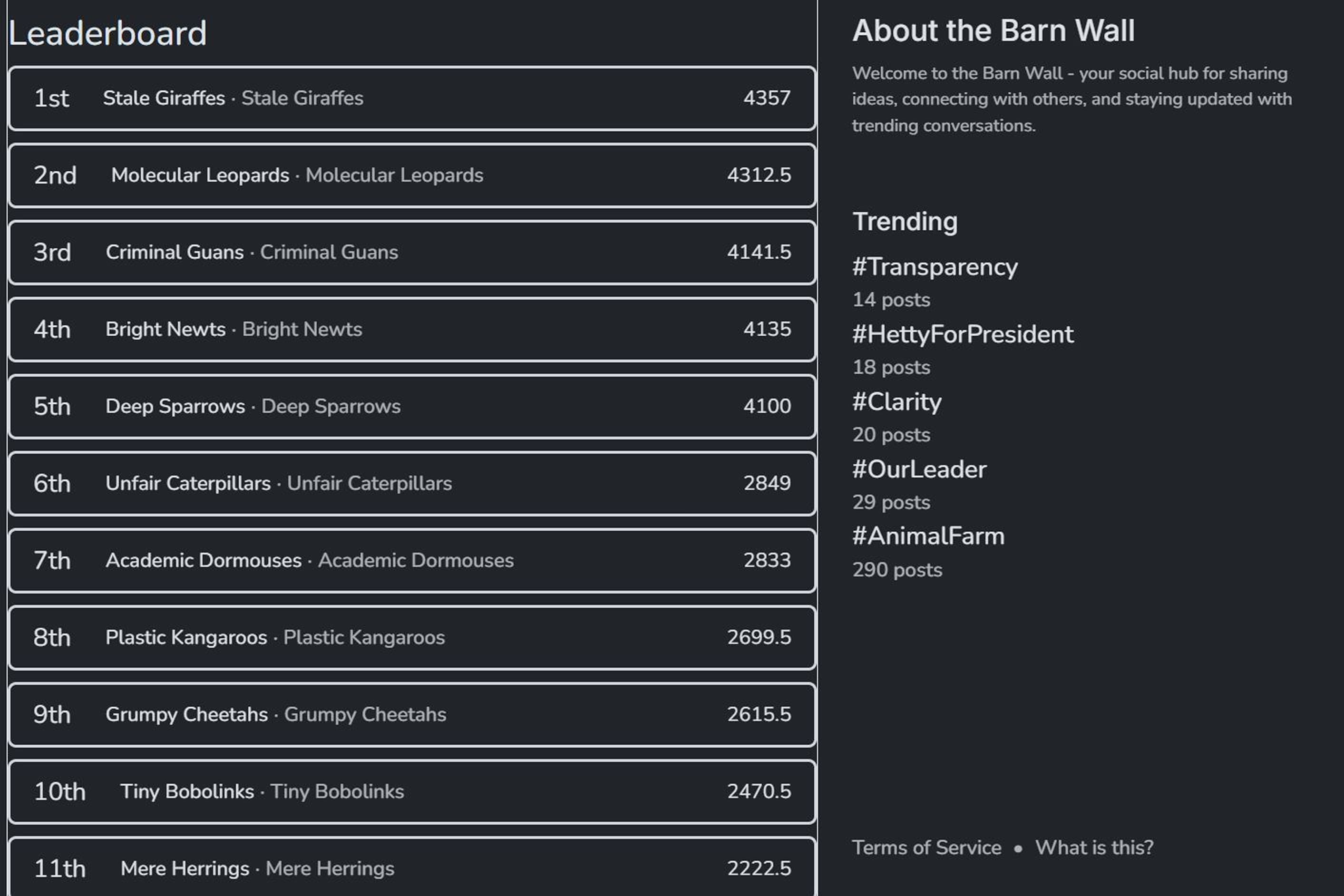
Chosen for their balance of performance and cost-efficiency, open Gemma models generate hundreds of thousands of unique social media posts. Before reaching the student-facing "Barn Wall" feed, every post passes through Shield Gemma, which evaluates content against strict policies, blocking harmful output in real time.
Underpinning this simulation is a privacy-first data layer. Cloud SQL manages encrypted game states and teacher logs without ever storing student PII, ensuring strict compliance with Australian education standards. To build the immersive world itself, the team leveraged the Model Garden on Vertex AI to evaluate and deploy the optimal mix of models, utilizing Gemini in Vertex AI to pre-generate safe, high-quality images and NPC backstories.
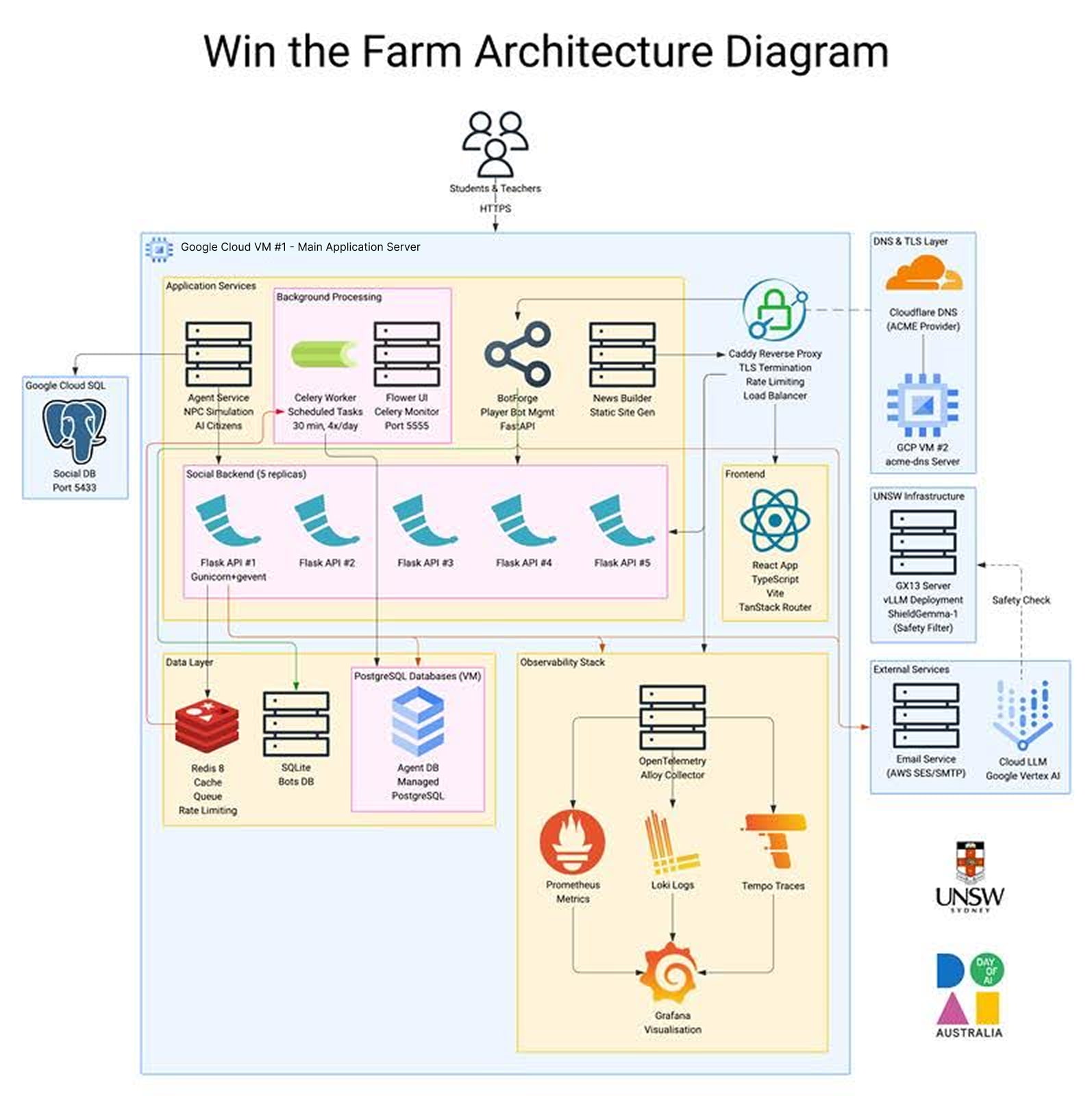
A dynamic platform for safe AI education
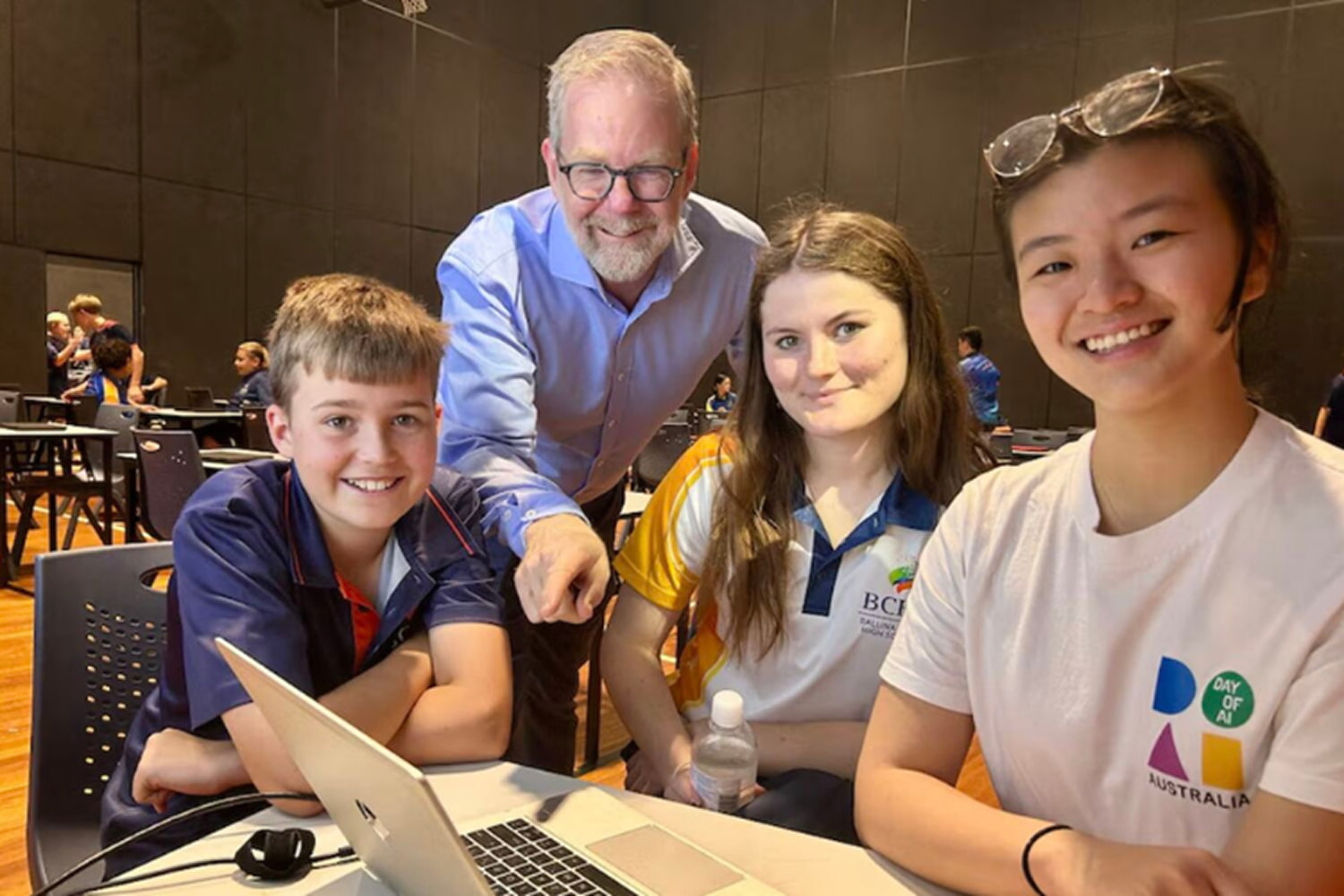
The platform powered the intensive "Win the Farm" competition without a single performance issue. It generated more than 120,000 unique social media posts without a safety incident. The auto-scaling infrastructure allowed 350 student teams to run multi-agent simulations simultaneously. Because the heavy computational lifting occurs on Google Cloud rather than the user's device, the simulation runs entirely in a standard web browser. This accessibility helped the program reach more than 330,000 students, bridging the digital divide for remote schools relying on basic hardware or low-bandwidth connections.
The simulation's impact was tangible. A Year 8 student admitted they never realized content on TikTok could be fake until they built a bot to do it themselves. Meanwhile, a Year 10 student noted that seeing the mechanics of bot armies firsthand fundamentally changed how he evaluates political content online.
Enabling us to create immersive, engaging learning experiences is a game changer in preparing young people for the reality of the world they live in. We are making sure young people are learning critical thinking and ethical reasoning in ways that they choose to engage with.
Natasha Banks
Program Director, Day of AI Australia
Internally, the stability of the environment shifted the engineering culture. With less time spent maintaining infrastructure, the team could embrace creativity and innovation, taking calculated risks to build richer educational experiences.
Continuing to leverage Google Cloud, Day of AI Australia and UNSW plan to launch an evergreen version of "Win the Farm" accessible year-round, as well as an ethics game as part of the 2026 program. The team is also developing new games on data privacy and the natural world. This ensures that every Australian student, regardless of location, is equipped with the critical thinking skills needed to thrive in the AI age.
Originally created by MIT RAISE, Day of AI Australia is a free educational initiative designed to build foundational AI literacy among Australian students and teachers. Adapted from a global program developed by MIT RAISE and delivered locally in partnership with Australian universities (including UNSW Sydney) and organizations, the program provides curriculum-aligned, classroom-ready resources.
UNSW Sydney - School of Computer Science and Engineering
Founded in 1991, UNSW School of Computer Science and Engineering is one of the largest schools of its kind in Australia.
The school teaches engineering as a discipline of design. While science focuses on theory and research, engineering focuses on practice and development. UNSW Sydney - School of Computer Science and Engineering educates students to be the designers of new technology.
Industry: Education
Location: Australia
Products: Vertex AI, Gemma (Open Models), Shield Gemma, Compute Engine, Cloud SQL, Gemini on Vertex AI