
Around half of the workforce uses the AI platform every month
92% of users come back month after month
More than €2M in estimated annual productivity value
Research that once took hours now runs in a 10-minute session
84.6% of all model outputs generated on Google Cloud
FUNKE Mediengruppe built its own AI platform on Google Cloud, turning scattered AI use into a governed, company-wide capability.
FUNKE Mediengruppe built its own AI platform on Google Cloud, turning scattered AI use into a governed, company-wide capability.
A surplus of tools, not a shortage
Our approach was always the same: build as little software as possible, but build the part with the longest shelf life. Build where standards already exist, where you know the components are less likely to change. That part is the platform.
Dr. Paul Elvers
Chief AI Officer, FUNKE Mediengruppe
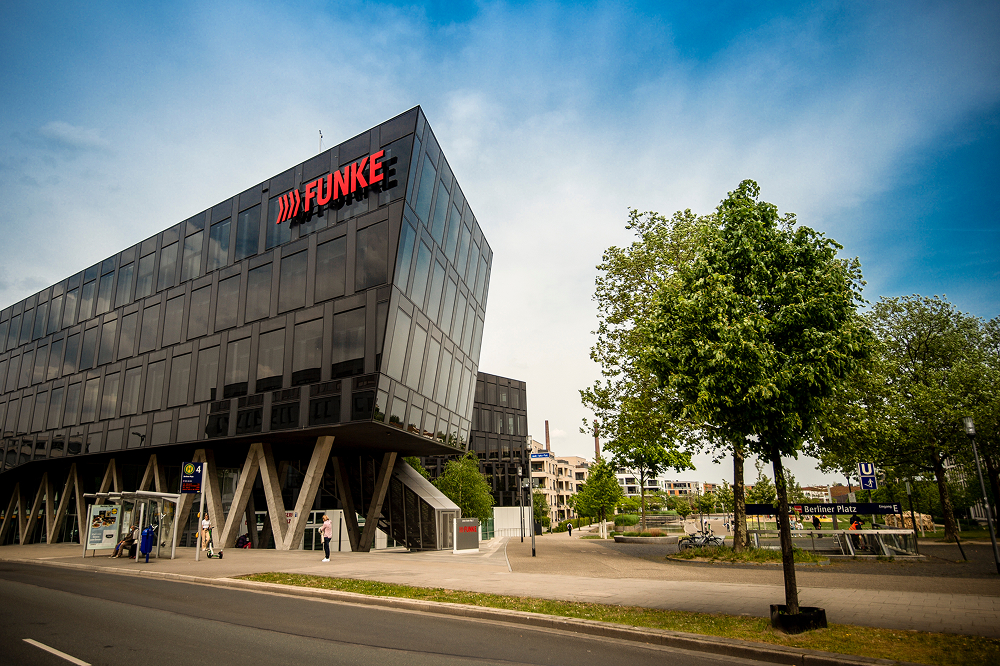
FUNKE Mediengruppe, one of Germany's largest media groups, spans regional daily newspapers, national brands ranging from magazines, such as Gala and Brigitte, to the online cooking community Chefkoch, and a digital division. Its regional media division alone employs around 3,000 people, and its various divisions operate with considerable editorial autonomy.
As generative AI advanced, FUNKE's leadership recognized early on that the technology would not only accelerate the transformation of the media industry, but also redefine it. And that standing still posed a greater risk.
The problem was never a shortage of AI tools. Rather, it was a surplus of them, used without coordination. Journalists and business teams were using consumer chatbots on their own initiative, a practice that posed compliance risks and was a waste of resources, as every team was solving the same research problem separately without sharing or governance. Others interpreted the absence of guardrails as a reason to wait, uncertain of what was permitted. They did not adopt the technology at all.
FUNKE's response was structural. Instead of running a pilot in one department, the company created a permanent, central AI unit and appointed Dr. Paul Elvers as Chief AI Officer. He reports to a dedicated AI Board and the Executive Board.
The premise of Paul's strategy was that isolated tools would never solve the underlying problem, and that building too close to any single use case would only create technical debt in a field where standards had not yet been established. What FUNKE needed was a foundation, and Google Cloud offered the four things that mattered most: European regions for data processing, the security and GDPR controls FUNKE already applied across its cloud estate, managed operations for running agents, and open access to a wide choice of models.
One platform, three doors
FUNKE AI is a single product with three entry points, all of which run on Google Cloud.
Employees encounter it as a chat workbench built on OpenWebUI where they can have private conversations, switch between models, and create their own custom assistants. The FUNKE AI API, a LiteLLM gateway, sits behind it. Every request passes through the API, which routes calls to models and connects tools and data sources. The third component is the agent layer, which is built on the Agent Development Kit and deployed to Gemini that supplies the runtime, session memory, and logging.
The metric that matters isn't what I pay per token. It's what I pay for a completed task. Many of the jobs we hand to AI have simply become too easy for the largest models.
Dr. Paul Elvers
Chief AI Officer, FUNKE Mediengruppe
Two of these components are not Google products. OpenWebUI and LiteLLM are open-source software that runs on Google Cloud infrastructure as Cloud Run workloads. The tool layer is a central registry on the Model Context Protocol with more than 20 MCP servers packaged in Artifact Registry, including a custom integration with dpa (Germany's national news agency) available to every agent as a standard tool.
Extensibility was the single most important requirement, and it drove the choice of the Agent Development Kit as the framework. Where the question was operations rather than flexibility, FUNKE went the other way: running the agent runtime itself on Kubernetes was considered and set aside, because Gemini already provides the scaling, session memory, and logging the team would otherwise have had to operate. That mix is the point—Google-managed services where operations are better handed over, open components where FUNKE wants to shape the behavior itself.
This architecture allows Paul and his team to "right-size" intelligence spending by running each task on the smallest model capable of completing it rather than the most capable model available. Many jobs given to AI have become too simple for the largest frontier models: questions about internal policies, lookups in business documents, and queries against research archives, for example.
These tasks make up the bulk of the platform's traffic and run on fast, low-latency Gemini Flash models. Since routing is managed by the central gateway, each agent can be equipped with the most efficient engine for its purpose and updated when a more cost-effective or advanced option becomes available.
At the opposite end sits the Deep Research Agent: a five-stage pipeline that runs up to 25 searches across FUNKE's own archives and licensed sources. It uses stronger reasoning models for the analytical stages and Flash for the high-volume ones. FUNKE estimates that a piece of research that would have once occupied an editor for hours now runs as a 9.7-minute session on average.

You cannot mandate adoption
Nothing about FUNKE AI is compulsory, which makes the usage figures the clearest verdict on it. Around half of the company actively uses the platform each month, with users coming from every part of the business, including not only newsrooms but also accounting, human resources, legal, and controlling. More than 90% of them come back the following month. The target for the end of 2025 was 800 monthly active users, but the platform reached nearly double that number.
The architecture is evident in the traffic. From June to August 2026, 84.6% of all model outputs on the platform were generated on Google Cloud, totaling over 40 billion tokens, with the remainder running on a second cloud provider. Gemini models account for nearly 40% of the total, almost entirely the fast Flash family. The numbers show the benefits of right-sizing. Because FUNKE built on open standards, the composition remains its own to adjust—and today the large majority of everything runs on Google Cloud.
FUNKE has since modeled the productivity value the platform generates, arriving at a figure above €2 million annually—and the largest rollout is still ahead. Paul is deliberate about what that number is: not revenue, but headroom. How the organization uses the extra time is a management decision, whether that means increasing output or allocating more time to investigative work.
Rather than outsourcing the platform, the unit built it in-house, reasoning that a project like this is as much organizational as it is technical and that change is easier to manage from within. FUNKE runs learning programs on its own platform and maintains a network of AI ambassadors across the business, alongside dedicated AI functions in each division.
When asked what he would do differently with the knowledge he has today, Paul emphasizes speed over direction. Most decisions were correct, but some were made too slowly. This is a common pattern in complex technology projects. The direction was never in doubt.
Better journalism with AI does not mean journalism without people. AI makes things easier and some processes more efficient, but a human has to sit at the center and set the direction. The stance stays with the human.
Dr. Paul Elvers
Chief AI Officer, FUNKE Mediengruppe
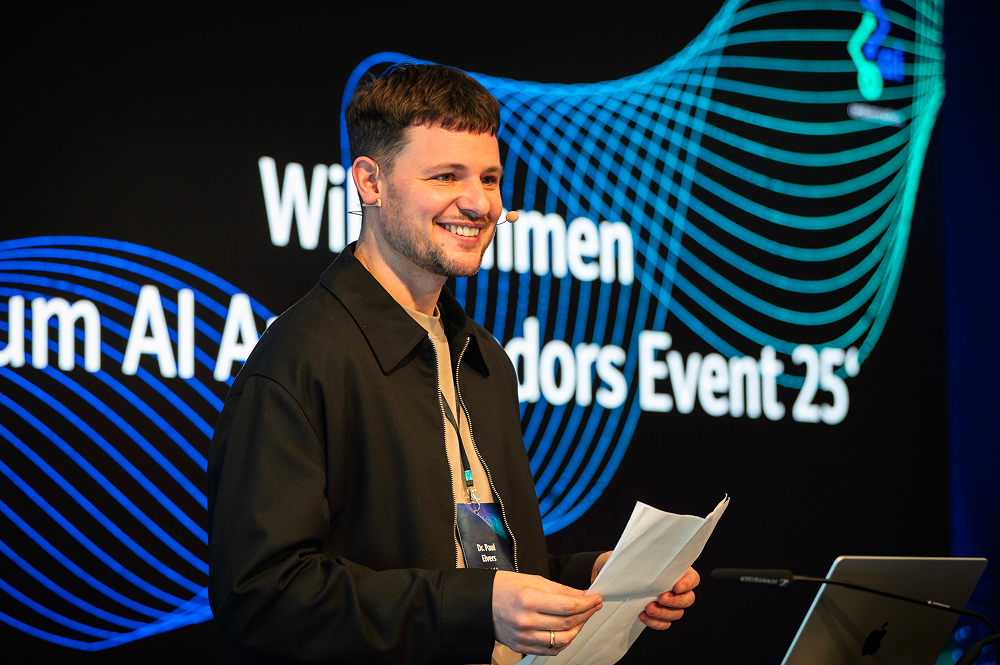
About 1,700 journalists and 2,800 media professionals produce FUNKE Mediengruppe's regional, national, and digital brands.
Industry: Media and Entertainment
Location: Germany
Products: Gemini platform, Agent Development Kit, Cloud Run, Artifact Registry, BigQuery, Secret Manager, Cloud Logging, Cloud Monitoring