
Supports on-demand calculations with up-to-date, harmonized data
Allows for expansion to areas throughout Europe where public data is lacking
Fosters innovation with access to valuable, trustworthy data and insights
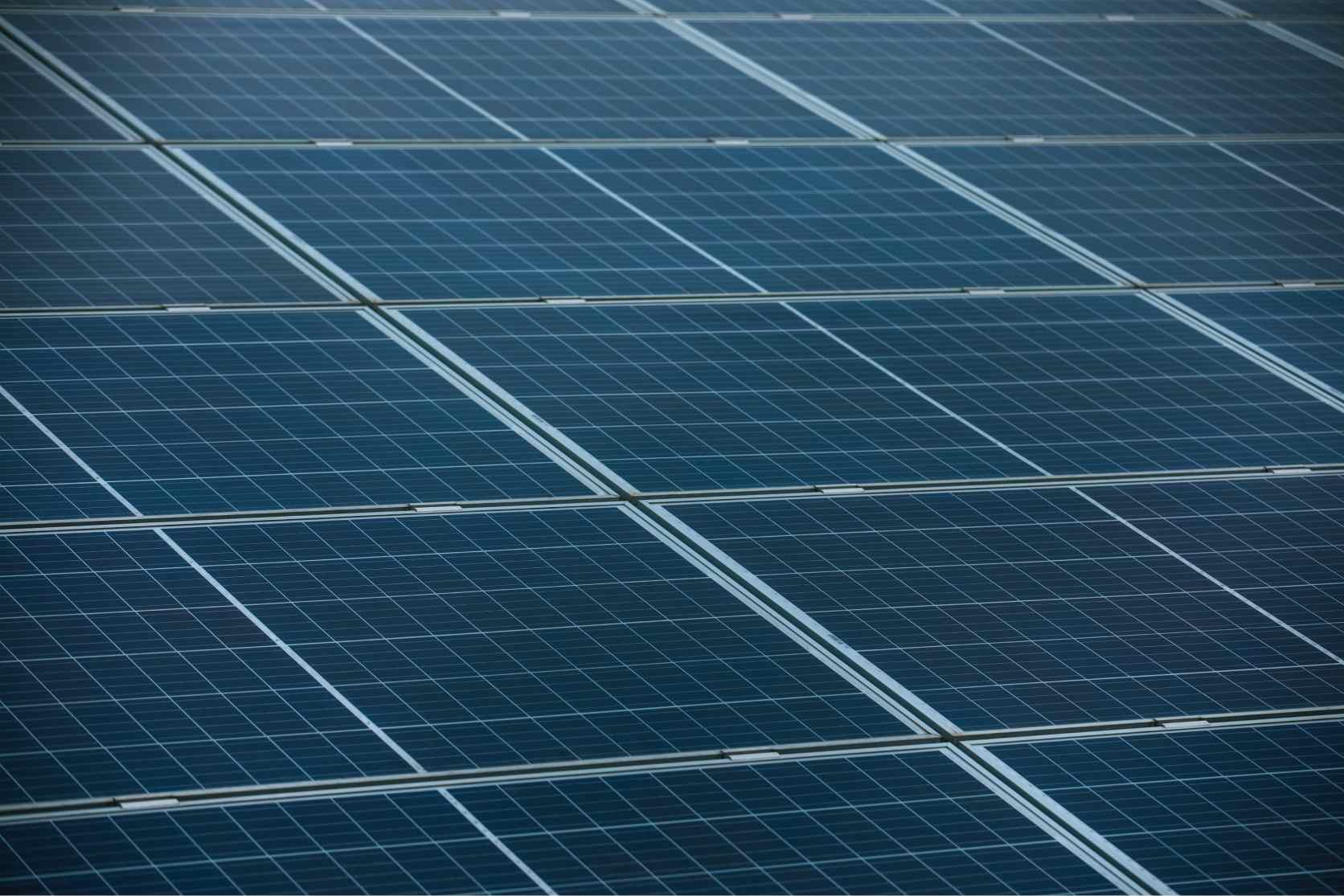
enwarp uses the Solar API in an innovative solution that reveals the solar potential of rooftops across Europe, supporting the European Union's goal of achieving one terawatt of solar energy.
enwarp uses the Solar API in an innovative solution that reveals the solar potential of rooftops across Europe, supporting the European Union's goal of achieving one terawatt of solar energy.
Mapping out solar energy potential
The Solar API provides a harmonized dataset that we can enrich with cadastral information to make on-demand calculations specific to each individual.
Malte Fichtner
CTO, enwarp
As part of its plan to bid farewell to fossil fuels, the European Union aims to increase its solar energy capacity to one terawatt before 2030. This is nearly four times current levels, with 50% of the increase expected to come from rooftops. Aligned with this mission and helping European citizens contribute toward this goal is enwarp. The company has been committed to helping municipalities and their citizens realize the full potential of their roofs to harness renewable energy since 2009. “We aim to motivate and empower individual homeowners to participate in the sustainable development of their cities and communities,” says Malte Fichtner, CTO at enwarp.
To do that, enwarp works with governments, organizations, large corporations, and medium-sized solar companies to integrate their API that maps out the solar energy potential of buildings’ roofs. Their various customers integrate enwarp’s API into their websites to facilitate the end-user’s journey with their solar calculator. With their solution, homeowners can search their address to check if their home’s roof is suitable for the installation of solar panels, and then go through an intuitive step-by-step journey that helps determine whether the transition is feasible and worthwhile. This includes, for example, calculating how many solar panels would be needed to produce the amount of energy consumed by the household and how much they can save over time. The search returns a comprehensive PDF file outlining all information needed to confidently make a decision before taking the next step.
Taking advantage of the Solar API
To accurately map the solar potential of buildings, enwarp takes into account a multitude of factors, such as where the roof is located and which direction it faces, whether there are tall trees or neighboring buildings creating shadows over its surface, and how the sun travels over that location throughout the year, to name a few. To make these calculations for as many buildings as possible, the company decided to leverage the vast amount of solar data available through the Solar API from Google Maps Platform.
enwarp uses its software to combine the raw data with cadastral information, which includes details of a building’s ownership, tenure, and precise location. This way, the company can calculate results that are tailored to individual homeowners. This distinction is very important in Europe, where the roof of one building as seen from aerial images often shelters multiple households.
The Solar API offers high-quality data to anyone who wants to use it for educational purposes, which opens new possibilities for scaling our business. We use surface model data from the Solar API to bring information to a lot more people in places where our solution wouldn’t be available otherwise.
Malte Fichtner
CTO, enwarp
“In Europe, it is very common for a building to host multiple homeowners, so in addition to calculating the potential of a roof, we need to reanalyze which parts of a roof belong to whom,” Fichtner explains. “Solar API provides a harmonized dataset that we can enrich with cadastral information to make on-demand calculations specific to each individual.”
Accessing the data needed to map Europe’s solar potential
Google Cloud and enwarp are very aligned when it comes to sustainability goals. We’re both working to empower as many people as possible with actionable data and insights to reduce global emissions, and the Solar API has had a significant impact in how we make this possible.
Bas van der Peet
Business Development International, enwarp
Initially, enwarp developed its solar atlas using two combined datasets provided by local governments – one made from a laser scan using an airplane and another from high-resolution aerial images. By overlapping the two datasets, enwarp could calculate the height and location of each roof on a map. But there were significant limitations to this way of working.
One big challenge was that the overlapping datasets should ideally have been collected at the same time, but this wasn’t something enwarp could control. “We had access to aerial images updated every two years, matched with laser images updated every five years, and the result is a mismatch. We could see new roofs on the image that the laser scan didn’t account for. This was a big issue for our software, but it was solved by using the Solar API raw data instead, which is updated on a regular basis,” Fichtner explains.
Another challenge was the fact that this data wasn’t available everywhere enwarp wanted to operate. In Germany, for example, where enwarp began doing this work, the company had access to data covering only 50% of the country’s municipalities, cities, and regions. “Only half of Germany is covered by governmental data that is publicly available,” Fichtner explains. “We can now close that gap with the Solar API and make on-demand calculations nationwide.”
Empowering more people in more places to reduce global emissions
Since they started collaborating with Google on Project Sunroof (an initiative to help people calculate their homes’ potential solar savings, eventually evolving into the Solar API) back in 2016, enwarp has been working to significantly expand its solution across all of Europe. “The Solar API offers high-quality data not readily available from other sources, which opens new possibilities for scaling our business,” explains Fichtner. “We use surface model data from the Solar API to bring information to a lot more people in places where our solution wouldn’t be available otherwise.”
In the meantime, enwarp also adopted more Google Cloud services to run its software and support business growth with a scalable infrastructure. The company migrated all the building information it had precalculated to Google Cloud in 2017, and it is in the process of migrating more and more microservices.
Next, enwarp is working to become a Google Cloud sustainability partner. “Google and enwarp are very aligned when it comes to sustainability goals,” says Bas van der Peet, responsible for International Business Development at enwarp. “We’re both working to empower as many people as possible with actionable data and insights to reduce global emissions, and the Solar API has had a significant impact in how we make this possible.”
The enwarp API is a product designed, developed, and distributed by enwarp.io GmbH, enwarp is part of tetraeder.group GmbH. enwarp provides a solution that gives instant access to the energy savings possible for any building or home and the optimal number and placement of solar panels. Its mission is to reshape the renewable energy landscape by highlighting the benefits of adopting solar energy on a large scale or personal level.
Industry: Technology
Location: Germany
Products: Google Cloud, Google Maps Platform - Environment APIs, Solar API
Published 2024
Product availability, functionality and terms may differ for customers with billing addresses in the European Economic Area (EEA). Learn more