Built a single, unified view of all inventory data across stores, distribution centers, and vendor orders with BigQuery
Albertsons Cos. created an AI-powered Intelligent Quality Control tool using Gemini platform and Vision AI to help its distribution center associates maintain consistently high-quality produce
Improved and standardized recipes company-wide with AI to find and remove stale or bad data, then automated the ordering process
Supported and improved multiple supply chain functions using AI, leading to reduced transportation costs, plus sped up business user work with data access and insights
Cut vertical siloes and added flexibility into the supply chain—typically a rigid structure—while also meeting legal and regulatory revisions that require tracking and tracing of goods
Grocery retailer Albertsons Companies checked data unification off its list with BigQuery, then applied Gemini platform and Vision AI to automate product quality inspections. The result: piping-hot data insights to improve the supply chain, better business decision-making, and fresher produce for customers.
Grocery retailer Albertsons Companies checked data unification off its list with BigQuery, then applied Gemini platform and Vision AI to automate product quality inspections. The result: piping-hot data insights to improve the supply chain, better business decision-making, and fresher produce for customers.
Creating a fresh enterprise inventory view
for grocery shoppers
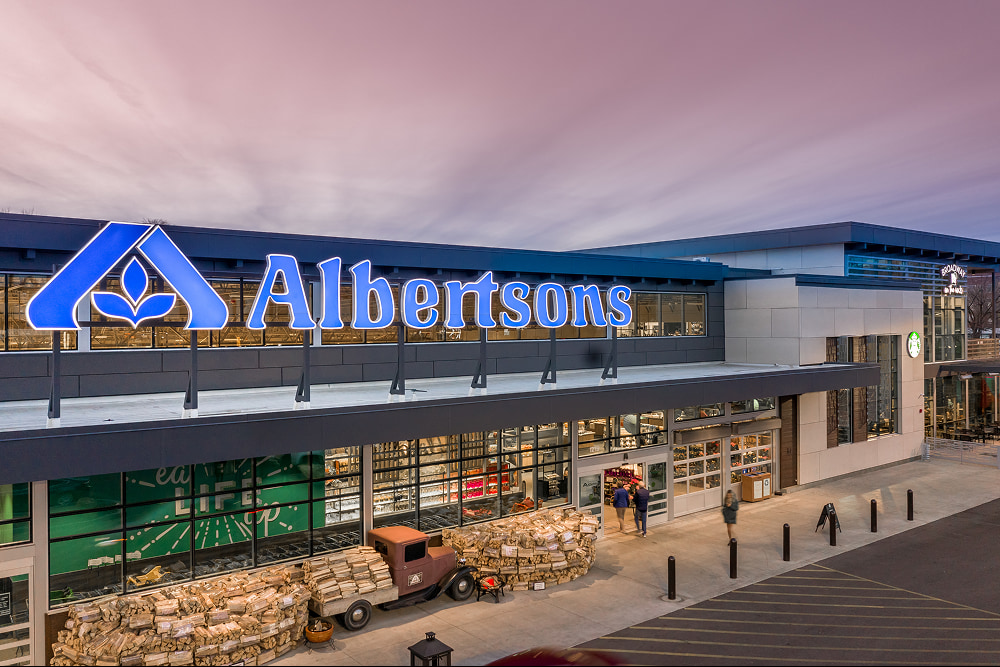
In the past few years, Albertsons Companies’ more than 2,200 stores have faced a huge explosion in the amount of data they capture, process, and put to work. Their move from on-prem to the cloud, and a new need for flexibility in a busy market, led the company to infuse AI into its daily operations. The result? Fresher strawberries, perfectly baked cakes, and the cherry on top: workers enabled with data when and where they need it.
“The way to the future is flexibility to be able to respond to evolving needs both in the market and in the availability of product,” says Dave Newton, vice president of supply chain and store operations technology for Albertsons Cos. “Supply chains had for years become more rigid, but rigidity is not necessarily the way forward.”
To achieve that needed flexibility in their multi-billion-dollar supply chain, and in the way the company operates, Albertsons chose modern, cloud-based applications that could easily interact with other solutions.
Albertsons Companies first completed the migration from on-prem to cloud a few years ago. The company adopted BigQuery to store, analyze, and unify data, which created an easy path to adopting Google Cloud’s AI and vision processing tools, including Gemini platform and Gemini.
One of Albertsons Companies’ first BigQuery projects was developing an enterprise inventory solution for a full view of company inventory. While Albertsons Companies had reliable data on inventory per store or on order from a particular vendor, they needed to put all those pieces together to better supply customers. There wasn’t one single place that showed everything: on-hand inventory, orders in progress, upcoming deliveries, product availability, and other details.
“It’s this massive data layer that comes from integrating all those solutions together from end to end,” says Newton, “that allows you to communicate and interact across the complete environment.”
BigQuery now serves as a unified source that other systems can rely on, and that ensures customers see up-to-date inventory when ordering online.
“You can ask how much of a product we have and carve it up any way you want, whether it’s total inventory or total pieces,” says Newton. “It’s really starting to bear fruit in allowing us to have the product available for the consumer when they want it, whether they’re in one of our stores or placing an order online.”
Albertsons Companies brought massive amounts of data into BigQuery and can now make it available to other solutions in near-real time. Having that type of data infrastructure, with huge scale and processing capability, opened the door to incorporating AI, machine learning, and data science solutions for the company.
Rigidity is easier. It takes less effort. Flexibility is harder, and you need to know more possible options. What can help fill that gap is AI.
Dave Newton
Vice President of Supply Chain and Store Operations Technology, Albertsons Companies

Freshly processed data leads to freshly baked cakes
Constantly updated, unified data served as a catalyst for Albertsons Companies to bring other ideas to life—all in service of their goal to provide the “first in fresh” to every consumer, whether that’s produce, meat, bakery goods, deli, or floral.
“Having a consolidated enterprise-wide inventory source is a great foundation for quite a few things,” says Newton.
In a world of expiration dates, the Albertsons Companies’ team decided to focus next on speed and accuracy.
“Data used to be old,” says Newton. “We ran a lot of systems that would run functions weekly, maybe daily, maybe some hourly. That’s not really good enough anymore. Now, we start with real time. Is 30 seconds long enough? Can we take as long as an hour to execute that transaction?”
Deliveries, for example, were previously reported per store each day. Now, with BigQuery’s unified data access, the operations team can know by the minute when a product will arrive at a store, so they can then plan other functions accordingly. The ability to process those large capacities of data as needed has changed how Albertsons Companies orders and maintains inventory levels in-store.
This new, faster way of working naturally led to the team exploring how Albertsons Companies could best apply AI. With freshness top of mind, Newton and team wanted to create a solution to automate the ordering of fresh products and maintain the right inventory levels in stores for those products. At the same time, they considered how to improve in-store production, such as to make fruit bowls, cakes, and more.
“One of the problems of automated ordering is that you’ve got to have those recipes right,” says Newton. “But how do you do that? Nobody comes in to work in the morning and wants to clean up recipe data.”
That’s where AI fit the bill perfectly. Newton and team set up Gemini platform to compare similar recipes across the entire company to standardize the recipes and improve the overall quality of that data. With that complete, Albertsons Companies could switch on automated ordering for all the different ingredients needed in a particular recipe.
“The goal is to ensure the consumer has a high-quality product in their kitchen as long as possible,” says Newton, “not to have shelf life burn off in the store or distribution center, or have product sitting in the cooler for even one day longer than it needs to be.”
We now talk about data in terms of, how close to real time does that need to be? That’s the start of the conversation.
Dave Newton
Vice President of Supply Chain and Store Operations Technology, Albertsons Companies
Cultivating AI as a tool for fresher produce
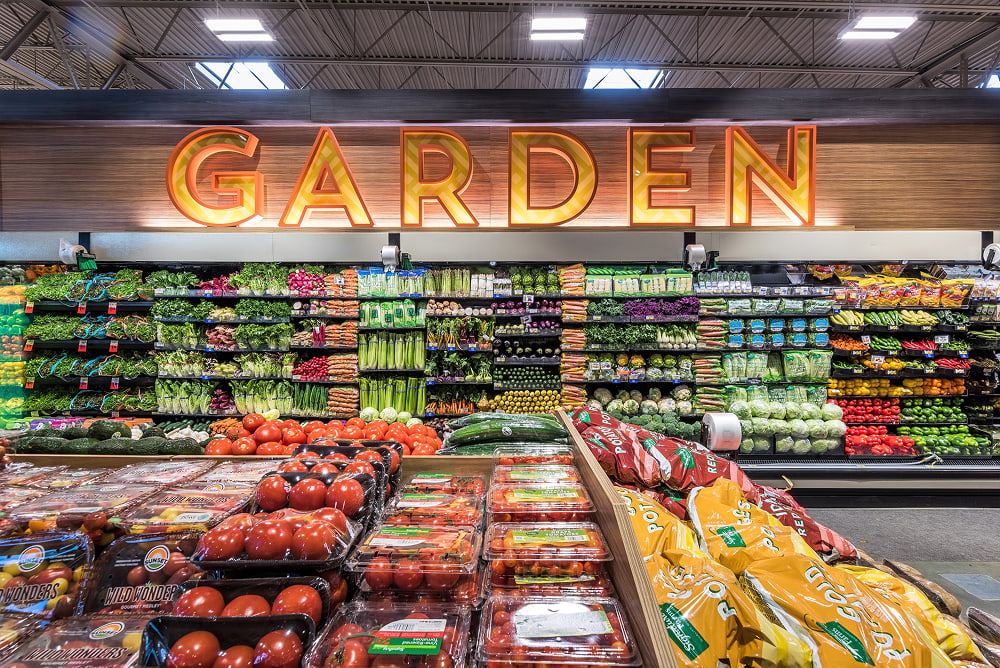
With speed and data quality baked in, the Albertsons Companies’ team turned their attention—and AI capabilities—to assessing produce quality at distribution centers. They adopted Gemini platform and Vision AI to create their Intelligent Quality Control solution to inspect and rate products as they come into distribution centers. Vision AI accesses advanced vision AI models, so it can capture and analyze product images, then compare them against Albertsons Cos.’s established quality standards (which are higher than even the FDA’s) to create a score that takes into account multiple dimensions of quality. A strawberry’s quality score, for example, is based on seven dimensions.
So, machine learning validates the photo, and AI rates it against the specifications set by the Albertsons Companies team. The distribution center associate then sees this concrete data as they’re deciding whether the product is suitable for market.
“One of the key goals is consistency across individuals who work on different days of the week and across the distribution centers,” says Newton. “We can raise the bar and work with our suppliers to continue to improve the quality of the fresh product we’re delivering to our consumers.”
Newton sees AI as the ideal solution to handle much of the tedious work of cleaning up stale or bad data. Albertsons Companies also uses AI to augment existing applications with smart, high-quality data, and to provide business users with personalized information and insights from data while cutting out mundane and tiresome tasks. This use of AI and automation has been working much more effectively to support business users than creating disparate dashboards, as Newton’s team did in the past.
“They all have dashboard fatigue,” Newton says. “People don’t want to come in the morning and look through 50 dashboards trying to find the thing they should do. AI is really good at going through a whole bunch of data and recommending the six things to look at today.”
Cost savings related to AI use aren’t always direct, Newton notes, but generally produce better outcomes by enabling teams to do things they couldn’t do before. For example, the AI-powered Intelligent Quality Control tool using Vision AI results in fresher products for consumers—boosting customer trust and brand promise, and indirectly leading to increased sales of the high-quality produce.
“We’re getting it from the field to the consumer as fast as possible and at the highest quality in the process,” Newton says. “AI is supporting that journey, and that applies to many cases of AI. It’s providing a better answer to the solutions that exist, therefore letting you optimize the company’s strategy how you want.”
AI also helps sift through massive amounts of data to help employees take action and make decisions that they couldn’t before, because they didn’t have the time to break down data to more granular levels. And Albertsons Companies’ use of Google AI has helped identify every point in the supply chain distribution node and optimized transportation routing—thus reducing the cost of delivering products.
And moving from rigidity to flexibility, broadly, has been a huge benefit to Albertsons Companies and its customers. In addition to better products delivered faster to consumers, their technology adoption has minimized the cost of moving products around.
“It’s the right product, at the right place, at the right time, at the highest possible quality,” says Newton. “We now think of the supply chain as a big component of source to table, from the grower’s field to the consumer’s home. That’s the entirety of the flow we connect together.”
What’s next for Albertsons Companies: continuing to streamline the supply chain, modernize the systems underneath, consolidate the data, and implement intelligent personalization to help humans take the right actions to optimize product flow.
“The industry has been trying to do things faster for decades,” says Newton. “The rapidly evolving AI on top of these solutions is a huge component of the next steps into the future. AI is the tool to improve your business and make it run better.”
There are these basic technological capabilities we can leverage, but what about thought partnership? That’s what Google provides. In this AI and agentic world, even if you have some great ideas, you have to be able to execute them.
Dave Newton
Vice President of Supply Chain and Store Operations Technology, Albertsons Companies
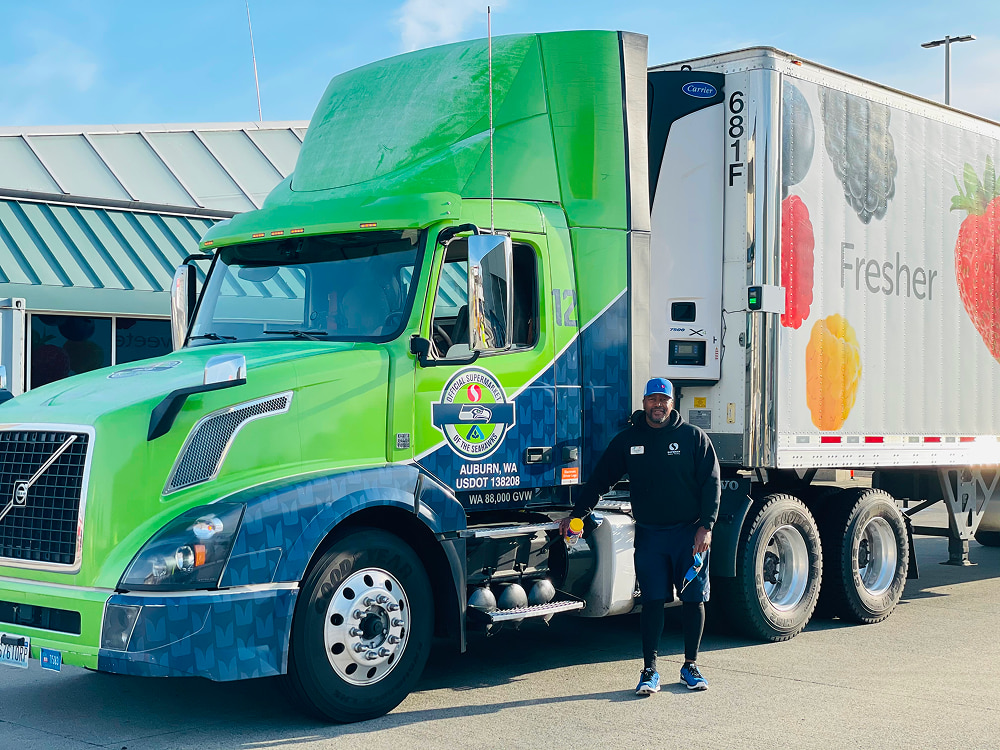
Albertsons Companies is a leading food and drug retailer in the United States. As of Feb. 28, 2026, the company operated 2,244 retail stores with 1,713 in-store pharmacies, 405 associated fuel centers, 22 dedicated distribution centers, and 19 manufacturing facilities. The company operates stores across 35 states and the District of Columbia under 22 well known banners, including Albertsons, Safeway, Vons, Jewel-Osco, Shaw's, ACME, Tom Thumb, Randalls, United Supermarkets, Pavilions, Star Market, Haggen, Carrs, Kings Food Markets, and Balducci's Food Lovers Market. The company is committed to helping people across the country live better lives by making a meaningful difference, neighborhood by neighborhood. In 2025, along with the Albertsons Companies Foundation, the company contributed $497 million in food and financial support, including $56 million through its Nourishing Neighbors Program, to ensure those living in its communities and those impacted by disasters have enough to eat.
Industry: Retail
Location: Boise, Idaho, United States
Products: BigQuery, Gemini platform, Vision AI, Gemini