Supply chain and logistics
Supply chain and logistics
Build an intelligent, resilient, and predictable business with Google Cloud’s advanced AI and data solutions. Orchestrate strategic outcomes, maintain continuous operations through disruptions, and empower your teams with real-time visibility and seamless collaboration across your ecosystem.


How agentic AI is rewriting the rules for logistics providers
Transform your entire value chain to drive business growth
Transform your entire value chain to drive business growth
Improve every touchpoint of the customer journey, delivering exceptional service with new speed and precision.

Customer feature: Learn how Tchibo built a forecasting model with Google AI and BigQuery, generating millions of predictions each day, to manage customer demand and needs in a timely and cost-effective way.
Logistics organizations and supply chain professionals can leverage Google AI to move beyond standard transactions, build deeper customer relationships and loyalty, and unlock significant data-driven growth.
Key Capabilities
- Accurate forecasting: Leverage internal and external data to unlock real-time, end-to-end visibility across operations, improving predictive forecasting and increasing efficiency and on-time deliveries.
- Improve customer satisfaction: Deploy gen AI and AI agents to automate critical customer-facing interactions, including high-quality customer service chatbots and up-to-the-minute delivery information.
- Personalized marketing: With gen AI and insights derived from your data, quickly create targeted marketing campaigns and customer communications ensuring every interaction is relevant and tailored to drive interest and satisfaction.
Achieve your customer experience goals with solutions like the Customer Experience Agent Studio and Analytics Data Platform.
Provide exceptional customer experiences
Improve every touchpoint of the customer journey, delivering exceptional service with new speed and precision.
Customer feature: Learn how Tchibo built a forecasting model with Google AI and BigQuery, generating millions of predictions each day, to manage customer demand and needs in a timely and cost-effective way.
Logistics organizations and supply chain professionals can leverage Google AI to move beyond standard transactions, build deeper customer relationships and loyalty, and unlock significant data-driven growth.
Key Capabilities
- Accurate forecasting: Leverage internal and external data to unlock real-time, end-to-end visibility across operations, improving predictive forecasting and increasing efficiency and on-time deliveries.
- Improve customer satisfaction: Deploy gen AI and AI agents to automate critical customer-facing interactions, including high-quality customer service chatbots and up-to-the-minute delivery information.
- Personalized marketing: With gen AI and insights derived from your data, quickly create targeted marketing campaigns and customer communications ensuring every interaction is relevant and tailored to drive interest and satisfaction.
Achieve your customer experience goals with solutions like the Customer Experience Agent Studio and Analytics Data Platform.
Ensure safety, resiliency, and reliability
Analyze, anticipate, and mitigate risks before they happen to protect the workforce and prevent supply chain disruptions.

Customer feature: Learn how Unilever is helping procurement make quicker and smarter buying decisions and designing and deploying agents at scale to transform how they serve 3.7 billion people every day.
Supply chain organizations and logistics providers can achieve a more connected, efficient, and safe supply chain by unifying data and insights across operations.
Key Capabilities
- Connected supply chain: Create efficient enterprise-wide visibility by unifying data from across your operations and supply chain.
- Predictive maintenance: Leverage insights from unified data to accelerate predictive asset maintenance. Reduce fleet and warehouse equipment downtime and costs, and prevent safety issues before they occur.
- Disruption management: Use Google AI and agents to analyze large datasets to predict and mitigate potential risks. Drive more accurate predictions, especially for external factors like weather, using real-time visibility tracking systems and automated workflows.
Achieve your safety and resiliency goals with data and AI solutions like Manufacturing Data Engine and WeatherNext.
Drive efficient and sustainable operations
Maximize resource utilization and minimize environmental impact while keeping employees safe.
Customer feature: Learn how FM Logistic uses Google AI to efficiently handle larger order volumes with the same team and equipment, without adding headcount or expanding their fleet.
Google AI can help logistics and supply chain teams optimize routes, improve fleet utilization, and recover from disruptions in real time. With the help of AI agents, employees across the organization work more efficiently and are able to focus on more strategic work.
Key Capabilities
- Route optimization: Create accurate and efficient delivery plans at Google scale and speed, lowering fuel and vehicle costs and enhancing driver experience and safety.
- Employee efficiency: Unlock enterprise expertise for employees with advanced reasoning and Google-quality search grounded in your enterprise data. AI agents manage repetitive tasks, freeing up employees to focus on more valuable work.
Optimize every part of your business with Route Optimization, Google Maps Platform Mobility Solutions, and Gemini Enterprise Agent Platform.
Empower collaboration across your supply chain
Enable real-time visibility and seamless ecosystem integrations to enhance communication and prevent disruptions.
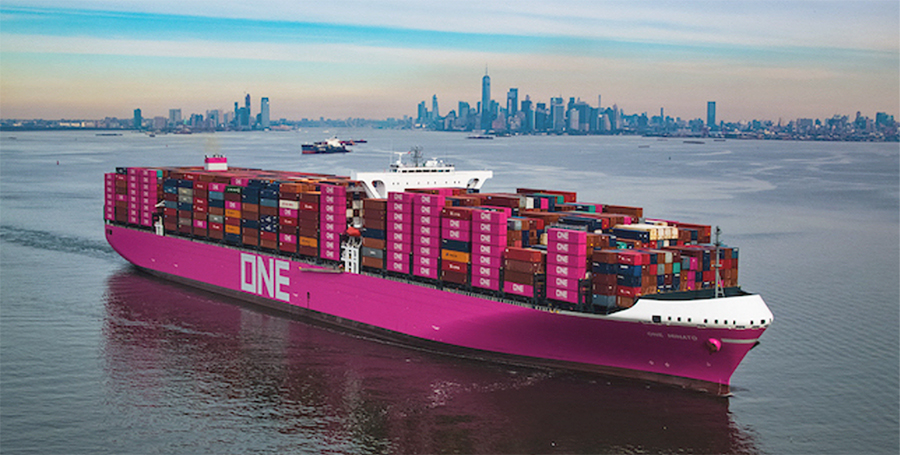
Customer feature: ONE leverages Google Cloud to improve its entire business process, deploying Google Workspace for employees to collaborate and onboard more efficiently.
AI-driven solutions and integrated tools connect disparate data across the ecosystem, giving all stakeholders shared, real-time visibility for enhanced collaboration, planning, and problem-solving across the enterprise and supply chain.
Key Capabilities
- Shared truth: Aggregate data from ERPs, suppliers, and partners into a single, comprehensive view for all stakeholders to have the same actionable truth regarding inventory and shipments.
- Extended team collaboration: Connect internal and external teams with Google Workspace built directly into their everyday workflows. Teams can quickly collaborate for immediate problem-solving and supply chain optimization across the organization, partners, and customers.
Collaborate effectively across the enterprise and supply chain with Gemini Enterprise Agent Platform, Google Workspace, and BigQuery and Analytics Hub.
Google Cloud AI is uniquely positioned to support supply chain and logistics organizations
Google Cloud AI is uniquely positioned to support supply chain and logistics organizations
Multimodal AI reasoning
Empower teams across your organization with Gemini to drive innovation and business outcomes. Like humans, Google AI processes multimodal data, including words, images, videos, and sounds. This technology enables employees to get a much richer understanding of information, leading to better decision-making, more efficient operations, accelerated delivery, and more personalized customer experiences.
Google-quality search with advanced grounding
Infuse Google-quality search, grounded in your enterprise data, into employee workflows to improve productivity and help your organization optimize operations, enhance quality, and reduce costs.
Employees can quickly locate the exact data they need, regardless of whether it's in a document, spreadsheet, or operational data, enabling faster problem-solving and better-informed decisions. Alternatively, consumers can find information and answers more quickly with AI-powered search experiences across apps and websites.
Learn more about Agent Search on Gemini Enterprise Agent Platform →
Robust agent capabilities
Capitalize on a unified platform to deploy AI agents and experiences quickly and securely. Build, deploy and scale your solutions with Google Cloud's flexible, end-to-end platform, Gemini Enterprise Agent Platform.
Google Cloud agent capabilities leverage AI to automate tasks, derive insights from diverse data, and optimize processes like predictive maintenance, quality control, and supply chain management for increased efficiency and innovation. This frees up employees to focus on more strategic work and ultimately boost productivity.
Learn more about Gemini Enterprise Agent Platform →
Learn more about Gemini Enterprise app →
Unified and secure AI platform
Google AI and security services provide advanced tools and practices to protect supply chain and logistics organizations. Our holistic offering equips our customers with automated threat detection and modern SecOps capabilities required to navigate the evolving cyber threat landscape and protect critical assets and operations.
Through identity management, network security, and threat detection and response, Google Cloud helps protect sensitive data, including customer data, transaction, and payment details, ensuring compliance with regulatory requirements.
Learn more about Cloud Security →
Specialized supply chain and logistics partner ecosystem
Engage with a robust partner ecosystem for expedited deployment. Leverage specialized supply chain and logistics partners to deploy and transform with your unique AI and business needs.
Learn more about Google Cloud partners for supply chain and logistics →

See how leading supply chain and logistics organizations innovate with Google Cloud AI
 University of Cambridge derisks supply chains with unprecedented data insightsThe Cambridge University's Institute for Manufacturing is improving supply chain transparency, sustainability, and resilience for businesses and governments alike with Google Cloud.Read now
 General Mills: transforming food using data, analytics, and AIGeneral Mills delivered a modernized tech foundation, enabling teams, strategic revenue management, and supply chain digitization while enhancing resiliency and scalability of its data and technology platforms.Read now

 J.B. Hunt executes speedy yet seamless cloud-to-cloud migrationIn just 35 business days J.B. Hunt Transport Services Inc. demonstrated the power of assessment, planning, and testing in its near-flawless migration of workloads to Google Cloud.Read now
 Tchibo: Optimizing demand forecasts with AI to match customer needsLeading German retailer Tchibo built a forecasting model with Google AI and BigQuery, generating millions of predictions each day, to manage customer demand in a timely and cost-effective way.Read now
 Smyths Toys: Driving Growth for one of Europe’s most successful retailers with SAP on Google CloudSmyths Toys migrates its SAP systems from on-premises to a scalable cloud infrastructure to continue growing and bringing a wide variety of toys to Ireland, the UK, Europe, and online shoppers.read now
Resources to help accelerate your AI and cloud journey
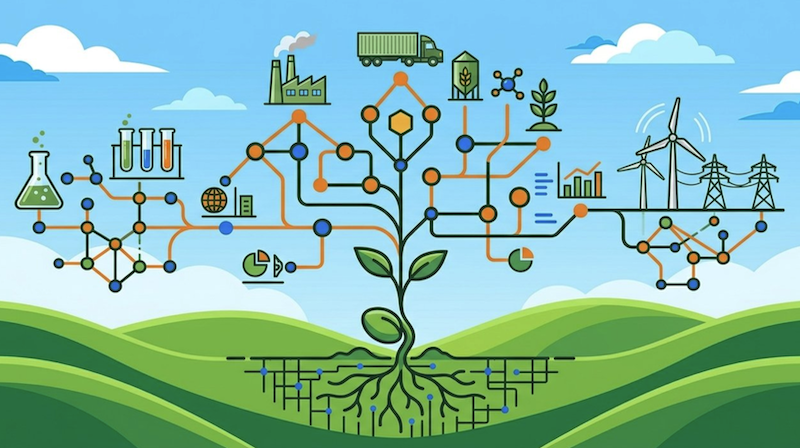 BASF manages thousands of supply chain decisions with AlphaEvolve’s agentic algorithmsLearn how planners at BASF Agricultural Solutions navigate daily changes in weather or regulations across 180 production sites, and turned to AlphaEvolve on Google Cloud to build a digital twin of their supply chain to better understand how local decisions ripple across their entire global network.Read now
 FM Logistic tackled the traveling salesman problem at warehouse scale with AlphaEvolveLearn how FM Logistic uses Google AI to efficiency handle larger order volumes with the same team and equipment, without adding headcount or expanding their fleet.Read now
 Powering a new era of global weather forecasting with WeatherNext 2WeatherNext 2 is our most advanced and efficient AI model. It delivers more accurate, higher-resolution predictions to help everyone—from businesses managing global supply chains to you planning your day—make better, faster decisions.
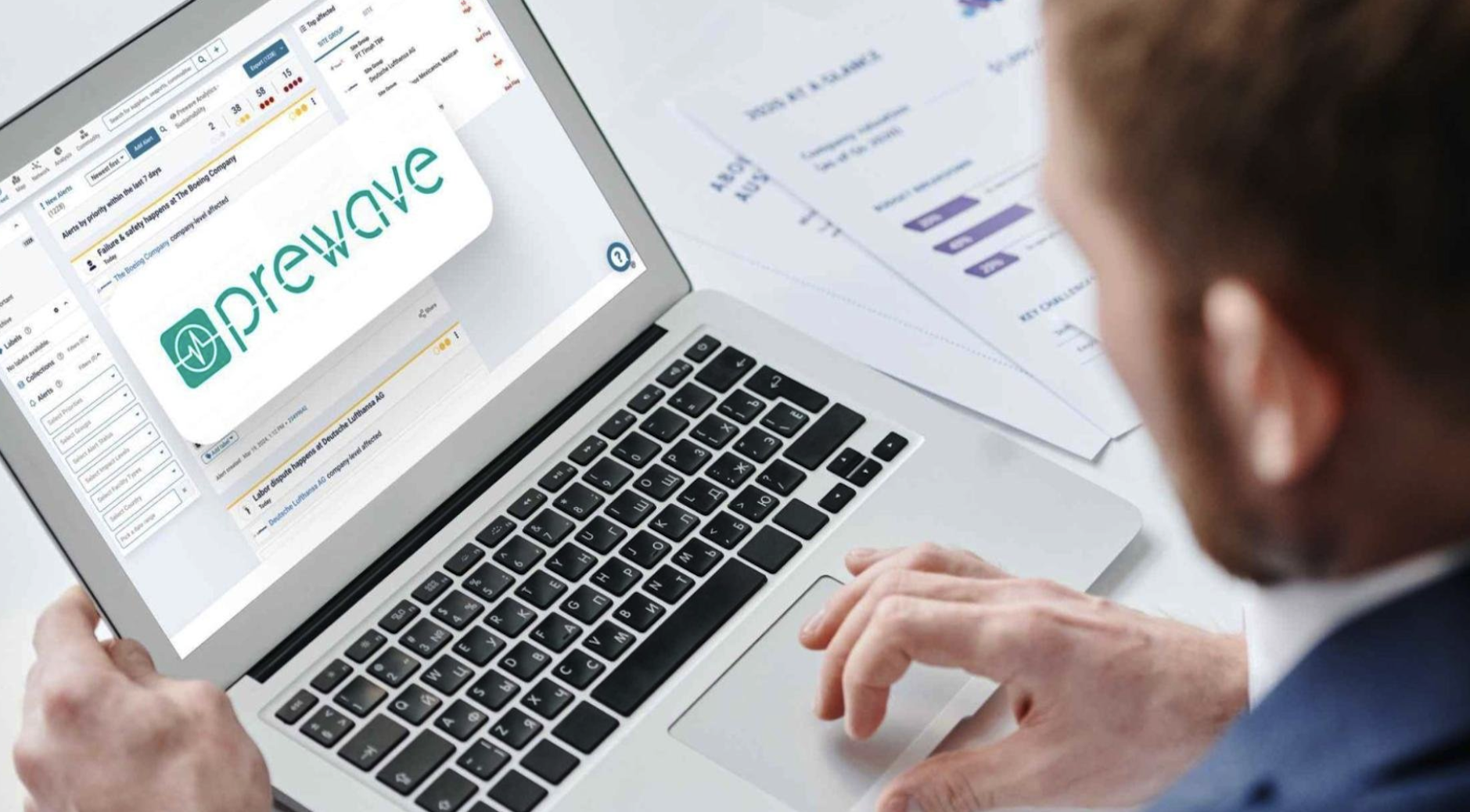 How Prewave is helping to secure deep supply chains worldwide with AI on Google CloudLearn how Prewave is tracking hundreds of thousands of suppliers and helping more businesses improve their deep supply chains.Read now
 How to build a digital twin on Google CloudLearn how digital twins, cloud-based replicas of physical systems, can be used for safer, smarter resilience and security testing in manufacturing environments.Read now
 1,302 real-world gen AI use cases from the world's leading organizationsAI is here, AI is everywhere: Top companies, governments, researchers, and startups are already enhancing their work with Google's AI solutions.Read now
 State of AI infrastructureThis report, based on a survey of 500+ global technology leaders, uncovers the key challenges and opportunities in building a robust, secure, and cost-effective AI-ready cloud.Read or download now
 Delivering trusted and secure AILearn how Google Cloud’s approach to generative AI prioritizes enterprise-readiness with built-in mechanisms for robust data governance, privacy controls, IP indemnification, and responsible AI practices.Read or download now
Blogs
- BASF manages thousands of supply chain decisions with AlphaEvolve’s agentic algorithmsLearn how planners at BASF Agricultural Solutions navigate daily changes in weather or regulations across 180 production sites, and turned to AlphaEvolve on Google Cloud to build a digital twin of their supply chain to better understand how local decisions ripple across their entire global network.Read now
- FM Logistic tackled the traveling salesman problem at warehouse scale with AlphaEvolveLearn how FM Logistic uses Google AI to efficiency handle larger order volumes with the same team and equipment, without adding headcount or expanding their fleet.Read now
- Powering a new era of global weather forecasting with WeatherNext 2WeatherNext 2 is our most advanced and efficient AI model. It delivers more accurate, higher-resolution predictions to help everyone—from businesses managing global supply chains to you planning your day—make better, faster decisions.
- How Prewave is helping to secure deep supply chains worldwide with AI on Google CloudLearn how Prewave is tracking hundreds of thousands of suppliers and helping more businesses improve their deep supply chains.Read now
- How to build a digital twin on Google CloudLearn how digital twins, cloud-based replicas of physical systems, can be used for safer, smarter resilience and security testing in manufacturing environments.Read now
Reports and ebooks
- 1,302 real-world gen AI use cases from the world's leading organizationsAI is here, AI is everywhere: Top companies, governments, researchers, and startups are already enhancing their work with Google's AI solutions.Read now
- State of AI infrastructureThis report, based on a survey of 500+ global technology leaders, uncovers the key challenges and opportunities in building a robust, secure, and cost-effective AI-ready cloud.Read or download now
- Delivering trusted and secure AILearn how Google Cloud’s approach to generative AI prioritizes enterprise-readiness with built-in mechanisms for robust data governance, privacy controls, IP indemnification, and responsible AI practices.Read or download now
Explore Google Cloud products driving transformation
- Gemini Enterprise Agent PlatformGoogle Cloud's open and comprehensive platform that empowers businesses to rapidly build, scale, govern, and optimize enterprise-grade agents.Learn more
- Mobility Solutions (Google Maps)Improve fleet efficiency and deliveries with detailed geospatial data and predictable pricing. All while dynamically tracking fleets, assets, and devices.Learn more
- Analytics Data Platform with BigQueryUnify multimodal data, accelerate innovation with AI, and simplify data analytics across all users in the enterprise.Learn more
- Route Optimization (Google Maps)Optimize multi-stop routes for one or more vehicles flexibly and intelligently.Learn more
- Gemini Enterprise appEmpower teams to discover, create, share, and run AI agents all in one secure platform.Learn more
- Manufacturing Data EngineSeamlessly bridge factory floor and enterprise data, enabling rapid AI and agent-driven insights. Drive immediate improvements in manufacturing visibility, quality, and productivity.Learn more
- Google WorkspaceTransform team productivity and collaboration with cloud-native apps including Gmail, Docs, Drive, Meet, and more—all with AI seamlessly integrated.Learn more
- Customer Experience Agent StudioBuild and deliver exceptional end-to-end experiences, agent assistance, and operational insights with our most advanced conversational AI products and Gemini models—grounded in your organization's resources to ensure high accuracy.Learn more
- Data sharing with BigQuerySecure, simple sharing of data and AI assets. Efficiently and securely share data assets within and across organizations to address challenges of data reliability and cost.Learn more
- AI agents for marketingLearn how AI and agents are powering growth across five key areas of marketing. This how-to quickstart guide makes it easy for every marketer to use generative AI with actionable tips, prompts and use cases.Learn more
- Looker agentic BI platformLeverage the power of Gemini and Google Cloud’s Agentic Data Cloud to deliver the most intelligent business intelligence solution—combining foundational AI, cloud-first infrastructure, industry leading APIs, and our flexible semantic layer.Learn more
- Weather API (Google Maps)Get near real-time weather analysis to make smarter decisions — whether you’re scheduling staff or making routing decisions.Learn more
- Gemini Code AssistAI-powered assistance to help developers deploy, and operate applications throughout the software development lifecycle.Learn more
- Apigee API ManagementGoogle Cloud’s native API management tool to build, manage, and secure APIs—for any use case, environment, or scale.Learn more
- Partner Industry Solutions (iVN)These solutions combine Google Cloud's AI, data, and analytics products with SI partners' deep domain expertise and ISV offerings (where applicable) to enhance industry business processes and functional capabilities that accelerate time to value and lower risk.Learn more
Security and compliance trusted by supply chain and logistics organizations
Protect your sensitive data and meet rigorous regulatory requirements with Google Cloud's secure-by-design infrastructure, zero-trust architecture, advanced threat intelligence, and comprehensive compliance certifications. We provide robust controls for data privacy, residency, and sovereignty, enabling you to innovate with confidence.
- Security Command CenterSecure the AI stack and manage AI risks and threats across your agents, data, models, apps, platform, and infrastructure.Learn more
- Google Threat IntelligenceProvides organizations with advanced threat intelligence and comprehensive visibility on the threats that matter most to your industry. Navigate the evolving cyber threat landscape with Gemini and and Mandiant expertise.Learn more
- Sovereign CloudGrow confidently with the most comprehensive and flexible solution to meet your sovereignty needs, worldwide. Our sovereign AI solutions are designed to empower enterprises with unparalleled data residency and administrative access controls over your AI deployments.Learn more
Frequently asked questions
How can we use data to make better business decisions?
Google Cloud helps supply chain and logistics companies unify their data, converting raw information into actionable strategic insights and decision making. By unifying internal data with external market signals, companies shift from reactive operations to a proactive data-based business strategy.
Google Cloud’s BigQuery serves as a serverless, multi-cloud data warehouse that allows customers to analyze petabytes of data in seconds. By democratizing data access, it ensures that supply chain metrics (like cost-to-serve or perfect order rate) are aligned with financial and strategic KPIs, enabling "prescriptive analytics" that guide executive decision-making.
Is it possible to see everything happening in our supply chain in real time?
Organizations often lack a "central source of truth" because data is trapped in siloed ERPs, supplier systems, and spreadsheets, leading to "catastrophic breakdowns" when conditions change. Google Cloud helps customers solve this by enabling them to build a supply chain twin—a digital representation of the physical supply chain. The twin orchestrates data from disparate sources (enterprise systems, supplier data, and public sources like weather and traffic) to create a complete, real-time view of inventory, suppliers, and logistics, dramatically reducing analytics processing time and the ability to act on the data.
How can we spot supply chain problems before they impact our operations?
Supply chain and logistics teams need to move from reactive to proactive planning, especially in the face of weather events, shortages, or transport delays. Google Cloud helps customers predict and mitigate disruptions by leveraging AI, machine learning, and real-time data analytics to transform fragmented supply networks into a cohesive, visible, and proactive system. By integrating disparate data sources, companies can identify potential bottlenecks, such as supplier delays or weather disruptions, before they impact operations. Supply Chain Pulse—a module within the digital twin—provides real-time dashboards and advanced analytics to monitor performance and receive alerts on potential bottlenecks, such as inventory shortages or shipping delays.
Can we leverage AI to improve demand forecasting and planning?
Customers can infuse Google AI into planning to handle volatile demand drivers like consumer trends, weather, and commodity prices. Companies can improve demand forecasting by moving from simple historical tracking to predictive, AI-driven planning. Google Cloud helps them do this by unifying siloed data (from ERPs, weather, ads) into a digital supply chain twin and applying machine learning models that can predict demand more accurately, optimize inventory placement, and reduce waste. Unlike traditional statistical models that only look at past sales, Google AI can ingest massive, diverse datasets to find hidden patterns.
How do we break down silos to improve collaboration with partners and suppliers?
Static or siloed applications prevent necessary data exchange with key trading partners upstream and downstream. Google Cloud’s architecture supports secure cross-company data sharing, allowing businesses to exchange data with vendors and partners without complex API integrations. This is enhanced by Google Workspace integration within the supply chain digital twin, allowing teams to collaborate directly on alerts and workflows in real-time to resolve bottlenecks.
How can we optimize our logistics and last-mile delivery for cost and speed?
Google Cloud helps optimize logistics and last-mile delivery by combining high-scale AI computation with real-time location intelligence from Google Maps to transform static routes into dynamic, efficient operations. Through the Cloud Fleet Routing API, companies can model thousands of delivery constraints—like vehicle capacity and time windows—to reduce total mileage, while the Last Mile Fleet Solution provides drivers with hyper-accurate navigation and customers with precise ETAs to minimize failed attempts. By integrating these tools with digital twin simulations and predictive AI agents, logistics providers can proactively reroute around bottlenecks and position inventory closer to consumers, ultimately reducing operational costs and increasing delivery speed.
Can cloud technology help us overcome labor shortages and improve workforce productivity?
With a shrinking workforce and high turnover, organizations need to do more with fewer people and reduce manual drudgery. Google Cloud helps supply chain and logistics companies overcome labor shortages and improve workforce productivity by automating repetitive administrative tasks and providing AI-driven decision support to front-line workers. By offloading complex data analysis to AI agents, the existing workforce can focus on high-value, strategic problem-solving. Google Workspace creates a central hub for real-time collaboration and AI-assisted automation. It bridges the gap between office planners and frontline workers, allowing them to resolve disruptions faster and spend less time on manual data entry.
How can technology enable us to meet our sustainability and ESG goals?
With Google Cloud, supply chain, and logistics companies can meet sustainability and ESG goals by integrating geospatial data and AI to drive transparency and operational efficiency. Leveraging Google Earth Engine and tools like TraceMark, businesses can monitor "first-mile" impacts such as deforestation to ensure ethical sourcing and regulatory compliance. Simultaneously, operations are decarbonized through the Cloud Fleet Routing API, which can drastically reduce fuel consumption, and Gemini Enterprise Agent Platform, which minimizes production waste by improving forecasting precision. The Carbon Footprint tool and a digital supply chain twin provide the unified data necessary for accurate ESG reporting, allowing companies to measure and mitigate their environmental impact across the entire value chain.
How do we securely modernize our legacy systems without disrupting operations?
As organizations integrate new technologies into legacy environments, they must protect the supply chain from growing cyber threats. Google Cloud offers a "secure-by-design" foundation that includes an AI-powered Security Operations platform to detect and respond to threats. For modernization, it supports a transition to microservices using Google Kubernetes Engine (GKE), allowing companies to update specific components (like inventory services) without taking down their entire legacy system, ensuring agility and continuous uptime.