Introduction
Large Language Models (LLMs) and autonomous agents are profoundly accelerating and optimizing the development, use, and impact of cyber capabilities for both adversaries and defenders. The evolving mix of capability and risk keeps the threat landscape in a constant state of volatility. We are seeing models evolve from human-guided advisory tools, to autonomous agentic systems that orchestrate complex workflows and execute end-to-end operations. Adversaries are leveraging agentic capabilities to accelerate and automate their offensive development, capacity, and speed of operations. As defenders, we are scaling our tools, skills, knowledge, processes, and programs to effectively defend our organizations. When used strategically and intentionally, LLMs and agentic systems present a clear opportunity to augment and enhance the defender’s speed, scale, and capability for identifying and responding to threats.
These models and agentic workflows do not change the key concept of The Defender’s Advantage: defenders control the battlespace. As defenders of our organizations, we know our infrastructure, technology stack, operations, and impact of associated threats better than our adversaries. With this knowledge, we have the advantage to control the environment where we meet our adversaries. When we combine this advantage with the speed and scale of agentic capabilities, we unlock new defensive capabilities, reimagine the limits of operations, and more effectively fulfill our mission, to allow organizations to continue to operate in the face of threats.
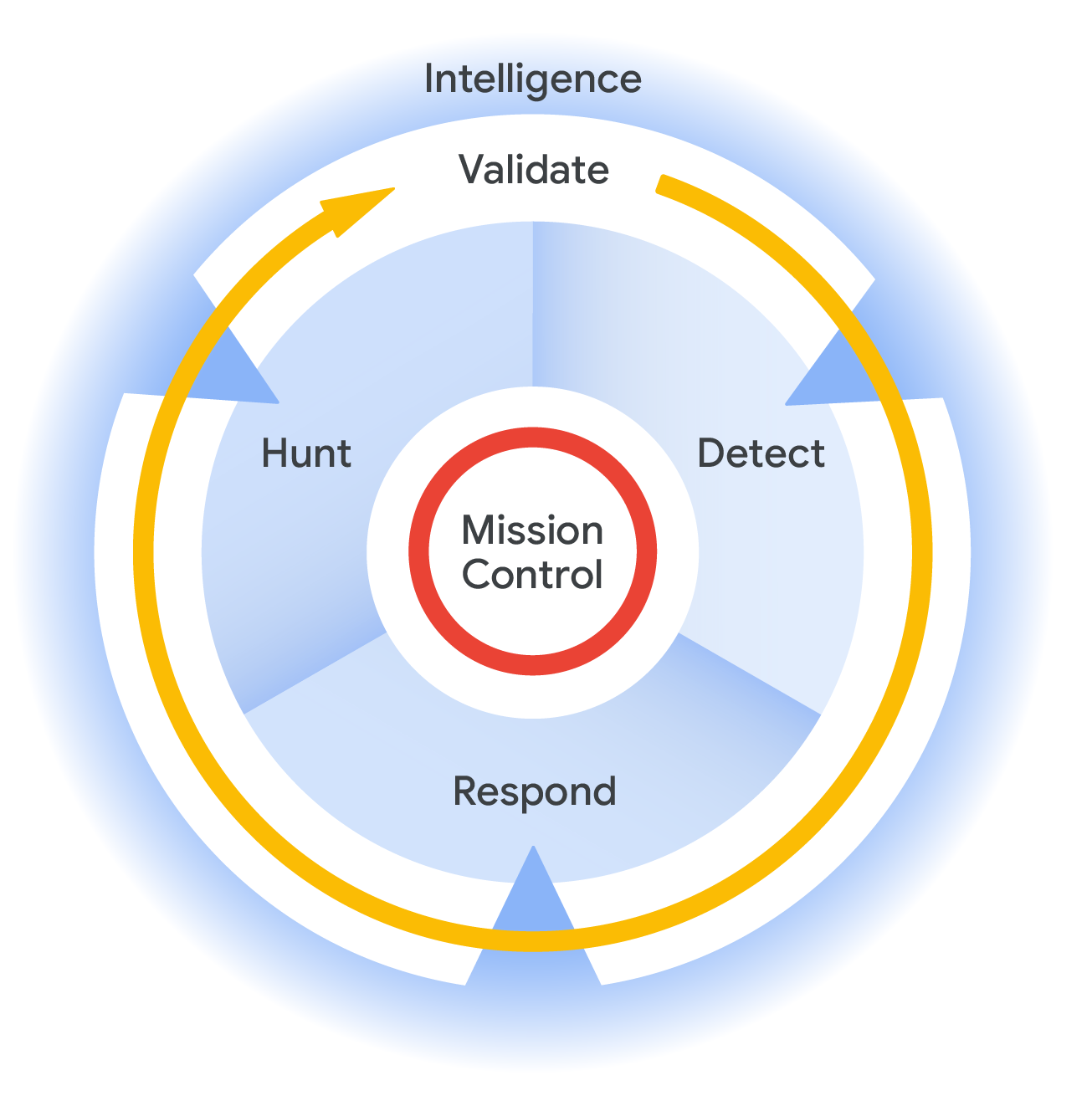
The Mandiant Defender’s Advantage operating model is made up of six critical functions that are required to effectively detect and respond to threats, enabling an organization to resist attacks and minimize the impact of a compromise: Intelligence, Detect, Respond, Validate, Hunt, and Mission Control.
Continuous Agentic Threat Iteration
The core objectives of our adversaries’ remain constant: disruption, espionage, profit, and sabotage. However, the threat landscape itself has been radically rewritten. Defenders must look past the notion that compromises are merely getting faster or more advanced and instead dissect how agentic systems are transforming an adversary’s capability and capacity.
Historically, adversaries were constrained by the high cost of sustained operations, overhead of managing campaigns, and a need to compete against top-tier talent from well-funded, legitimate organizations, as well as other threat groups. Advanced language models and agentic workflows are dismantling these pain points, allowing adversaries to optimize velocity. Beyond speed, agents also expand the breadth, orchestration, and targets of campaigns. By automating contextual discovery and lateral movement attempts, LLMs bridge the technical skills gap, allowing less technically-enabled adversaries to traverse more complex environments with similar levels of sophistication previously reserved for nation-state or advanced persistent threat (APT) actors. Adversaries are now also able to spin up, configure, and tear down their infrastructure across various services at a rapid pace, reducing the time-to-live of more volatile indicators of compromise (IOCs). For example, Mandiant has observed adversaries leveraging models and agentic systems to orchestrate command-and-control botnet migrations to evade detection. Shortly after defensive tooling flags behaviors, agents have been observed iteratively restaging until their malware circumvents detection signatures.
Adversaries are leveraging this infrastructure to operate with fewer logistical bottlenecks and greater operational tempo. As defenders, we should act with equal urgency to shift and evolve our capabilities, not only to counter active threats, but to stay ahead of them.
Cyber Defense at Machine Scale & Speed
In the ongoing conflict between adversaries and defenders, speed is the ultimate currency. The advantage goes to the side that is able to understand the landscape, make effective decisions, and translate those decisions into actions faster than their opponents. As defenders, our goal is to optimize our capabilities to understand and operate within our battlespace so that we can most effectively and efficiently defend against and respond to threats.
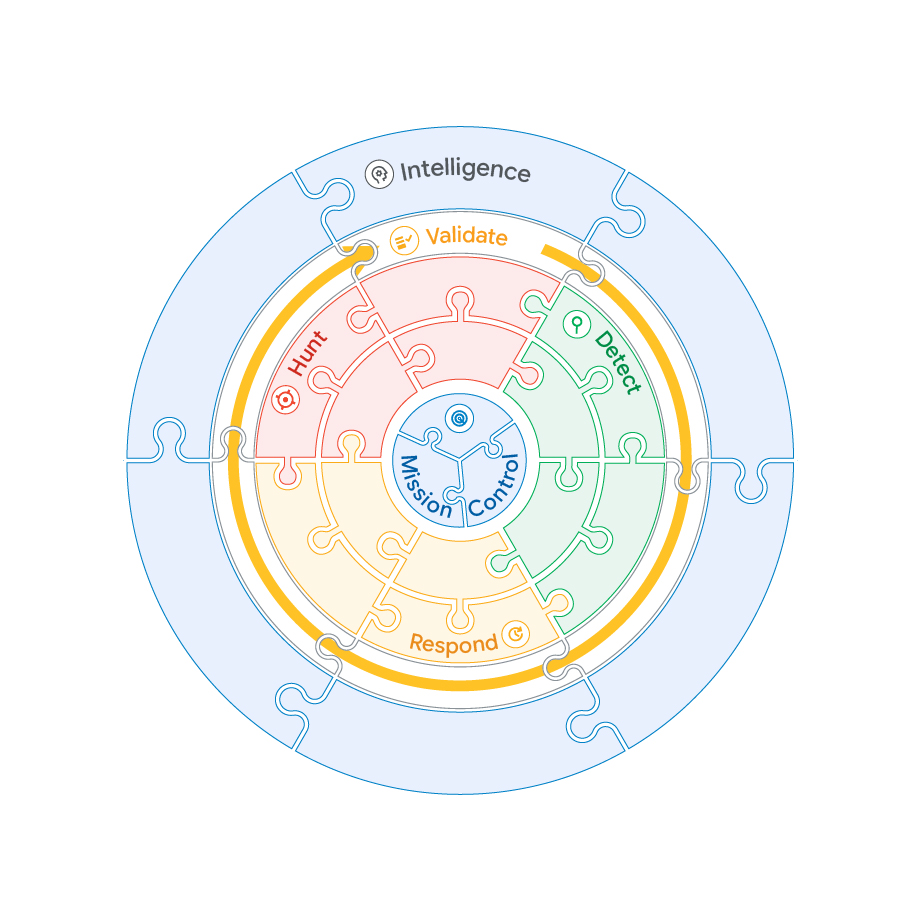
Previously, the required levels of defensive and operational maturity were difficult to achieve due to limited resources, budget, time, and access to specialized skills, resulting in a fragmented or disjointed cyber defense organization. However, agentic platforms provide defenders the opportunity to close these gaps by augmenting often missing or immature capabilities to improve speed, harden defenses, and reduce alert fatigue. Agents and advanced LLMs allow defenders to expediently operationalize threat intelligence, detect and respond to known threats, hunt active threats, continuously validate security controls, and manage mission control orchestration and prioritization.
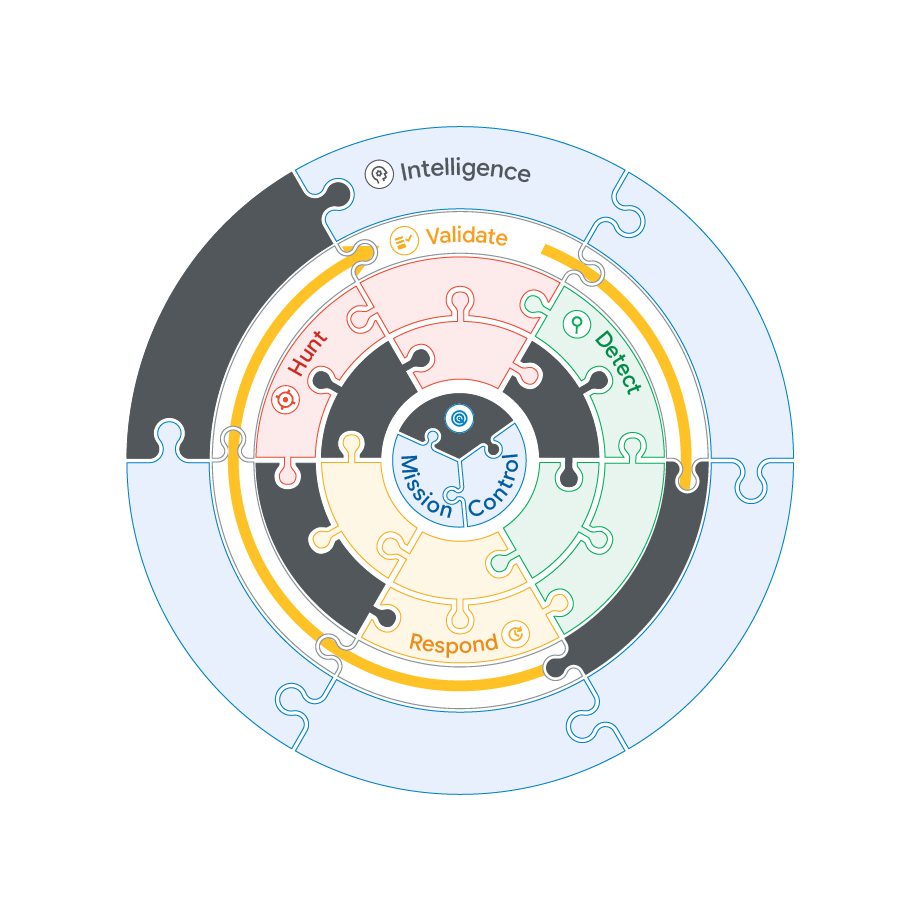
For example, defenders can leverage agents to optimize the ability of insights and findings from one function to directly influence the processes of other functions. Consider what an agentic-enabled process might look like for alerts closed by Security Operations Center (SOC) analysts. For alerts closed as true positives, an agent can immediately initiate a proactive threat hunt against historical telemetry for related intrusion techniques. For alerts closed as false positives, an agent can immediately recommend detection tuning to ensure analysts do not spend time investigating the same benign anomaly again.
Defenders should focus first on leveraging agentic systems in two key areas that enable their speed and capabilities to match or exceed those of adversaries:
- Augmenting Existing Capabilities: Defenders should leverage agents to enhance existing capabilities such as adding context, evaluating blast radius, and otherwise automating and enriching routine tasks. A primary tenet of leveraging agents is enabling defenders to improve workflows and remove manual or time-intensive tasks that then allow defenders to shift to closing defensive gaps.
- Closing Gaps: Agents enable defenders to bridge known capability gaps by taking previously unattainable workflows that may have been manual or resource intensive and turning them into reality. For example, defenders could leverage agentic capabilities to synthesize threat intelligence reports, automate enrichment for alerts, and review security information and event management (SIEM) logging ingestion for completeness and accuracy.
By leveraging LLMs for specific use cases across The Defender’s Advantage operating model, defenders alleviate resource constraints, increase operational tempo, reduce friction and fatigue, and transform the cyber defense capabilities of yesterday into the agentic security of today.
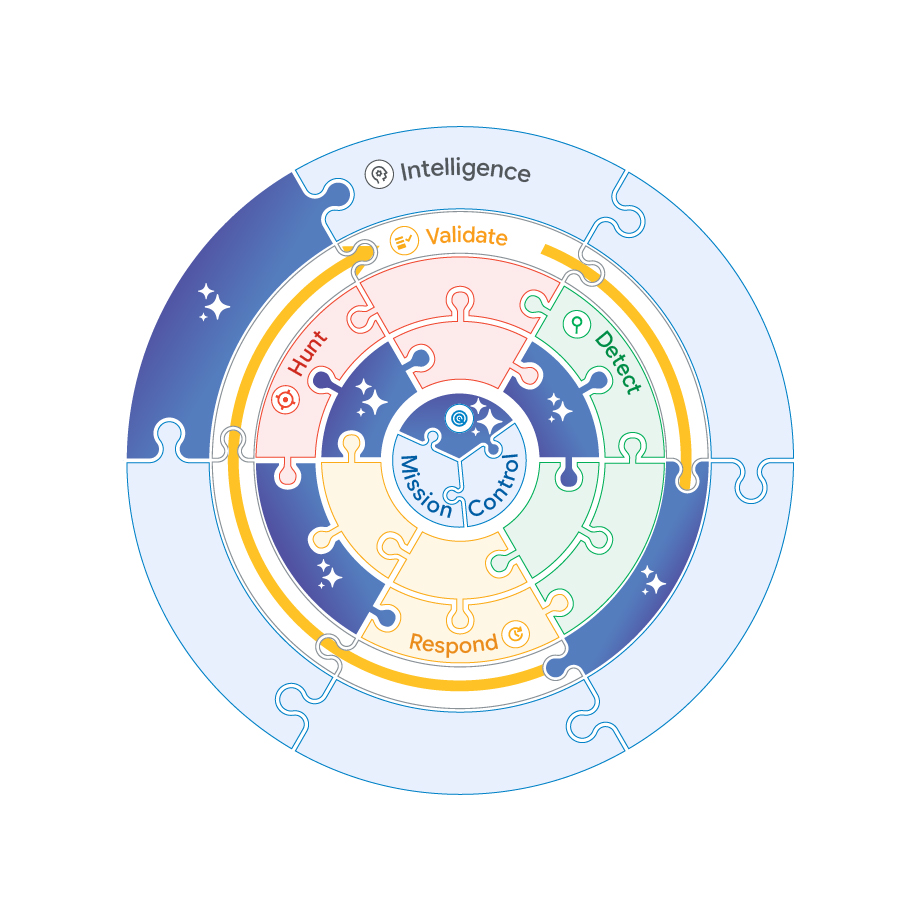
Intelligence: Optimized Actionability in the Face of a Rapidly Accelerating Threat Landscape
Mandiant advocates for an Intelligence-led approach to cyber defense, where intelligence is the differentiator that guides actions and decisions across the entire cyber defense organization. The Intelligence function is designed to help defenders understand the threats they face, proactively implement detection strategies and processes, prioritize response actions and resources, and support strategic risk management decisions.
Intelligence functions should leverage agents to rapidly collect, synthesize, analyze, and disseminate cyber threat intelligence (CTI) to key stakeholders. The goal is to reduce noise and operational friction, equipping defenders with near real-time, actionable, and relevant information to best defend the organization. Instead of analysts spending days, weeks, or months manually reading CTI reports to assess threats, agents assist in synthesizing, summarizing, and identifying trends, IOCs, and adversary tactics, techniques, and procedures (TTPs) that should be prioritized by defenders today.
For example, intelligence analysts can leverage LLMs to instantly process multiple disparate CTI sources to generate tailored, industry-specific, and organizational-relevant threat predictions before threats impact the environment, enabling CTI to be more actionable in the context of a rapidly changing threat landscape. Organizations often ingest CTI from various sources, including IOC feeds and long form reports, into repositories. In practice, these repositories often become outdated and disorganized with time, making it difficult to analyze and review. Agent-enabled workflows turn associated operational and tactical intelligence into highly specific, predictive outputs that drive strategic decision-making, detection engineering development, response playbooks, validation assessments, and hunt hypotheses.
Detect: Operationalizing Intelligence for Active Defense
To achieve the mission, it is critical for defenders to detect malicious behavior based on activity observed within the organization. The Detect function coordinates with and supports the other functions by operationalizing intelligence, observations, and other requirements into actionable triggers that activate a coordinated response.
Agents augment and enhance the Detect function by assisting in identifying logging gaps to include missing log sources, parsing issues, and timestamp issues, which is often a manual and time-consuming assessment for defenders. It is critical for cyber defense organizations to continually review log ingestion to ensure optimal observability across the environment in order to detect malicious behavior.
By leveraging LLMs to augment the Detect function’s ability to translate threat actor TTPs directly into active detection rules via natural language, defenders significantly reduce manual engineering time and close visibility gaps at speed. Additionally, when paired with a detection-as-code pipeline leveraging continuous integration and continuous delivery/continuous deployment (CI/CD), this reduces the detection engineering lifecycle from days or weeks to minutes.
Respond: Orchestrating Rapid and Resilient Recovery
It is critical that once a threat is identified, defenders work to minimize the impact of a compromise, ensure rapid recovery to normal operations, and relay information to other functions to increase resilience. The Respond function focuses on activities commonly seen in incident response teams to include investigation and containment, as well as automation and orchestration capabilities.
Agentic augmentation empowers the Respond function with automated summaries of complex cases, holistic enrichment of alerts, and dynamically generated Security Orchestration, Automation, and Response (SOAR) remediation actions where none had previously existed. This correlation and enrichment at scale minimizes SOC analyst friction and fatigue, reducing Tier 1 toil, and allowing defenders to advance from manual triage to focus on more complex response activities.
Validate: Security Effectiveness at Scale
As defenders, our advantage lies in knowing and understanding our environment, infrastructure, and attack surface. The Validate function focuses on the continuous management of threat exposure within an organization, provides assurance that the security controls within the environment are operating as intended, and manages the risk across the attack surface, to include vulnerabilities.
The Validate function uses LLMs to generate and execute test scripts based on the latest intelligence of real-world and relevant threat activity to stress-test controls and prove defensive posture at machine speed. Continuous Threat Exposure Management (CTEM) provides a systemic approach to scaling beyond point-in-time red teaming. CTEM runs in a continuous cycle and provides a holistic view that can be mostly automated by agents, allowing an organization to scale at the speed required by today’s threat landscape. Additionally, cyber defense organizations should leverage red teaming services to evaluate their own agentic capabilities and applications against weaknesses, such as prompt injection and data poisoning.
Hunt: Accelerate Discovery of Advanced Adversaries
In addition to the Detect function identifying threats within the environment, defenders can also expand these capabilities to proactively search for active compromises across the environment and weaknesses in security controls. The Hunt function supplements and partners well with both the Detect and Validate functions to identify active adversarial actions, help discover vulnerabilities, improve detection and visibility, and increase the difficulty of adversaries to compromise systems.
Generative models augment the capabilities of the Hunt function by shifting defenders’ operations from writing complex queries to executing conversational threat hunt hypotheses driven by predictive intelligence. By leveraging agents, defenders radically accelerate the discovery of advanced adversaries trying to evade traditional detections.
Mission Control: Optimize Collaboration and Cross-Function Communication
To ensure the efficiency and effectiveness of a cyber defense organization, the Mission Control function drives coordination and unified management across the security program. It ensures the functions are connected to the organization’s business goals and values, and establishes formal processes for resource management, communications, metrics, and crisis management.
The Mission Control function can leverage LLMs to synthesize complex, multi-domain security metrics into dynamic, executive-ready risk summaries and autonomously generate tabletop scenarios to align technical response with business resilience. For example, when a zero-day vulnerability is discovered, an agent can empower the Mission Control function to quickly translate and synthesize information across the other five functions into an executive-ready risk summary. This reduces the often multi-day, resource intensive coordination, often only seen in mature cyber defense organizations, and enables leadership with immediately actionable information to coordinate defensive actions without delay.
Guiding Principles & Key Considerations for Deploying Agentic Capabilities
As with any organizational transformation, the adoption of agentic capabilities within cyber defense must be planned, deployed, and integrated strategically, in a managed fashion, and around key principles to ensure alignment and success. Mandiant recommends the following principles to guide defenders in deploying agents.
Augment, Not Replace
The evolution of LLMs and agentic workflows impacts all levels of an organization, including people, processes, and technology. Mandiant strongly encourages cyber defense organizations to leverage agents as a strategic force multiplier to augment and enhance each of these areas. However, prior to developing an agentic capability, it is essential to understand the organizational needs, define requirements, explore other solutions, and determine organizational return on investment. While LLMs can be a defensive catalyst, other options, such as traditional automation, may meet the business need and requirement with a lower cost and lower risk solution.
- People: Despite the compounding improvements to agentic capabilities and methods of interacting with LLMs, people remain central to the accurate, effective, and durable implementation of agents throughout cyber defense operations. An LLMs’ capability to automate processes beyond traditional SOAR will shift the burden of human knowledge work from repetitive, time-intensive activities, like Tier 1 triage, to more complex, strategic problems such as closing logging gaps and reducing the attack surface.
- Process: One of the greatest challenges in implementing The Defender’s Advantage operating model involves cross-collaboration and partnership across all of the functions. Effective processes require significant resource and time investments, often becoming burdens for defenders. Agents can alleviate some of these burdens, like generating actionable guidance to develop and execute well-defined playbooks or standard operating procedures (SOPs) that can increase cross-team communication, clarify procedures, and optimize collaboration.
- Technology: Generative models provide another layer of technology to enable and optimize automations. However, traditional automations such as scripts and playbooks still provide significant value to defenders in terms of speed and reliability at relatively lower costs. Agentic workflows and advanced system automation should be layered on top of this existing technology to expand current capabilities and allow for analysis and reasoning to close gaps that deterministic automation cannot cover.
Instead of replacing teams or functions with agentic capabilities, Mandiant recommends organizations first invest in agentic capabilities that will allow them to obtain new functionalities that may have previously been unattainable, such as parallelization of execution or automated incident report drafting.
The Same Cybersecurity Foundations Still Apply
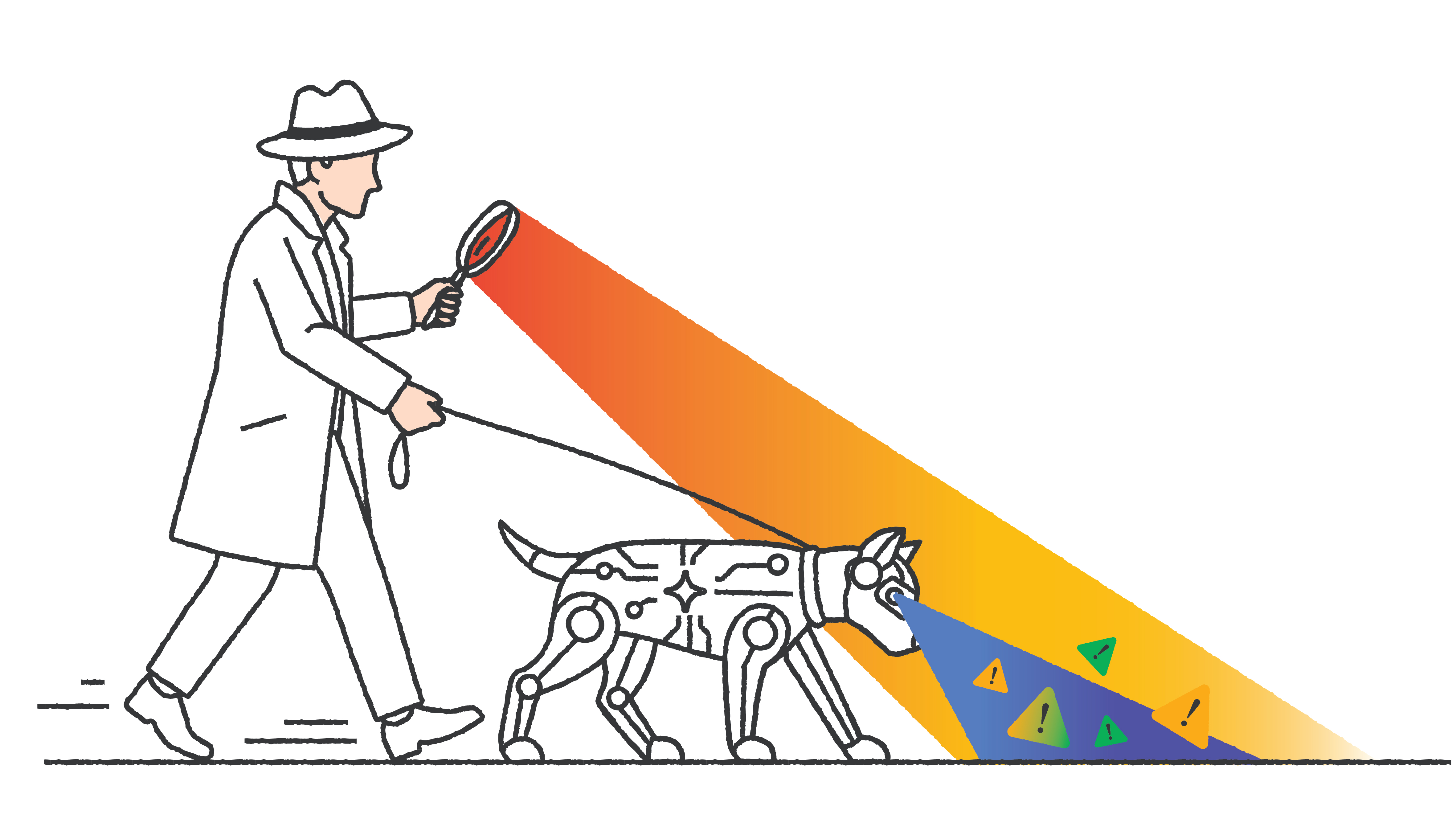
Generative models require the right data, context, and prompts to produce meaningful responses. This means that the critical cybersecurity foundations of the past still apply for the agentic cyber defense of the future. Yet, many organizations still struggle with the foundations of security hygiene such as accurate asset inventories; visibility and observability obtained by logs in a centralized SIEM; up-to-date documented SOPs and communications plans; and siloed teams. For this to be the most impactful, agents require access to operational workflows, technology and architecture diagrams, and critical data sources to make rational, context oriented decisions.
Governance & Human-Oriented Risk Acceptance Required
Organizations should not deploy an agent that they cannot describe, monitor, or govern. Any mission-critical or potentially disruptive decisions must be anchored in an accountable human’s judgment. Security by its nature is often viewed as disruptive to business. However, unbridled security as a result of non-governed or unmanaged agentic systems can be equally disruptive.
Defenders are already accustomed to escalations and management approvals. Agents should be no different. Mandiant recommends organizations align on how tightly coupled agentic and human decision making should be. Overall, a domain expert should always be involved in the decision making process, whether before, during, or after potentially disruptive actions are taken. While LLMs increase the speed of operations, as well as provide critical insight and details about the environment and potential threats, defenders still rely on experts for decision-making and accountability. In general, Mandiant recommends organizations engineer human oversight and intervention levels into agentic workflows according to their risk of disrupting day to day operations.
Agentic Innovation & Transformation Comes with Risks
Leveraging generative models to augment and enhance cyber defense capabilities today is not without risk, the most critical of which are hallucinations, inaccurate conclusions, unmetered token spend, processing loops, sensitive information disclosure, and operational disruptions. While these risks are not limited to agentic systems, Mandiant recommends organizations assess and review associated potential risks prior to implementation, focus agents on non-mission critical tasks first, conduct rigorous testing, and adopt a “trust but verify” mindset.
Conclusion
In order to be successful, defenders must outpace the adversaries. The continued evolution of generative models provides cyber defense organizations with the opportunity to accelerate in order to achieve scalable security velocity. Defenders must augment existing capabilities and close gaps within and across the six critical cyber defense functions to maintain The Defender’s Advantage.
The Defender’s Readiness Checklist for Agentic Systems
As agents continue to be a pivotal accelerator for defenders and adversaries alike, there is mounting pressure for organizations to adopt LLMs throughout their operational processes. When evaluating your organization’s readiness, consider the following ten concepts:
- Organizational Context: Information unique to the operations of your organization is pivotal to accurate tailored outcomes when augmenting with generative models. Is that context readily available for agents to reference as a ground truth?
- Knowledge Management: When augmenting cyber defense operations, accurate network topology, asset management, and high-value asset definitions are necessary contexts for an agent. How does your organization capture, refresh, and make available up-to-date pivotal knowledge management artifacts?
- Agent Identity: Identity and Access Management (IAM) for agents that execute autonomous operations is a fundamental requirement for LLM-augmented operations. Does your organization have the ability to programmatically issue task-specific, short-lived, token-based authorizations at the time of execution?
- Governance: Similar to human operational guardrails, LLM augmentation must be exposed to the same structural scrutiny. Has your organization adopted an LLM governance strategy?
- Cyber Threat Intelligence: Both internally collected and externally produced CTI are necessary components for effective LLM augmentation of cyber defense operations. Does your organization have an established CTI pipeline able to enable LLM-augmented operations?
- Log Coverage: Understanding available information and gaps in visibility are crucial data points for effective and accurate LLM augmentation of operations. Does your organization capture logs from all critical data sources and document known logging gaps or deliberately excluded logs?
- Validation: Certifying the implementation of organizational security controls is vital to ensuring the accuracy and effectiveness of security measures, especially those augmented by agents. Does your organization have the tooling required to validate the effectiveness of implemented security controls across your attack surface?
- Evaluation: Measuring the impact of security controls, agentic augmentation, and an overall security posture is crucial context for organizational decision-makers at all levels. Does your organization have a strategy for evaluating the quality, health, and effectiveness of cyber defense operations at a tactical, operational, and strategic level?
- Cost: As generative models are being implemented across organizations, token consumption has been highlighted as an overlooked factor that is escalating operational costs. Has your organization considered cost mitigation and identified workflows for LLM augmentation that cannot readily be resolved using classic security operations tools?
- Model Provider Strategy: Reliance on external providers opens potential risks to service outages and third-party infrastructure instability, also increasing data privacy concerns. Does your organization have a strategy for when to use frontier models versus open-weight alternatives?
Contributors
Alex Flores
Ben Opel
Brentyn Muir
Chris Busse
Chris Satanek
Dan Nutting
Daniel Smith
Emily Cranston
Gauri Dave
Ilan Lanz
Kal Guntuku
Kerry Matre
Kurt Wolfe
Nick Bartosch
Pascal Issa
Sara Takhim
Tanya Wilkins
Thomas Sheil