Reduced operational overhead through Google Cloud managed services
Large-scale data ingestion and analysis without infrastructure constraints using BigQuery
Simplified geospatial data exploitation thanks to Google Earth Engine
A unique service that provides long-term sustainability and resilience for global supply chains
To sustainably secure the supply of critical agricultural raw materials, TRACT leverages Google Cloud’s infrastructure and managed services to collect, structure, and analyze supply chain data at scale.
To sustainably secure the supply of critical agricultural raw materials, TRACT leverages Google Cloud’s infrastructure and managed services to collect, structure, and analyze supply chain data at scale.
In the face of the climate emergency and profound shifts in agricultural balances, global supply chains are facing an unprecedented challenge: guaranteeing the long-term availability of the raw materials on which an entire industry depends. Coffee, cocoa, palm oil, or soy—these resources are directly exposed to the effects of climate change, deforestation, soil depletion, and social issues.
TRACT was created in 2023 specifically to address this systemic issue. Born from a joint initiative by four agricultural giants, the company is developing a technology platform designed by and for the industry, with a clear objective: to build a common data foundation for sustainable supply chain management.
Building a common language to manage complex supply chains
"The challenge goes beyond regulatory obligations or environmental commitments," explains Allison Kopf, CEO of TRACT. "It is primarily a challenge of resilience: ensuring the long-term viability of the agricultural sector and securing supply in an increasingly unstable environment. Yet, these supply chains are among the most complex in the world, involving hundreds of thousands, or even millions, of producers across several continents, each operating in different economic, social, climatic, and regulatory contexts."
Adding to this operational complexity is a major data challenge. Every stakeholder collects, structures, and shares information using their own frameworks and in extremely varied formats: databases, CSV files, PDFs, and unstructured data. Consequently, companies along the supply chain—particularly downstream actors, such as brands and retailers—struggle aggregating sustainability information to assess suppliers, regions, or raw materials and, ultimately, make informed decisions about sourcing and where to invest.
"This is exactly the challenge we are tackling: collecting, structuring, and analyzing this data to provide our customers with a reliable and effective insight into their supply chains," adds Allison Kopf.
The challenge goes beyond regulatory obligations or environmental commitments. It is primarily a challenge of resilience: ensuring the long-term viability of the agricultural sector and securing supply in an increasingly unstable environment.
Allison Kopf
CEO, TRACT
"Our customers use TRACT to identify the risk of forced labor in a given region, meet the demands of a customer’s responsible sourcing program, invest in programs around the world, or verify a supplier meets regulatory requirements for market access. They use TRACT to stay ahead in a rapidly changing world.”
Beyond data consolidation, TRACT aligns methodologies across the industry, allowing companies to reliably assess their performance and identify exactly where to act to strengthen supply chain resilience. They have industry-aligned methodologies related to deforestation, carbon, forced labor, child protection, and are currently aligning around farmer income.

Industrializing data management for reliable decision-making
TRACT’s platform covers the entire data lifecycle: collection, validation, normalization, analysis, and sharing. Data comes from supply chain actors, their suppliers, farmers, and external sources (climatic, environmental, or social). From the start, the company chose an entirely cloud-native architecture, opting for Google Cloud.
Thanks to Google Earth Engine, we can easily leverage large volumes of satellite imagery, which significantly accelerates our ability to produce insights at scale.
Luis Carrasco Tornero
Senior Geospatial and Sustainability Data Scientist, TRACT
"We need an infrastructure capable of managing millions of records while ensuring high levels of performance, security, and reliability," explains Luis Carrasco Tornero, Senior Geospatial and Sustainability Data Scientist at TRACT. "We also needed operational simplicity, and in this regard, Google Cloud’s fully managed services are a decisive asset."
To guarantee data confidentiality—a critical issue in highly strategic supply chains—TRACT’s platform security model is built so that data is encrypted at rest and during transport, and remains strictly segregated between customers, whether run on dedicated or shared infrastructure.
At the heart of the architecture, BigQuery plays a key role, centralizing massive data volumes and allowing for rapid queries without infrastructure constraints. Around this core, Google Kubernetes Engine orchestrates workflows, while Cloud Run and Cloud Run functions ensure the dynamic execution of processing and API delivery. "This combination of managed services allows us to stay focused on creating business value rather than the technical management of environments," emphasizes Luis Carrasco Tornero.
Accelerating and enriching analysis with geospatial data and AI
Recently, TRACT reached a new milestone by integrating Google Earth Engine into its platform. "This marks a major step in our development," says Luis Carrasco Tornero. "Thanks to Google Earth Engine, we can easily leverage large volumes of satellite imagery and derived spatial data, which significantly accelerates our ability to produce insights at scale."
By leveraging the native integration between Google Earth Engine and BigQuery, TRACT cross-references geospatial and business data without multiplying pipelines. This approach allows the company to develop its own analytical models, notably to assess deforestation risks at the farm level.
Continuing this innovation drive, TRACT is launching workflows leveraging Artificial Intelligence to drive efficiency, accuracy, and accelerated value for customers. TRACT is exploring the potential of using Google Cloud’s Gemini models for certain key workflows. The goal is to automate key data processing steps, particularly ingestion and validation. This is already taking shape with GeoFixer, an internally developed tool designed to interpret and normalize often heterogeneous or incomplete geospatial data. "Ultimately, AI will contribute to a significant reduction in the time needed to move from raw, fragmented data to reliable insight," says Allison Kopf.
In a context where regulatory pressure is intensifying, the ability to transform fragmented data into reliable, actionable insights is a strategic lever. Google Cloud plays a fundamental role in our journey, allowing us to move faster and experiment with new use cases.
Allison Kopf
CEO,TRACT

Fostering more sustainable supply chains
Today, TRACT is already transforming how companies manage their supply chains. While industry players typically only manage to collect complete, accurate, and actionable data for 30% to 35% of their supply chain, TRACT’S platform achieves 80% to 85% completion in just a few weeks, reaching up to 90% to 95% over time.
"In a context where regulatory pressure is intensifying and agricultural systems are becoming increasingly fragile, the ability to transform fragmented data into reliable, actionable insights is a strategic lever," concludes Allison Kopf. "Through its robust infrastructure and innovation capabilities, Google Cloud plays a fundamental role in our journey. This partnership allows us to move faster, experiment with new use cases, and provide our customers with a platform capable of adapting to their future challenges."
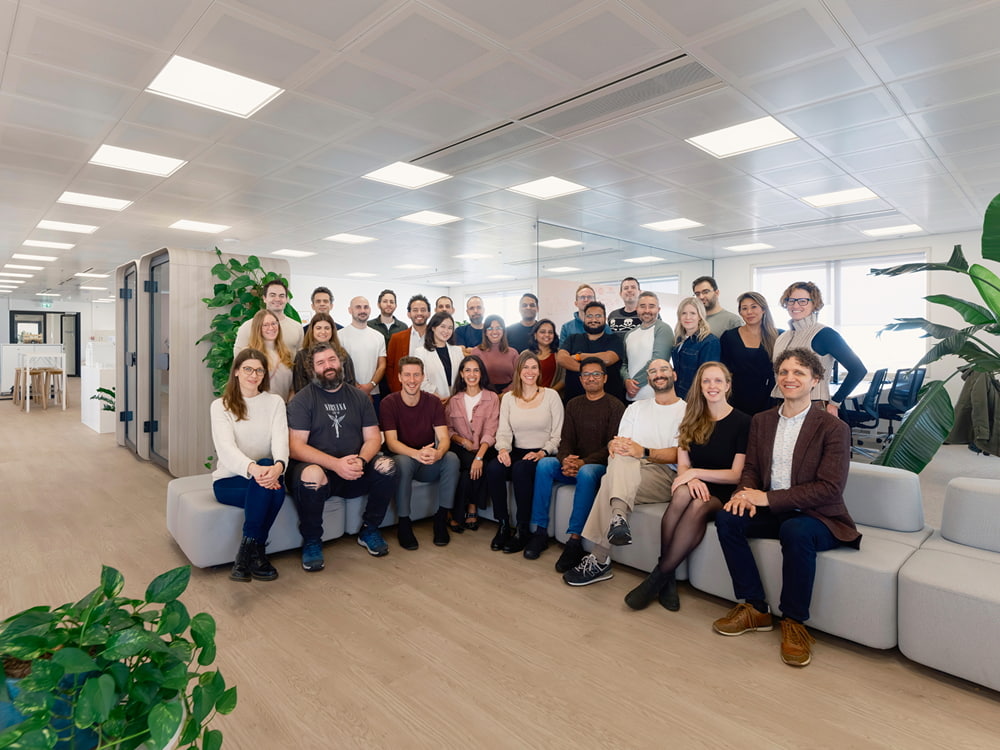
Founded in 2023 by a consortium of major agribusiness leaders (ADM, Cargill, Louis Dreyfus, and Olam Food Ingredients), TRACT develops a SaaS platform dedicated to managing traceability and sustainability data for agricultural supply chains. Designed by and for the industry, its solution structures, harmonizes, and scales complex data to improve transparency, manage risks, and strengthen supply resilience in a context of increasing climatic and regulatory pressure.
Industries: IT / Food & Beverage (Agribusiness)
Location: Netherlands
Products: BigQuery, Google Kubernetes Engine (GKE), Cloud Run, Cloud Run functions, Google Earth Engine, Gemini, Google Maps