
80,000 RPS peak traffic sustained using Google Kubernetes Engine (GKE)
40% infrastructure cost reduction achieved across Compute Engine and GKE
30,000 tickets processed in the first five minutes of a major on-sale backed by Cloud Load Balancing
Platform protection through Google Cloud Armor and reCAPTCHA Enterprise
Vietnam’s top ticketing platform rebuilt its architecture on Google Cloud to eliminate bottlenecks and guarantee capacity during huge fan surges.
Vietnam’s top ticketing platform rebuilt its architecture on Google Cloud to eliminate bottlenecks and guarantee capacity during huge fan surges.
Modernizing architecture to eliminate capacity bottlenecks under extreme traffic load
Moving to Google Cloud gave us greater confidence that the compute capacity we needed would be available when a major on-sale began. Running both platforms in parallel took additional time, but it let us validate the new architecture under real-world conditions before fully cutting over.
Nguyễn Khánh Bằng
Chief Technology Officer, Ticketbox
As Vietnam’s premier live entertainment platform, Ticketbox operates in a fast-paced market where sudden traffic surges can make or break an event's success. While the company successfully expanded beyond core ticketing to include secondary marketplaces and fan communities, its older IT setup struggled to keep up.
The main bottleneck was legacy monolithic architecture. Because the front end and business logic were tightly connected, scaling up for a major ticket sale meant inefficiently scaling the entire application. This not only inflated cloud costs but also increased the risk of system crashes. Compounding this issue, their previous cloud provider often failed to deliver capacity exactly when a big sale went live.
Recognizing that these capacity limits were a major business risk, Ticketbox’s engineering leadership led a complete platform rebuild on Google Cloud. Supported by Diamond Partner Cloud Ace for commercial optimization and local Vietnamese billing, the team executed a focused four-month implementation. To minimize risk, Ticketbox ran a controlled, six-month parallel deployment—testing smaller events before moving flagship sales to the new environment.
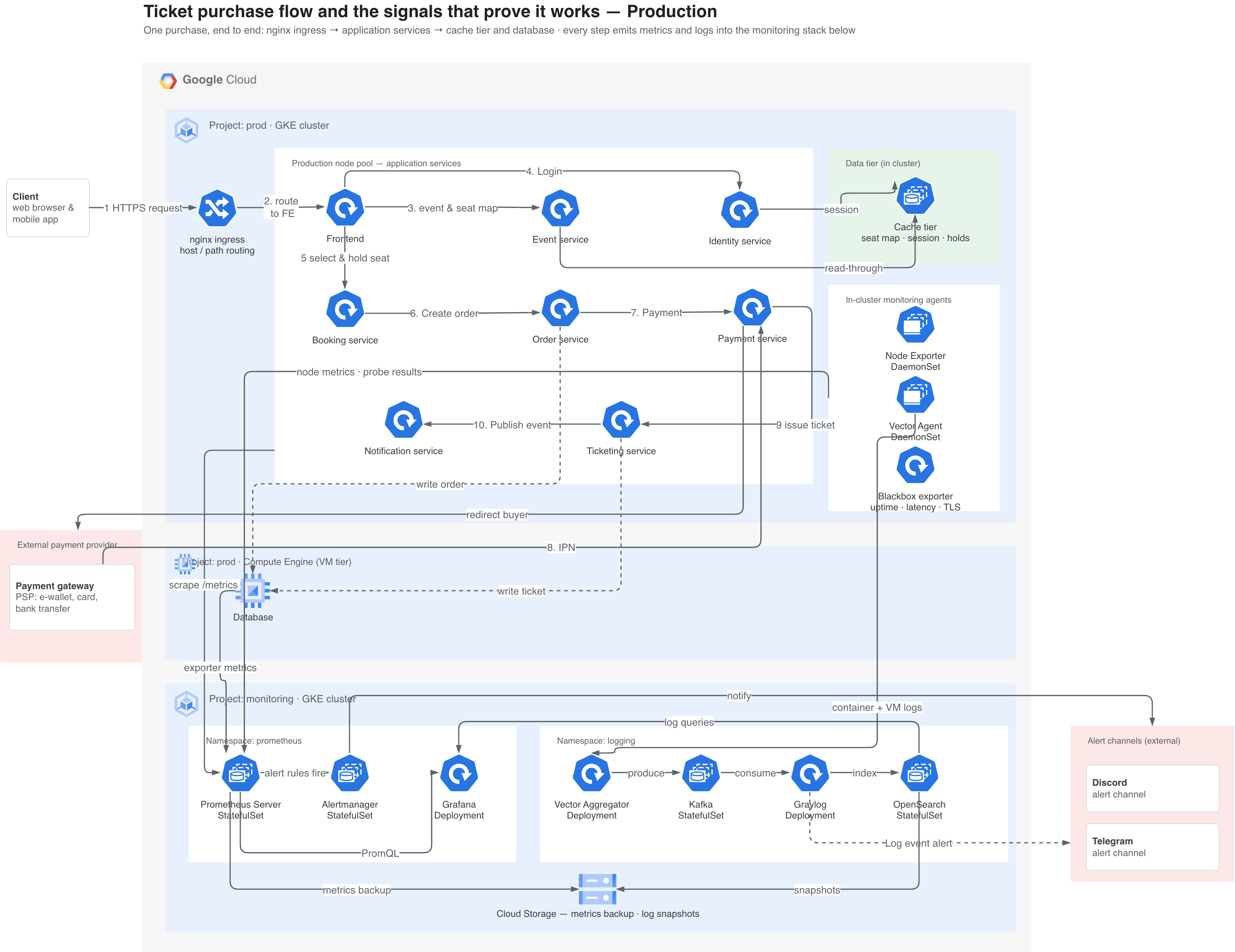
The new architecture replaced the monolith with agile Go microservices running on Google Kubernetes Engine (GKE). To maintain precise control over the database during high-pressure booking windows, Ticketbox kept PostgreSQL self-managed on Compute Engine, while running Redis, Kafka, and Elasticsearch on dedicated node pools inside Google Kubernetes Engine (GKE). This setup allows the engineering team to direct compute power exactly where it is needed, eliminating platform-wide scaling bottlenecks.
Isolating traffic spikes and achieving
40% cost efficiency
To keep the platform stable during massive traffic spikes, Ticketbox separated its user journey into three distinct phases: queuing, booking, and payment processing. Incoming traffic flows through Cloud Load Balancing, with perimeter security and bot protection managed by Cloud Armor and reCAPTCHA Enterprise.
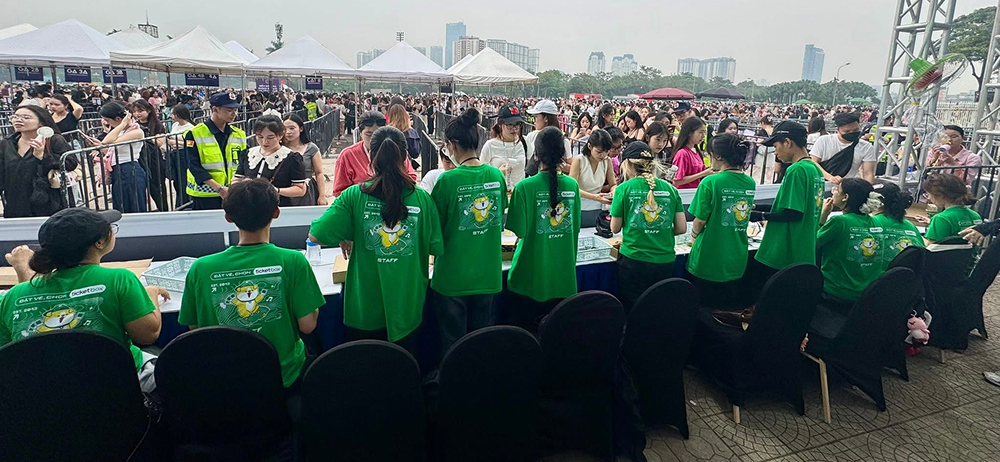
This setup proved its value during a major televised music franchise sale. As over 200,000 fans flooded the site, public traffic surged to 80,000 requests per second (RPS). The new queue acted as a shock absorber, absorbing the initial surge and letting only a controlled number of buyers into the booking phase. By leveraging database connection management (pgpool) to protect PostgreSQL alongside Redis for atomic seat-locking, Ticketbox successfully processed 30,000 tickets in the first five minutes without backend bottlenecks.
Best of all, this operational resilience actually lowered expenses, reducing overall cloud costs by 40%. Ticketbox optimizes its spending by using Committed Use Discounts (CUDs) for everyday baseline traffic, while adding on-demand GKE capacity in pre-planned stages just before a major sale goes live.
With everyday media streams supported by Cloud Storage and Cloud CDN, Ticketbox is now looking beyond core infrastructure. By unifying its ticketing data in BigQuery and Looker, the company delivers real-time sales analytics directly to event organizers. The team is also exploring Gemini to automate fan support inquiries during high-demand sales—showing how Google Cloud is accelerating their growth.
On Google Cloud, our core architecture behaved exactly as designed under extreme load. The queue absorbed the full surge of 80,000 requests per second so our booking services never saw that pressure, allowing GKE to handle smooth transactions from start to finish.
Nguyễn Khánh Bằng
Chief Technology Officer, Ticketbox
Ticketbox is Vietnam’s premier ticketing and live entertainment platform. Beyond core ticketing, it provides gifting features, an official resale marketplace, and artist-to-fan community hubs.
Industry: Ticketing and Entertainment
Location: Vietnam
Products: Google Kubernetes Engine (GKE), Compute Engine, Cloud Load Balancing, Google Cloud Armor, reCAPTCHA Enterprise, Cloud Storage, Cloud CDN, BigQuery, Looker, Data Studio, Cloud Logging, Cloud Monitoring
About Google Cloud partner – Cloud Ace
Cloud Ace is a Google Cloud Diamond Partner and Managed Service Provider, specializing in cloud architecture optimization, commercial pricing strategy, and localized billing administration for businesses across Japan and Asia Pacific (JPAC).