Smooth scalability
Enhanced performance
Reduced operational load
Controlled infrastructure costs
Clearer reports thanks to Generative AI
Tardigrade AI transforms complex scientific data into strategic financial indicators, helping organizations anticipate their exposure to climate hazards. To support its growth, the company chose Google Cloud.
Tardigrade AI transforms complex scientific data into strategic financial indicators, helping organizations anticipate their exposure to climate hazards. To support its growth, the company chose Google Cloud.
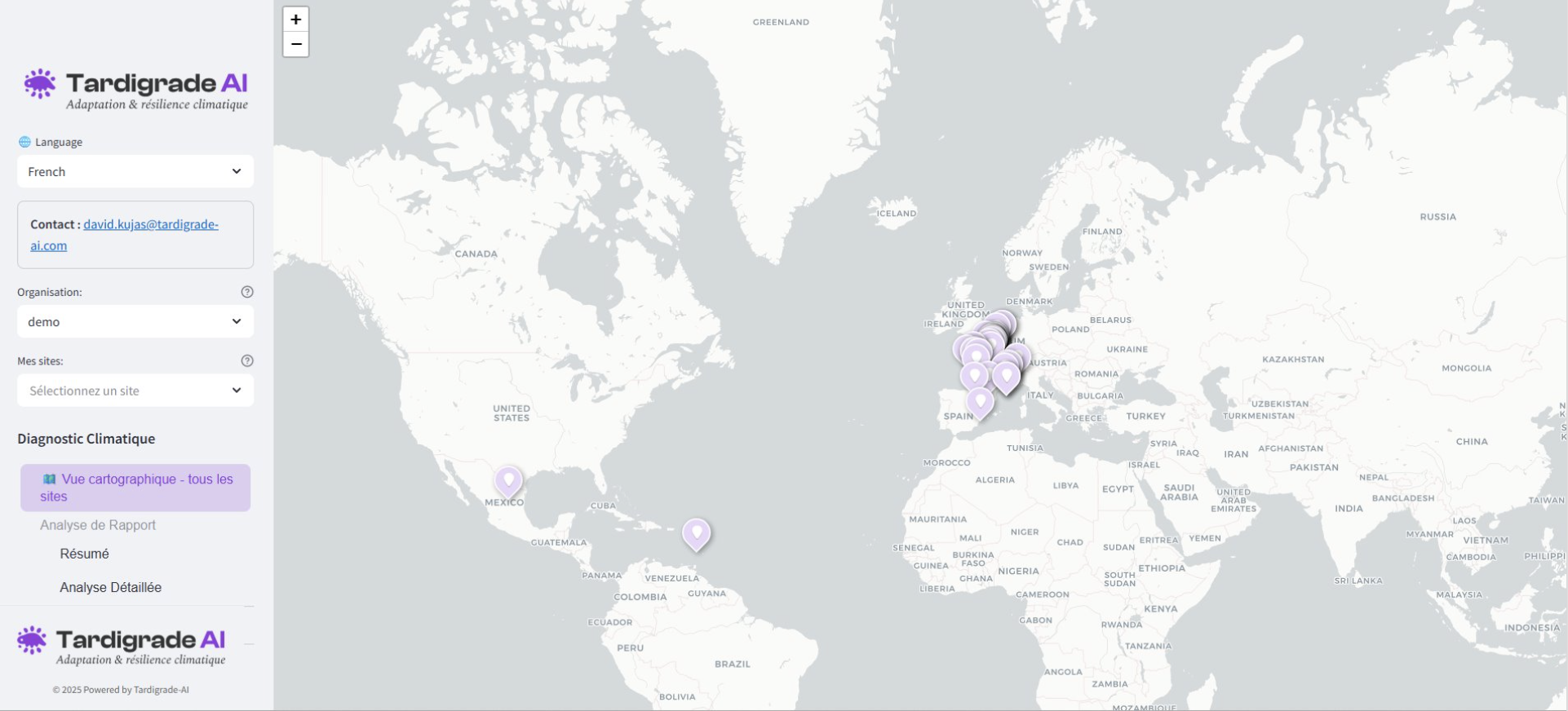
Founded in 2019 and marketing its platform since 2022, Tardigrade AI is on a mission to enable economic players—from agri-food manufacturers to financial institutions and local authorities—to understand their real exposure to climate hazards through to the year 2100. Its SaaS solution, Adapt, transforms scientific data into a true decision-support tool capable of projecting exposure to climate perils for every building or industrial site.
"You just need to indicate a latitude and longitude. Our platform then calculates the financial risk for our clients based on the year, their activities, and, of course, climate projections for the chosen location. In other words, we transform climate risk into financial risk to give our clients a precise idea of the cost of climate inaction and identifying which levers they can pull to anticipate and protect their activities," explains David Kujas, Co-founder and Managing Director of Tardigrade AI.
Google Cloud: A strategic choice to support growth and innovation
Initially, Tardigrade AI developed and hosted its platform on a university supercomputer at Arts et Métiers (ENSAM). However, as the solution developed and the first clients arrived, the need for a more flexible infrastructure became apparent. "The increasing load was becoming difficult to absorb, and we had to manage the infrastructure ourselves.
We needed a scalable platform capable of handling our heavy computing needs to simplify industrialization," explains David Kujas.
After a comparative study conducted with Valtech, Google Cloud emerged as the clear choice. Several criteria weighed in the balance: the robustness of the infrastructure and data ecosystem, the maturity of managed services, and advancements in AI, not to mention strict GDPR compliance. "The computing power, reporting capabilities, orchestration simplicity, and the level of innovation in generative AI offered by Google Cloud were decisive," confirms David Kujas. "And being able to rely on an infrastructure compliant with European standards definitely solidified our choice, as this is an essential point for some of our clients, such as local authorities."
We transform climate risk into financial risk to give our clients a precise idea of the cost of climate inaction and identifying which levers they can pull to anticipate and protect their activities.
David Kujas
Co-founder and Managing Director, Tardigrade AI
A platform designed for scale, industrialization, and cost control
Together with Valtech, Tardigrade AI rebuilt a cloud-native architecture. The modernization relies on Cloud Run to execute workloads, BigQuery to centralize and exploit data, Cloud SQL and Cloud Storage to manage user accounts and reports, and Cloud Workflows and Pub/Sub to orchestrate the entire process.
The computing power, reporting capabilities, orchestration simplicity, and the level of innovation in generative AI offered by Google Cloud were decisive, not to mention being able to rely on an infrastructure compliant with European standards—an essential point for some of our clients like local authorities.
David Kujas
Co-founder and Managing Director, Tardigrade AI
Operational since December 2024, the new version addresses both technical and economic challenges, as highlighted by Chrys Le Gall, Google Cloud Architect at Valtech: "The platform adjusts automatically according to activity, which wasn't possible before. This ability to scale on demand guarantees performance while controlling costs, as it avoids financing fixed resources for workloads that, by nature, vary significantly."
This flexibility, reinforced by the use of managed services that reduce operational maintenance needs, allows Tardigrade AI to refocus its efforts on its core business today.
It also constitutes an essential prerequisite for processing the massive and heterogeneous data sources used by the company, whether from insurance databases, public data, partner sources, or the Copernicus program (the European Union's Earth observation system). At the heart of this data architecture, BigQuery unifies massive volumes and provides an essential abstraction layer, offering Tardigrade AI specialists (climatologists, econometricians, and AI experts) unified and simplified access to all data.
Generative AI to transform raw data into actionable insights
AI then transforms this data capital into strategic information. The climate and econometric models used in Adapt, entirely developed in-house, constitute the scientific heart of the platform. However, the results they produce can sometimes be difficult for non-specialists to grasp. To facilitate understanding and offer clear reports to its clients, Tardigrade AI relies on Gemini models: they interpret the results and render them in accessible language. Thanks to this generative component, client reports are automatically produced and enriched with natural language summaries, peril-by-peril insights, and immediate operational adaptation recommendations. "We use generative AI to go from data to insight, the goal being to offer our clients intelligible analyses and directly actionable indicators, thereby facilitating informed decision-making," notes David Kujas.
Gemini also intervenes in certain analysis modules, notably to contextualize water level projections derived from an internal model fed by over 440,000 natural disaster recognition orders (arrêtés CatNat) published by the French state over several decades. By confronting model projections with these thousands of real-world floods, Tardigrade AI refines its estimates and offers clients orders of magnitude that are even more reliable and closer to situations likely to occur on their sites.
Finally, Tardigrade AI is working on the possibility of querying BigQuery in natural language with Gemini, so that platform users can explore climate data even without technical skills, as well as AI agents to automate certain expert tasks. "The objective is to go ever further in providing usable information by simplifying data access and accelerating analyses," emphasizes David Kujas.
Google Cloud allows us to move faster, further, and to focus our efforts on what counts: helping organizations understand their climate exposure and build their financial resilience.
David Kujas
Co-founder and Managing Director, Tardigrade AI
Going further in climate risk management support
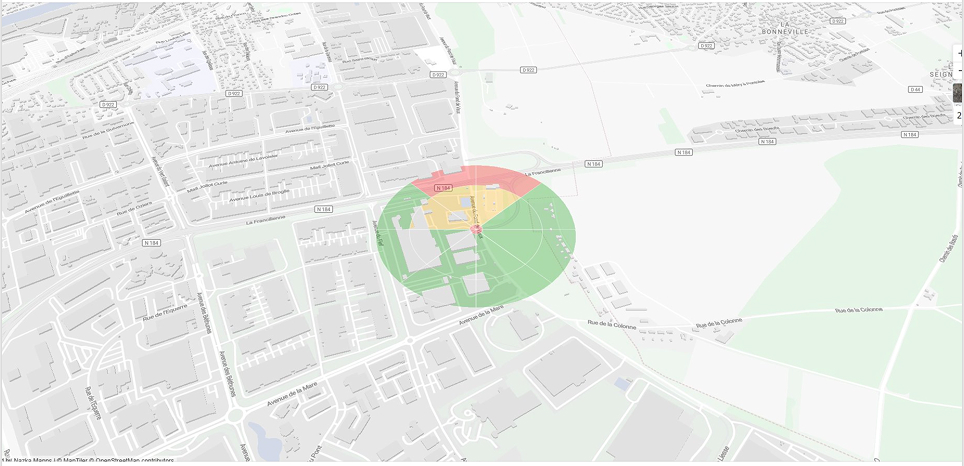
Empowered by a cloud-native infrastructure, Tardigrade AI continues to enrich its platform. The migration of dashboards to Looker will soon offer dynamic visualizations to finely explore Climate Value at Risk or the cost of inaction. Integration with Google Earth is also expected to foster a better perception of risk. "One meter of water is complicated to grasp. But if I place that meter of water next to a vehicle parked in front of your office in a Google Earth visualization, immediately, you understand better. It allows you to see where the water risks entering and to adapt protection measures," illustrates David Kujas. "This visual realism will help decision-makers objectify the return on investment of preventive measures, such as installing flood barriers or elevating equipment."
This dynamic of innovation extends to R&D: Tardigrade AI is closely monitoring work by Google Labs on modeling complex climate phenomena (storms, hail) to integrate them as soon as they become available. For David Kujas, these advances could further strengthen analysis precision. "Indeed, the adoption of Google Cloud clearly marked a turning point in our evolution: it allowed us to accelerate development, expand our international presence, and open new perspectives by combining Google Cloud's innovation strength with our own." A view shared by Valtech, for whom this project responds to "a major social and environmental necessity," recalls Serge Biscard, Managing Director of Valtech France. And it is precisely this course that David Kujas intends to maintain: "Google Cloud allows us to move faster, further, and to focus our efforts on what counts: helping organizations understand their climate exposure and build their financial resilience."
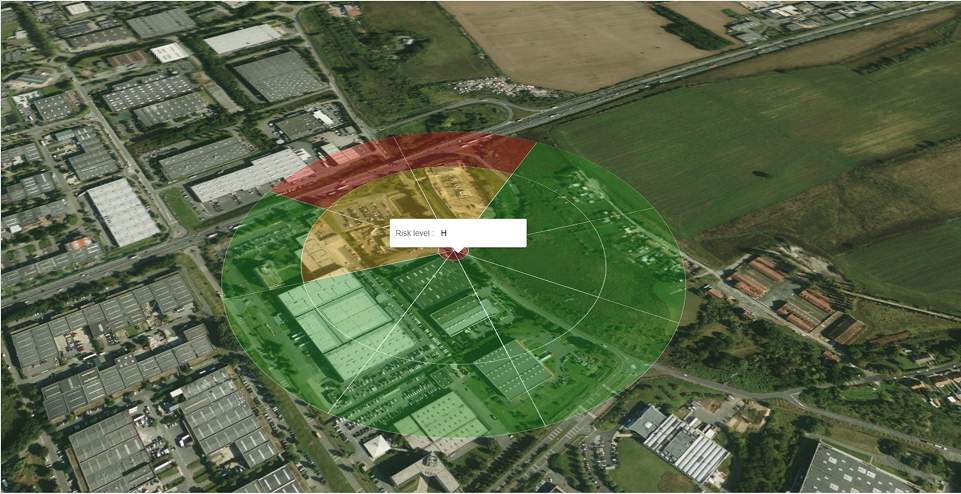
Founded in 2019, Tardigrade AI develops Adapt, a SaaS platform that transforms complex scientific data into financial indicators to help organizations anticipate their exposure to climate risks. Commercialized since 2022, the solution provides precise projections—down to GPS coordinates—on perils such as floods, droughts, or violent winds, offering its clients a reliable and operational reading of climate risk.
Industries: Climate Tech, Other
Location: France
Products: Google Cloud, BigQuery, Cloud Run, Cloud SQL, Cloud Storage, Cloud Workflows, Pub/Sub, Gemini