70% of researchers strengthened their positions for grants and proposals
67% achieved significant time savings and research acceleration
60% successfully completed a major component of their core research
200+ researchers launching more than 80 projects in the first year
The State University of New York’s AI platform, built on Google Cloud, accelerates discovery, paving the way to double research volume.
The State University of New York’s AI platform, built on Google Cloud, accelerates discovery, paving the way to double research volume.
Advancing research and discovery, safely
Researchers need control of their intellectual property. If they accidentally release their data or ideas into a commercial tool, they lose their ability to move that along the tech transfer process in the future. Keeping this in a safe technology stack allows researchers freedom to experiment without risk of loss.
Catherine Stollar Peters
Director of Research Data Strategy, The State University of New York
As the largest federated system of higher education in the United States, the State University of New York (SUNY) spans 64 campuses, including four premier R1 research institutions, two medical universities, and nine doctoral programs. With 93% of New Yorkers living within 15 miles of a campus, SUNY serves 1.4 million students and supports an extensive network of thousands of researchers responsible for nearly a quarter of academic research in New York.
After SUNY Chancellor John B. King Jr. and New York Governor Kathy Hochul announced an ambitious goal to double research across its system, SUNY recognized it would need to invest in research infrastructure, including AI, to fast-track new breakthroughs. However, making AI technologies available to thousands of users requires a careful balancing act between protecting academic assets without stifling creativity.
In particular, SUNY wanted to avoid researchers turning to shadow IT or paying out of pocket for unvetted commercial tools that lack proper protection or governance.
“Researchers need control of their intellectual property. If they accidentally release their data or ideas into a commercial tool, they lose their ability to move that along the tech transfer process in the future,” explains Catherine Stollar Peters, the director of research data strategy in the SUNY Office of Research, Innovation, and Economic Development. “Keeping this in a safe technology stack allows researchers freedom to experiment without risk of loss.”
To empower its community safely, SUNY developed the SUNY AI Platform in partnership with Google Cloud. This system-wide, secure, and scalable ecosystem provides access to cutting-edge AI technologies, high performance computing, and specialized tools, while safeguarding proprietary data and intellectual property. Now, researchers can skip the technical complexity, giving them more time to focus on what they do best—finding solutions to the world’s biggest problems.
Building a one-stop shop for cloud and AI
We started with building a foundational infrastructure within Google Cloud, and on top of that, we built the SUNY AI portal to make a one-stop shop for researchers that doesn’t require them to be cloud engineers to get their work done.
Catherine Stollar Peters
Director of Research Data Strategy, The State University of New York
Bringing a vision of this scale to life meant ensuring that anyone, regardless of expertise, could utilize advanced technologies in their daily work.
“Our overarching goal was to give access to AI tools and resources to faculty, students, administrators, and researchers across the system,” Stollar Peters reflects. “We started with building a foundational infrastructure within Google Cloud, then on top of that, we built the SUNY AI portal to make a one-stop shop for researchers that doesn’t require them to be cloud engineers to get their work done.”
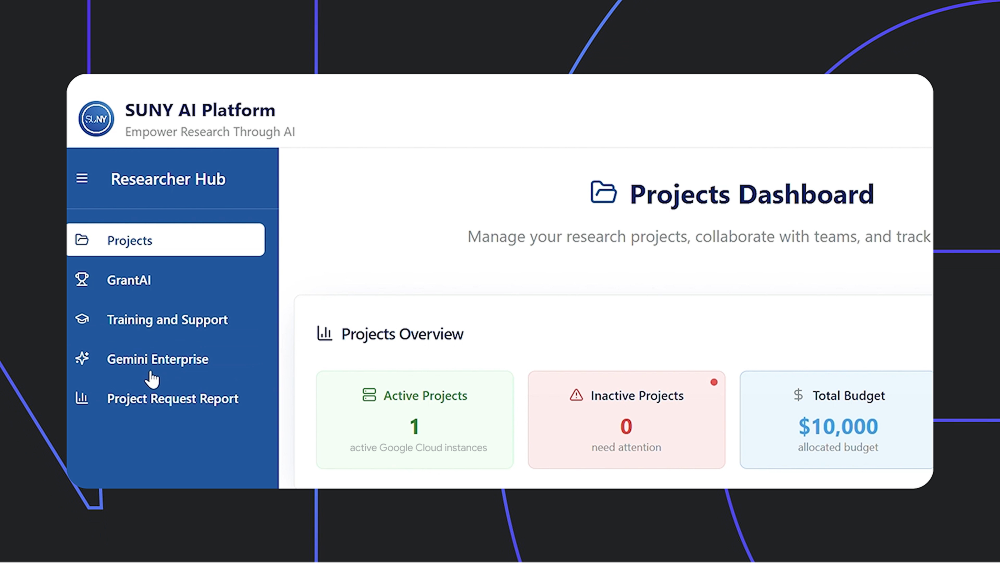
Rather than struggling to build complex infrastructure or set up tools, users now have a “front door” to Google Cloud AI and computing resources. For instance, researchers can simply sign into the portal with their existing institutional credentials and request dedicated workspaces on Google Cloud based on templates or their own custom project settings.
They can reach the Gemini platform, reserve compute engines using processing power from Google’s AI Hypercomputer, and access over 200 models in the Model Garden, providing integrated infrastructure to speed the time to science.
The portal also enables researchers to tackle complex tasks and uncover insights faster by connecting to Google-made agents like Gemini Notebook (formerly NotebookLM) or building their own custom AI workflows with Gemini.
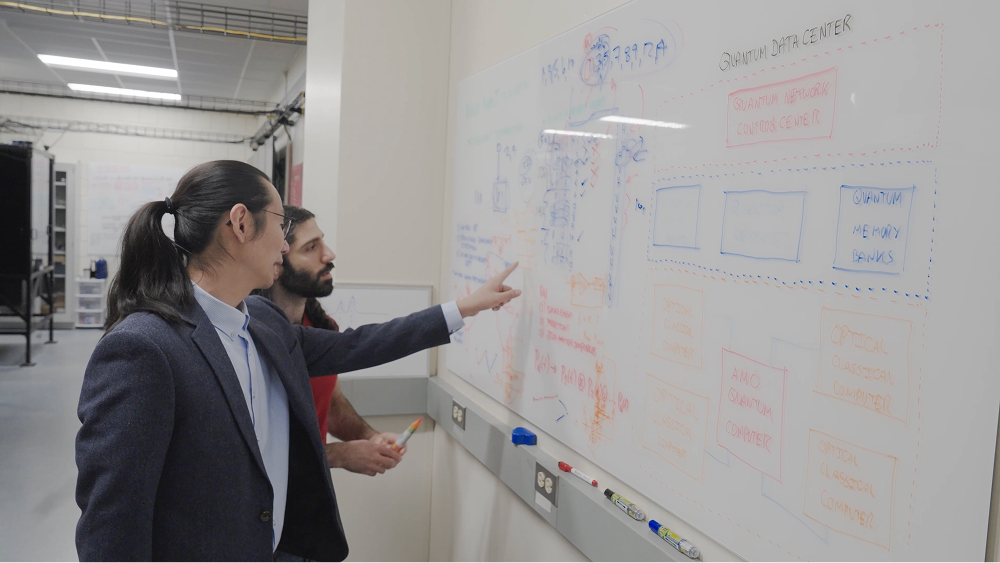
“We were really compelled to use Google Cloud in order for researchers to do their work in one central place,” Stollar Peters says. “The outcome of the platform was a safe, secure technology stack that allowed researchers to access AI-enabled tools without having them to depend on shadow IT.”
While the platform’s immediate priority is empowering researchers, this initial phase is only the beginning. The foundational infrastructure is purposely built to scale, laying the groundwork to eventually enable the entire SUNY system to leverage these same secure AI capabilities and more.
Shaping a better future for generations
We’re really thrilled to bring this together to democratize AI across the system, making sure that our research and our students are ready for a 21st century world. SUNY has a new way to advance societal and scientific impact for the public good across New York state and beyond.
Catherine Stollar Peters
Director of Research Data Strategy, The State University of New York
In its first year, the SUNY AI Platform has gained significant momentum, with over 200 researchers launching more than 80 projects across a diverse range of disciplines—from pharmacy studies and geospatial data to education, mental health, and computer science.
This success stems from a phased rollout, starting with three top-tier research campuses and scaling to add six additional doctoral-granting institutions. By working closely with technology and research leaders, along with the researchers themselves, SUNY tailored the platform to meet user needs from the outset, fueling rapid adoption. Strategically, SUNY also made it easier for researchers to get started by initially using only public data and data not protected by additional regulations, kick-starting experimentation without the burden of complex compliance regimes.
According to Stollar Peters, this purposeful approach is already yielding measurable impact for researchers across SUNY:
- 70% strengthened their position for grants and proposals.
- 67% achieved significant research acceleration and time savings.
- 60% successfully completed a major component of their core research.
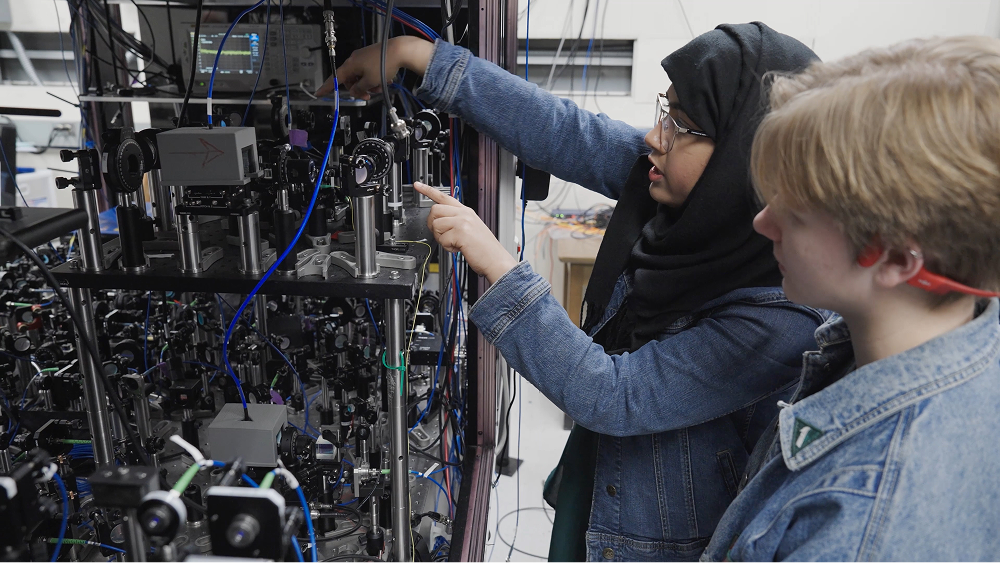
“For some of them, the work that took days to complete, they were able to complete in a few hours,” she adds. “That allowed them to focus on the work instead of administration and setting up the tools to do the job.”
SUNY is continuing to expand the AI Platform’s capabilities, integrating specialized research tools like GrantAI, which allows researchers to find collaborators, awards, and use AI to develop initial proposals. Looking forward, the next step will be expanding the platform to support highly regulated, sensitive information like HIPAA and CMMC (Cybersecurity Maturity Model Certification) data, using Google Cloud to establish the appropriate audit trails, security protocols, and compliance frameworks across its campuses.
“We’re really thrilled to bring this together to democratize AI across the system, making sure that our research and our students are ready for a 21st century world,” Stollar Peters says. “SUNY has a new way to advance societal and scientific impact for the public good across New York state and beyond.”
The State University of New York (SUNY) is the largest comprehensive system of higher education in the United States, serving a total 1.4 million students across its 64 colleges and universities. Across the system, SUNY has four academic health centers, five hospitals, four medical schools, two dental schools, a law school, the country’s oldest school of maritime, the state’s only college of optometry, and manages one US Department of Energy National Laboratory.
Industry: Public Sector
Location: United States
Products: Gemini, AI Hypercomputer, Gemini Notebook