Accelerated feature development by 20% with the MongoDB-compatible API
Simplified concurrency using native conditional updates
Eliminated complex application-layer coordination logic
Saved 5 hours of database management per week
SeaMe scales its creator platform and accelerates feature rollout by upgrading to Firestore with MongoDB compatibility on Enterprise edition.
SeaMe scales its creator platform and accelerates feature rollout by upgrading to Firestore with MongoDB compatibility on Enterprise edition.
Overcoming the operational limits of rapid growth
Built by SeaArt.AI, SeaMe is a thriving creator-driven social commerce platform designed to help users easily discover, share, and monetize their unique digital content. The platform has experienced explosive growth, rapidly expanding to support over 1,000,000 active users and more than 3,000 creators, while seeing upwards of 1,000 new pieces of content published every single day.
In its early stages, SeaMe successfully built its data foundation on Firestore Native mode on Standard edition, which provided excellent out-of-the-box scalability and a fully managed infrastructure that allowed the small engineering team to focus on initial product launches. However, as the user community multiplied and the product matured, the core user experience began to rely heavily on highly dynamic, personalized feeds. Delivering these customized experiences meant executing increasingly complex queries that filtered data across multiple dimensions, such as creator, category, and time, while simultaneously ranking content by popularity and real-time engagement. As these query scenarios multiplied, maintaining indexes to serve these queries became a significant operational overhead for the engineering team.
We realized that our industry is changing rapidly, and we needed to evolve our infrastructure to support dynamic content experiences. Firestore Standard edition provided excellent scalability early on, but our growing scale required a more sophisticated approach to handling complex data interactions seamlessly.
Xiang Shen
Technical Lead for SeaMe, SeaArt
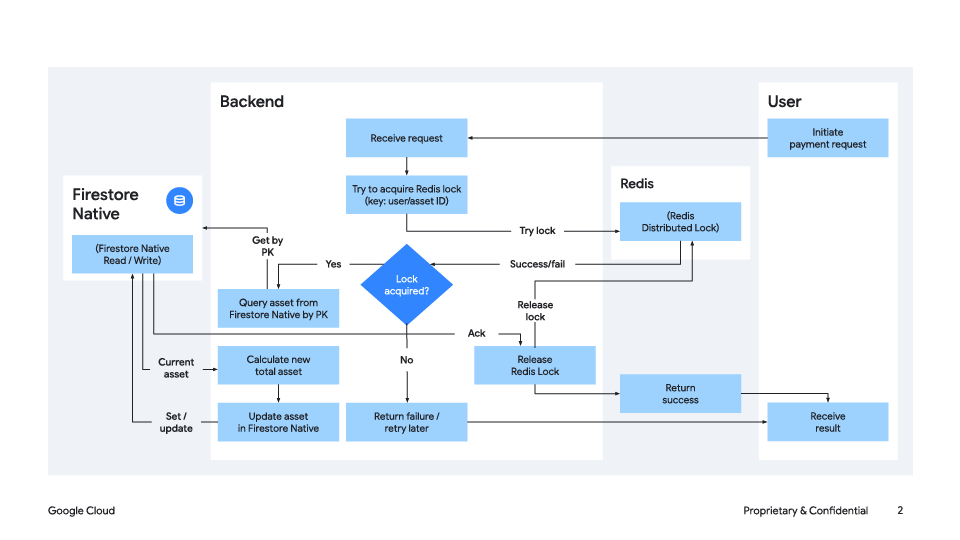
New feature requests demanded intricate new query combinations, which complicated index overhead and significantly slowed down the team's ability to iterate rapidly. Simultaneously, the platform's immense growth introduced complexities around high-concurrency updates, particularly within core ecommerce workflows such as inventory deduction and user asset maintenance during order placement. Because Firestore Standard edition requires a 'read-then-write' flow, simultaneous orders could read the same stock level, leading to critical risks like overselling or negative inventory.
To prevent these race conditions, engineers were forced to build custom, complex, and error-prone coordination mechanisms and application-level locks directly into the application layer. While this workaround functioned temporarily, it resulted in brittle logic that increased maintenance overhead and made vital backend workflows increasingly harder to manage.
Realizing that their underlying data layer needed to evolve to keep pace with these expanding product requirements, SeaMe initiated a selection process for a more robust and flexible database architecture that could scale seamlessly without disrupting their existing cloud-native environment.
Unlocking multi-dimensional querying with MongoDB compatibility
To address their growing pains without completely rewriting their database layer, SeaMe decided to upgrade to Firestore Enterprise edition. The absolute game-changer for the engineering team was the Enterprise edition's advanced query engine and its newly introduced MongoDB API compatibility.
The Firestore MongoDB-compatible API enables us to leverage enterprise capabilities and take advantage of our BSON data to provide personalized results. Now, our users can easily find the content they need, and we can effectively implement new platform features through our advanced query engine.
Xiang Shen
Technical Lead for SeaMe, SeaArt
By leveraging the Firestore MongoDB-compatible API, SeaMe completely transformed how it handled complex data retrievals for its application feeds. To deliver customized experiences, the platform needed to execute intricate queries that filtered data across multiple dimensions, while simultaneously ranking content by engagement. The enhanced query functionality, advanced indexing controls, and performance advantages provided by this MongoDB API compatibility allowed developers to run sophisticated queries directly against BSON-compatible document data. This empowered the engineering team to effortlessly combine multiple conditions for personalized feeds, such as combining creator IDs, category tags, and timestamps into unified query patterns.
Ultimately, this enhanced Firestore Enterprise edition allowed SeaMe to support evolving product requirements without introducing any unnecessary operational bloat. Developers no longer had to spend hours manually configuring and maintaining complex index structures.
Instead, the advanced query engine automatically optimized data retrieval paths, instantly speeding up new feature development and reducing database management overhead. Furthermore, this transition was entirely frictionless because the team could use their existing data during the migration with zero transformation, allowing the team to enjoy the benefits of an enterprise-grade NoSQL database while utilizing familiar MongoDB syntax and tooling.
This combination of flexibility and familiarity eliminated the steep learning curve typically associated with migrating to a new database platform. This allowed SeaMe to maintain its rapid development pace and continuously roll out innovative features to its global creator community. By eliminating the backend bottlenecks that previously slowed them down, the platform has managed to cultivate a highly responsive digital ecosystem where content creators can seamlessly engage with millions of active users daily.
Simplifying concurrency control and accelerating future growth
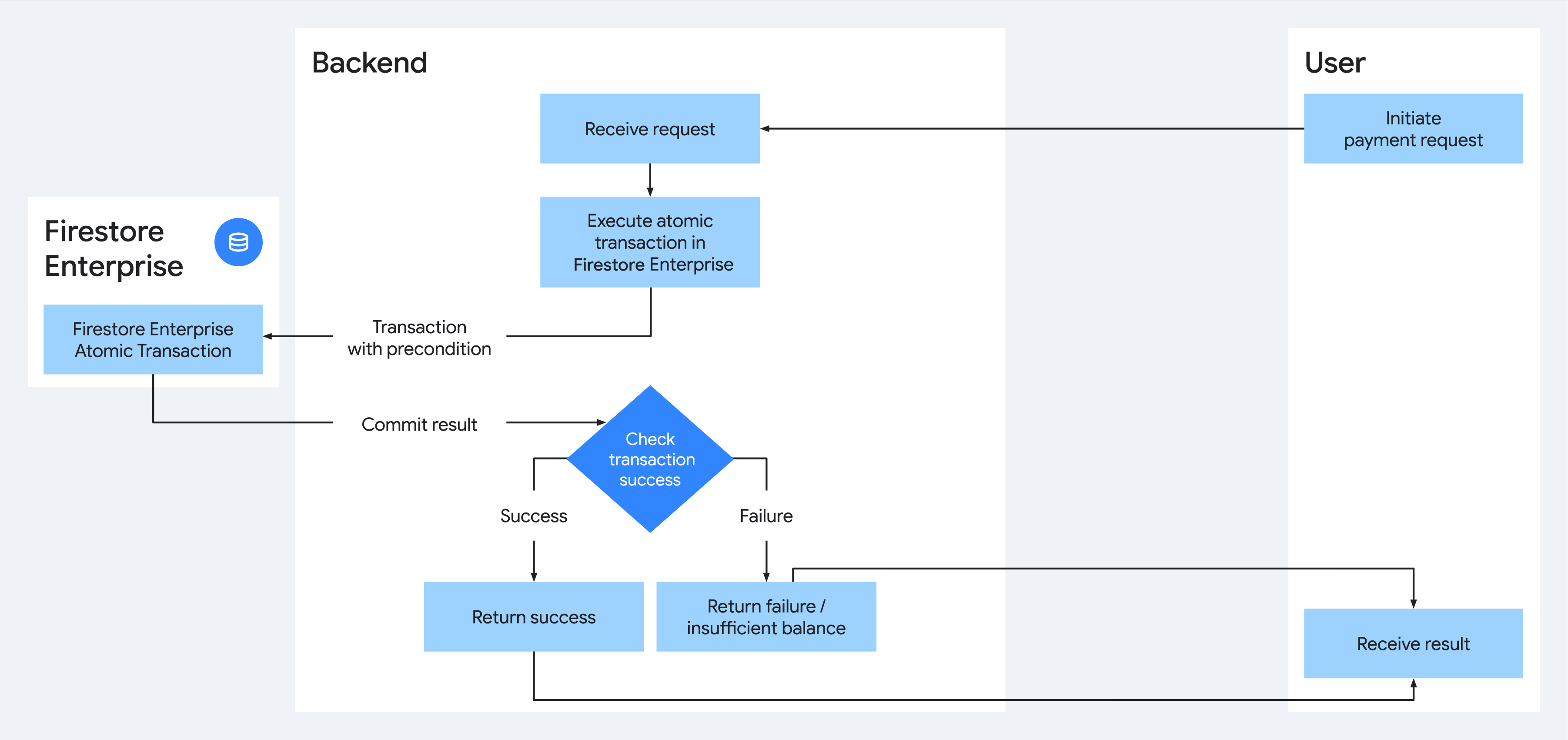
Beyond transforming multi-dimensional queries, Firestore Enterprise edition with MongoDB API compatibility provided an exceptionally clean and efficient mechanism for handling high-concurrency update scenarios across the platform. Instead of relying on messy, error-prone application-layer workarounds or building temporary coordination logic to prevent race conditions, the engineering team now leverages Firestore’s native optimistic locking mechanism.
By utilizing native conditional update patterns, such as executing precise, atomic conditional update operations, the database now handles concurrency control directly at the infrastructure level. SeaMe can now execute precise, atomic conditional update operations directly at the infrastructure level.
SQL
db.test.update({"nopk": 1},
{"$set": {"nopk": 2}})
This fundamentally simplifies concurrency handling in its most critical operational workflows and strips away the need for application-level locks or brittle coordination mechanisms. By adopting an enterprise-grade database architecture armed with robust MongoDB API compatibility, SeaMe has drastically reduced the engineering overhead associated with maintaining complex query patterns and high-concurrency transactions.
Upgrading to Firestore Enterprise edition allowed us to handle high-concurrency update patterns with clean, native infrastructure controls. Our engineering operations are now substantially more efficient, and our team is fully liberated to build highly engaging, advanced experiences for our rapidly expanding creator community.
Bin Wu
Backend Software Engineer, SeaArt
This has directly boosted their overall development efficiency, enabling the engineering team to deploy new features in days rather than weeks.
Today, SeaMe’s backend engineers are no longer burdened by tedious infrastructure management, required index creation for executing queries, or data consistency workarounds. Instead, they are fully focused on building the next generation of advanced, scalable content experiences, interactive commerce tools, and monetization features for their rapidly expanding community.
As the creator economy continues to grow, this reliable cloud foundation ensures that SeaMe can seamlessly scale to support tens of millions of users without experiencing performance degradation or increased operational costs. The transition to Firestore Enterprise edition has effectively turned their data layer from a scaling bottleneck into a powerful catalyst for continuous, long-term platform innovation. By relying on Google Cloud's fully managed ecosystem, the team can confidently look forward to pioneering new industry standards in social commerce without worrying about data infrastructure constraints.
SeaMe, built by SeaArt.AI, is a creator-driven social commerce platform where over one million users discover, share, and monetize content.
Industry: Retail
Location: China
Products: Firestore, Firestore with MongoDB compatibility