First EMEA retailer with native voice shopping live in production
Voice assistant available across ~19 million products
Scaled expert product advisory from 5 to 50 categories—and growing
Custom orchestration layer keeps conversations fluent and controlled
OTTO became Europe's first retailer with a native voice shopping assistant, turning expert advice into a real conversation.
OTTO became Europe's first retailer with a native voice shopping assistant, turning expert advice into a real conversation.
Why search wasn't the final answer
OTTO is the largest German online retailer, offering ~19 million products from both its own wholesale business and 6,100 marketplace partners. Its history runs through every major wave of retail change, from the thousand-page printed catalog to one of Europe's earliest ecommerce platforms. Adapting has long been part of OTTO's DNA. As generative AI matured into a reliable foundation, the question for OTTO's AI team was no longer whether to build conversational shopping, but how to make the experience feel like a real conversation.
Search has always been a powerful tool, but it answers in lists. A customer typing "washing machine" gets thousands of results and starts filtering. A customer who wants advice—"What's a quiet machine for a single-person household with a dog?"—needs something search alone cannot deliver: a back-and-forth dialogue, follow-up questions, and a recommendation that explains itself. That gap is where the project began.
In November 2024, the team set out to build a true advisory experience and identified voice early on as the interface best suited to that ambition. The hypothesis was simple: spoken conversation could create deeper engagement, encourage customers to share richer context, and ultimately improve the quality of advice.
AI is fundamentally changing digital shopping. With our new AI assistant, developed together with Google, we are creating, for the first time, a natural, dialogue-driven shopping experience that feels like a real conversation—just like in a specialty store.
Dr. Boris Ewenstein
CEO, OTTO
A text chatbot would provide the foundation, but voice was the interface that could make digital consultation feel natural. Google had been a development partner since earlier 2023 experiments. With Gemini's emerging capabilities and direct support from Google's forward-deployed engineering team, OTTO chose Gemini as the Gemini platform on which to build the new assistant.
The technical bet was significant. When the team started, Gemini's native audio model was not yet production-ready. OTTO chose to start anyway, betting that the model would mature alongside the build.

Building a voice that knows the aisles
Because Gemini Live with native audio was still in development, OTTO first tested an interim approach: extending the existing text assistant with speech-to-text and text-to-speech layers. Functionally, the setup worked. Customers could speak to the assistant, and the assistant could respond. But in remote user tests, the experience did not create the excitement the team was looking for. It felt less like a real conversation and more like a voice-operated text chatbot, with noticeable pauses between turns. Customers responded by using short commands—“Trousers”—rather than sharing the richer context that makes advisory shopping valuable. The test made one thing clear: voice control alone would not be enough. To create deeper engagement and better advice, OTTO needed a native audio experience built for real conversation.
We had a functional cascading approach that worked. But it never created that ‘wow!’ moment in user tests. We wanted customers to be genuinely surprised by the experience. That only started happening once we built on Gemini Live.
Volker Carlguth
Senior Product Manager AI Focus, OTTO
The breakthrough came in November 2025, when Gemini Live had matured enough for production. OTTO rebuilt the voice path on the Live API with native audio. Instead of cascading text into speech, two models now run in parallel: the text assistant continues to drive guardrails, recommendations, and search, while the live audio model handles the conversation in real time, coordinating turn by turn. Chirp 3 handles German speech recognition, a capability that improved measurably as Google iterated during the build. End-to-end latency dropped from 8–9 seconds in early prototypes to under two.
Keeping that fluency under control required something new. OTTO's engineers in Hamburg, with hands-on support from Google's product and engineering teams, built an orchestration layer drawn from formal methods—the kind used to verify concurrent systems, not just test them. It lets the team make provable guarantees about conversation behaviour: a guardrail like "never offer medical advice" holds even when the model is mid-response and multiple signals are arriving at once. On the search side, the system treats imprecise requests—"a very quiet washing machine"—as a retrieval and validation problem: candidates are surfaced, then re-evaluated for fit by Gemini 2.5 Flash before anything reaches the customer.
Early signals from a listening catalog
The voice assistant entered open beta in early May 2026. Production data is only days old at the time of writing, but early customer behavior already validates the central design bet. In voice mode, customers tell the assistant more than they would ever type. In one test session, a customer describes a broken lamp in passing—"a wire is sticking out"—and the model surfaces the right replacement product. Voice draws out context, text never captures.
The advisory pattern itself scales. OTTO began with five product categories hand-crafted alongside category experts, then used Gemini to extend the same structure to fifty more, with the next wave covering the full catalog now in progress. Soon, the system will integrate user-generated product reviews into the advisory step, giving the assistant access to the language real customers use about real products.
In parallel, OTTO operates a second AI assistant for customer service—handling orders, deliveries, and returns—built in-house under stricter data-privacy requirements. Running the two tracks separately bought speed; the long-term direction is unification. An internal OneBot initiative is already underway to bring shopping and service into a single conversational experience, eventually agent-to-agent.
We started building before the model was ready, betting that Google would deliver—and Google delivered. The pace of improvement was the most impressive part of the partnership.
Volker Carlguth
Senior Product Manager AI Focus, OTTO
The further horizon is more ambitious. OTTO is exploring agentic capabilities for routine purchases (replacement orders, recurring needs) and multimodal extensions such as virtually placing furniture in a customer's own room—never on autopilot, always with the customer in control. For a company that has navigated every wave of retail change since the printed catalog, conversation is simply the next interface.
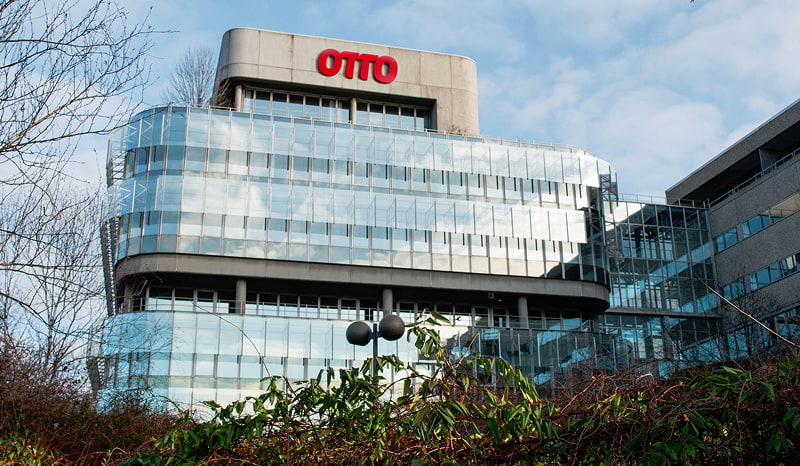
Germany's largest online retailer. From 1949 catalogs to AI-powered shopping, OTTO has reinvented retail at every turn.
Industry: Retail
Location: Germany
Products: Gemini platform, Gemini Live API (Native Audio), Gemini 2.5 Flash, Gemini 3 Pro, Chirp 3