
Nearly 17,000 articles published monthly
Zero unsubstantiated claims across 400 published articles
Global coverage of private market news
More time dedicated to proprietary, exclusive insights
Gain leverages Google Cloud and Gemini to collect, structure, and verify information on private companies, their investors and lenders, and the transactions shaping private markets.
Gain leverages Google Cloud and Gemini to collect, structure, and verify information on private companies, their investors and lenders, and the transactions shaping private markets.
Scaling data management to drive reliable analysis
Relative to private markets, public markets offer a standardized information environment: financials are externally audited, issuer communications are regulated as to content and timing, and prices are observable continuously. Private companies operate under far lighter disclosure obligations. Information is correspondingly scarcer, dispersed across incompatible sources, and often inconsistent. Figures, if available, arrive on different accounting bases, for different periods, with no common definition of the underlying metrics. Under these conditions, the difficulty for investors is not judgment but inputs: establishing a reliable factual baseline before any evaluation, comparison, or allocation decision can be made.
"In such a highly competitive market, having the right information at the right time can be the difference between winning a deal and missing an opportunity. At Gain, we collect, verify, and connect fragmented data to give our clients a reliable, contextualized view of high-interest companies—whether they are targets for investment, financing, or acquisition—and their entire ecosystem. They spend less time researching, can move faster on deals, and stay ahead of the competition," explains Brian Leenen, Director of Data Engineering at Gain.
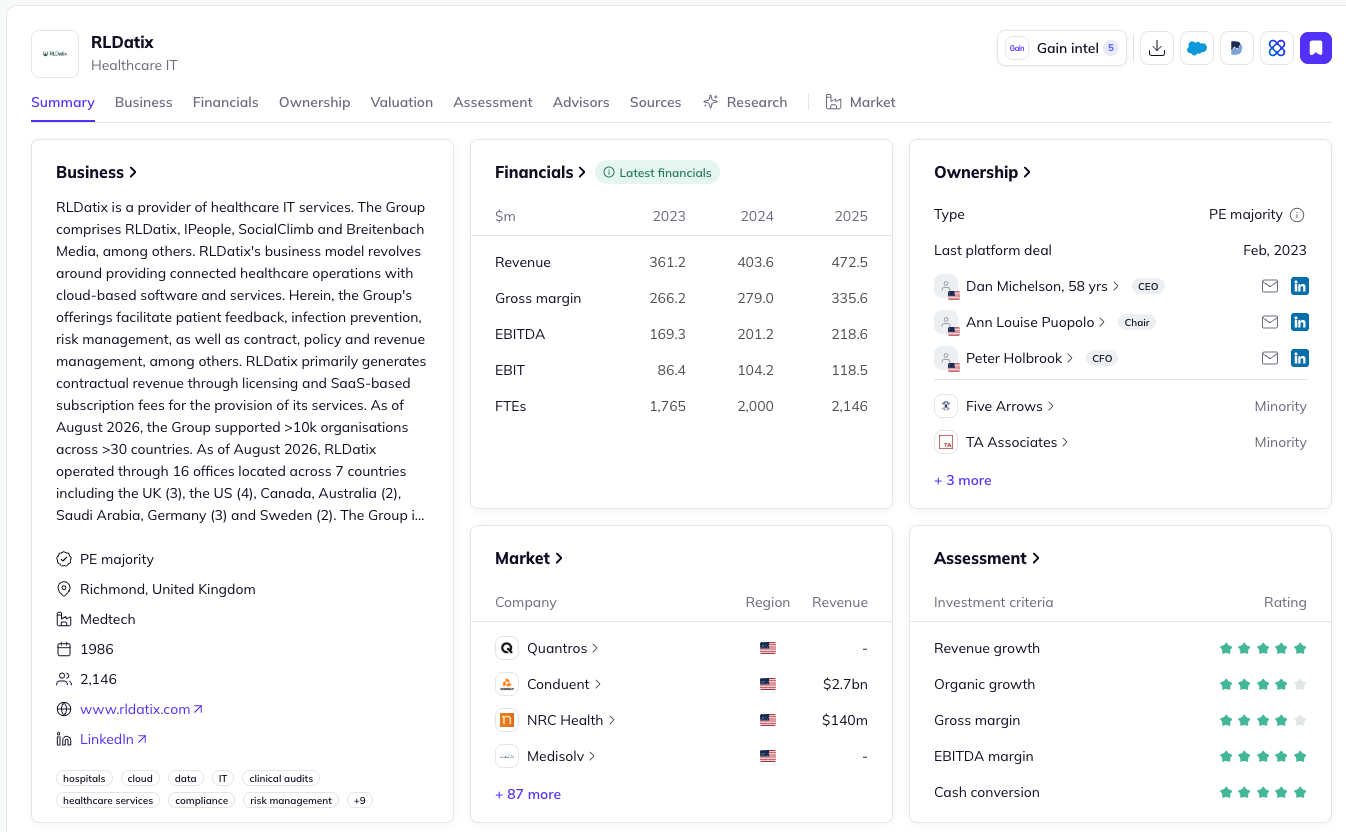
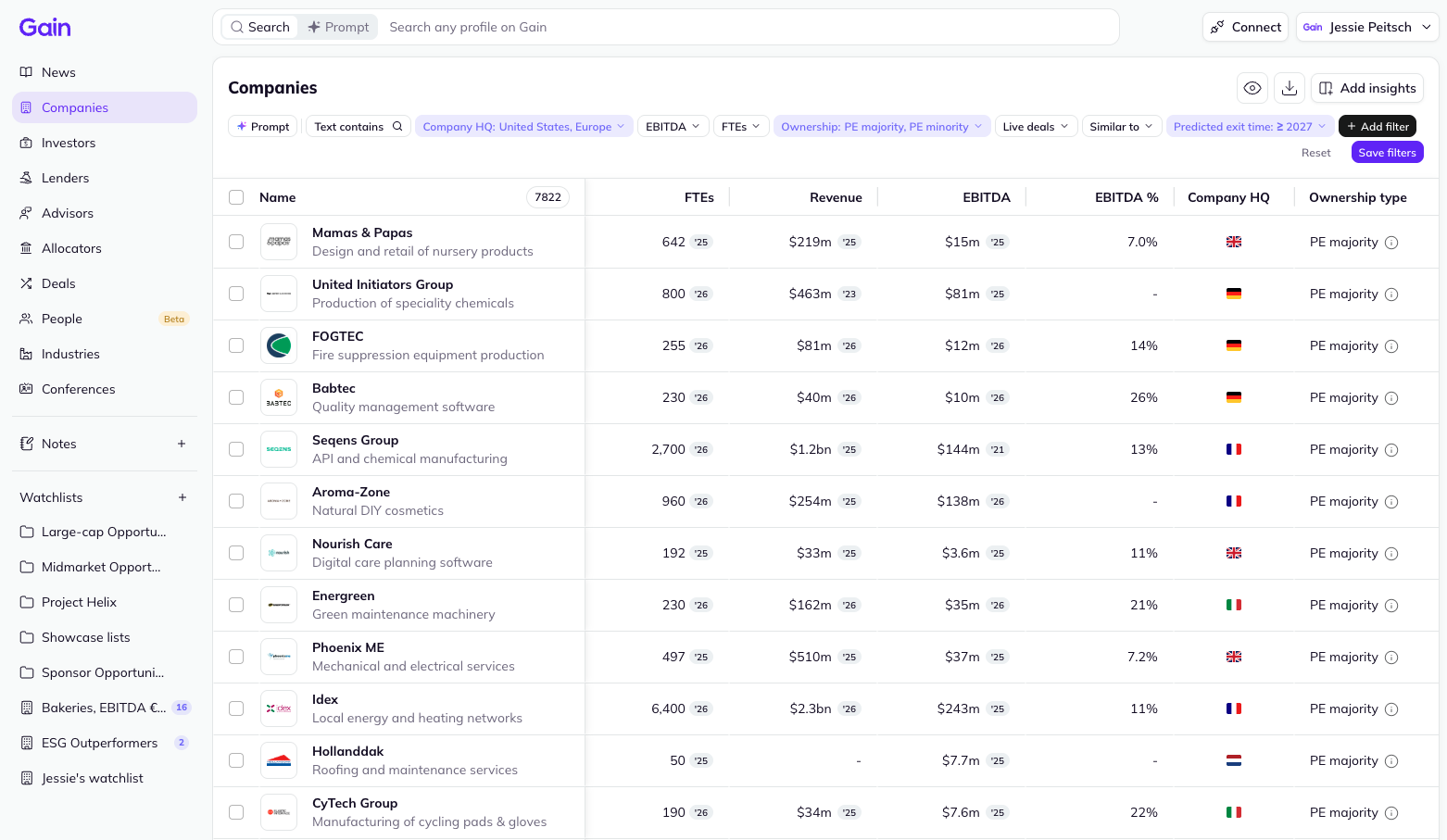
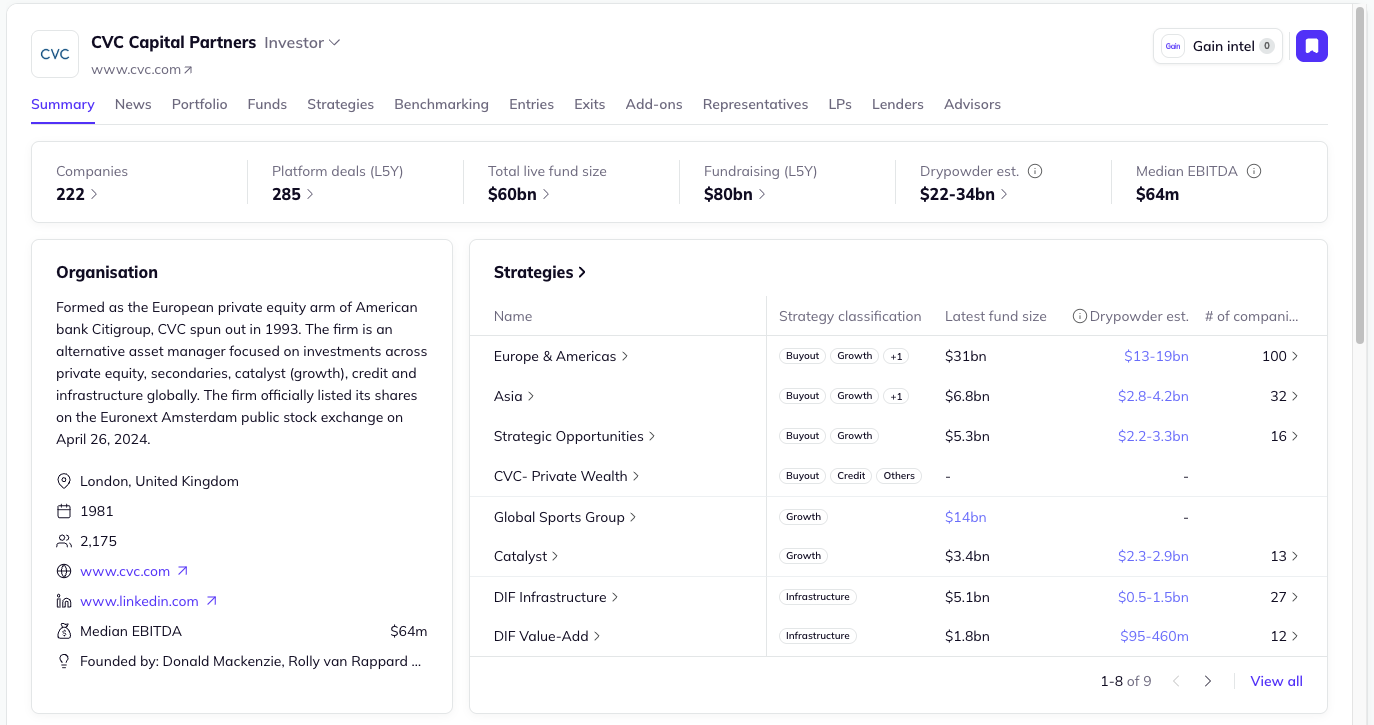
Founded in Amsterdam in 2018, Gain saw what others were starting to feel: private markets held more potential than ever, but were getting harder to win in. What began as a better way to do private market research has grown into something bigger: The private markets super app. With over 500 employees, including nearly 300 analysts, the Dutch company has developed a SaaS platform that centralizes information on private companies, their financial performance, shareholders, investors, lenders, and transactions.
However, as Brian Leenen points out,"The challenge goes beyond automated data collection. Our goal is to provide an integrated, reliable view of a complex ecosystem. Therefore, our core value lies in our ability to cross-reference often contradictory sources and ensure we substantiate every claim."
In such a highly competitive market, having the right information at the right time can be the difference between winning a deal and missing an opportunity. At Gain, we collect, verify, and connect fragmented data to give our clients a reliable, contextualized view of high-interest companies and their entire ecosystem.
Brian Leenen
Director of Data Engineering, Gain
To build this detailed mapping of private markets, Gain designed data pipelines that crawl the web to identify new companies, detect financial filings, and track funding rounds and M&A activity. From the beginning, the company chose Google Cloud to power its infrastructure. At the heart of its platform, AlloyDB—a fully managed, PostgreSQL-compatible database service from Google Cloud—centralizes millions of company profiles, transactions, and investment funds. Meanwhile, Cloud Run provides the scalable compute power needed to run these high-volume processes.
"With Google Cloud, we found technical depth, high performance, and ease of use all in one place," Leenen continues. "The intuitive design of the services makes it easy to understand the role of each component, allowing us to seamlessly integrate and interconnect them to enhance our offerings over time."
Human analysts then step in to verify, enrich, and contextualize the gathered data. They also interact directly with private company executives, investors, and advisors to obtain insights that aren't publicly available. This approach allows Gain to combine the efficiency of automated data collection with human expertise that can put the data into perspective and validate it before publication.
Accelerating and accelerating coverage with Generative AI
To scale its private market coverage globally, Gain integrated Google Cloud's Gemini models using the Gemini Enterprise Agent Platform. The goal: automate intermediate tasks like consolidation, drafting, and fact-checking, without ever compromising on data quality.
Alongside its analyst organization, Gain runs a small, dedicated team of reporters focused exclusively on news coverage. "Covering global private markets news using a traditional newsroom model... would have required a massive workforce," Leenen explains. "Instead, we maintain a lean, highly experienced team of reporters who spend most of their time where the value is: speaking with market participants, reading fragmentary evidence, and assembling information that is not published anywhere."
Between sourcing and the final publishing decision, a custom pipeline powered by Gemini takes over. First, Gain's proprietary Facts Composer module aggregates relevant sources, whether from the web, Gain's databases, or internal analyst notes. Next, Gemini analyzes and cross-references the information, evaluating document recency, source reliability, and the potential for corroboration. The pipeline then generates a unified factsheet that highlights confirmed data, flags discrepancies between sources, and identifies the most reliable details. Gemini then drafts an article from this factsheet, tailoring the tone for Gain's audience. Last, Gemini performs a source-reconciliation check, reviewing the article sentence by sentence. Every single claim must map back to a specific data point in the factsheet and a verified source. If a sentence is not sufficiently substantiated, the article is rejected, and the pipeline restarts.
Among all the models we tested, Gemini’s pricing structure is exceptionally competitive relative to the performance it delivers. It allows us to scale up our rigorous verification process cost-effectively.
Brian Leenen
Director of Data Engineering, Gain
"To minimize noise and the risk of hallucination, we run all these verification steps three times and use majority voting," Leenen adds. "This is a key advantage of Gemini: among all the models we tested, its pricing structure is exceptionally competitive relative to the performance it delivers. It allows us to scale up our rigorous verification process cost-effectively."
Once these automated checks are complete, the final decision remains in human hands: analysts retain sole authority over publishing. This "human-in-the-loop" model is central to Gain’s philosophy—AI handles the time-consuming groundwork, while humans provide critical editorial judgment.
Driving meaningful and measurable results at scale
By combining automation with human validation, Gain has successfully scaled its news production. Its pipeline now verifies and publishes over 17,000 articles per month. This allows the company to systematically apply a rigorous verification standard to all of its content.
Moving forward, we want to go even further to provide our clients with a predictive decision-making tool unlike anything else on the market. That is our clear ambition, and in Google Cloud, we have the perfect partner to bring this global vision to life.
Brian Leenen
Director of Data Engineering, Gain
The business impact is clearly reflected in the quality of the generated content: the share of sentences flagged as unsubstantiated had been reduced to 0.46% by the time the beta was complete. The small fraction of articles that still trigger errors (roughly 3%) are automatically discarded and regenerated before ever reaching an analyst. In fact, across a recent sample of 400 published articles, not a single unsupported or unsubstantiated claim made it past the multi-layered verification system.
"With this triple-checking process, our analysts receive highly reliable drafts: they spend far less time on corrections and can focus entirely on final editorial validation," Leenen notes.
Building on this success, Gain plans to leverage generative AI further to enrich its market intelligence capabilities. By combining the structured data on its platform with Gemini’s reasoning power, Gain aims to help clients target the right stakeholders faster and better evaluate investment and acquisition opportunities.
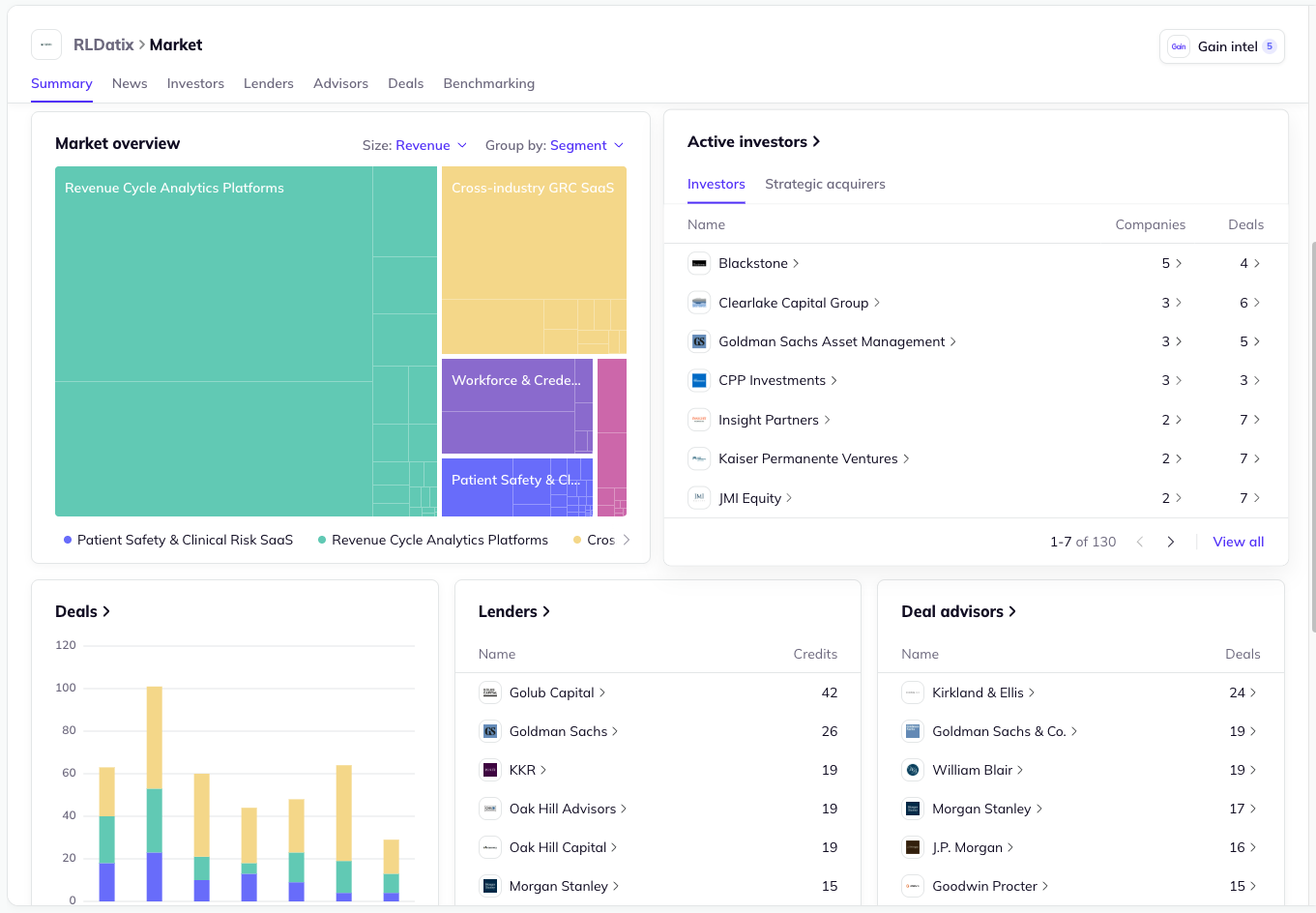
"By drastically reducing research and analysis time, our platform is already helping finance professionals get ahead of sales cycles, identify prime opportunities faster, and win deals in a highly competitive market. Moving forward, we want to go even further to provide our clients with a predictive decision-making tool unlike anything else on the market. That is our clear ambition, and in Google Cloud, we have the perfect partner to bring this global vision to life," concludes Leenen.
Gain operates globally with offices in New York, London, Amsterdam, Frankfurt, Warsaw, and Bangalore. Gain develops a SaaS private market intelligence platform. The company collects, structures, and analyzes data on private companies, their shareholders, investors, lenders, and transactions. With a team of about 400 employees, Gain combines AI and human expertise to provide dealmakers the "Private Markets Super App."
Industry: Financial Services
Location: New York City
Products: Gemini Enterprise Agent Platform, AlloyDB for PostgreSQL, Cloud Run