Boosted workforce reliability with 98% routing accuracy
Cut costs by charging only for completed drop-offs
Simplified billing with automated, per-head costing
Etapath helps South African companies move workers safely, reliably, and affordably with Google Maps Platform Mobility.
Etapath helps South African companies move workers safely, reliably, and affordably with Google Maps Platform Mobility.
Getting people where they need to go, safely and on time
Efficient transportation services play an essential role in enabling people to access employment opportunities, especially those from remote and underprivileged communities. In South Africa, unreliable public transport and security concerns have long impacted workers’ ability to get to work safely and on time.
The country’s large corporate sector employs hundreds of thousands of people, while manufacturing remains a key employer. However, the lack of affordable and safe transportation options is a challenge for workers and employers alike.
Launched in 2020, Etapath looked to address this problem by providing businesses with door-to-door group transport solutions. The company picks people up from their homes and drops them off at their workplace, all at a cost comparable to that of public transport.
“People and the companies that employ them need transport that’s reliable, safe, and cost-effective,” says Benjamin Gordon, co-founder of Etapath. “But to use public transport, you have to be on a main road. Even then, service is unreliable and safety a major issue for women.”
We went with Google because they are a leader in the mobility space. What’s more, Google recognizes Africa as part of the picture. They want cutting-edge tech accessible worldwide, not just in the U.S. and Europe, which really aligns with our perspective.
Benjamin Gordon
Co-founder, Etapath
Faced with the need to move beyond manual processes and in search of greater stability, scalability, and data accuracy, the team partnered with OniGroup to integrate Google Maps Platform Mobility services, a process that took just three months. “We went with Google because they are a leader in the mobility space,” Gordon says. “What’s more, Google includes Africa in its global vision. They want cutting-edge tech accessible worldwide, not just in the U.S. and Europe, which really aligns with our perspective.”
From manual processes to real time accuracy
Etapath originally based its solutions on a self-built platform that required manual booking, route verification, and driver tracking processes. The system was labor-intensive and subject to glitches, and entailed high API costs as the client base grew. In addition, the company was in need of accurate, reliable data in order to continue to scale its offer. “Our former platform didn’t offer us what we needed in terms of data reliability,” Gordon explains. “Our routing was nowhere near as accurate as it is now, and we were constantly having to check drivers’ routes and verify everything manually. Now, Google Mobility APIs do all the heavy lifting.”
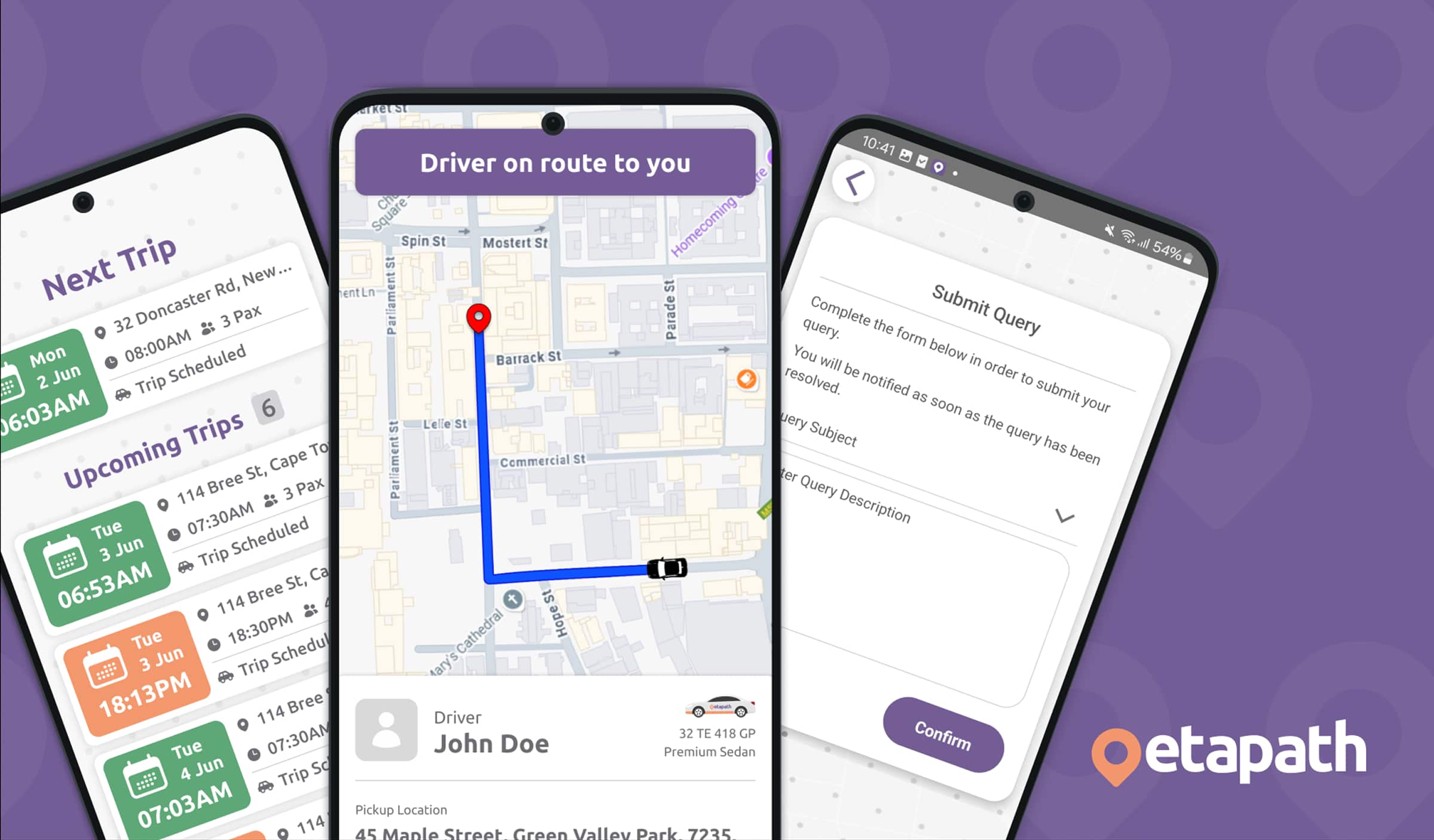
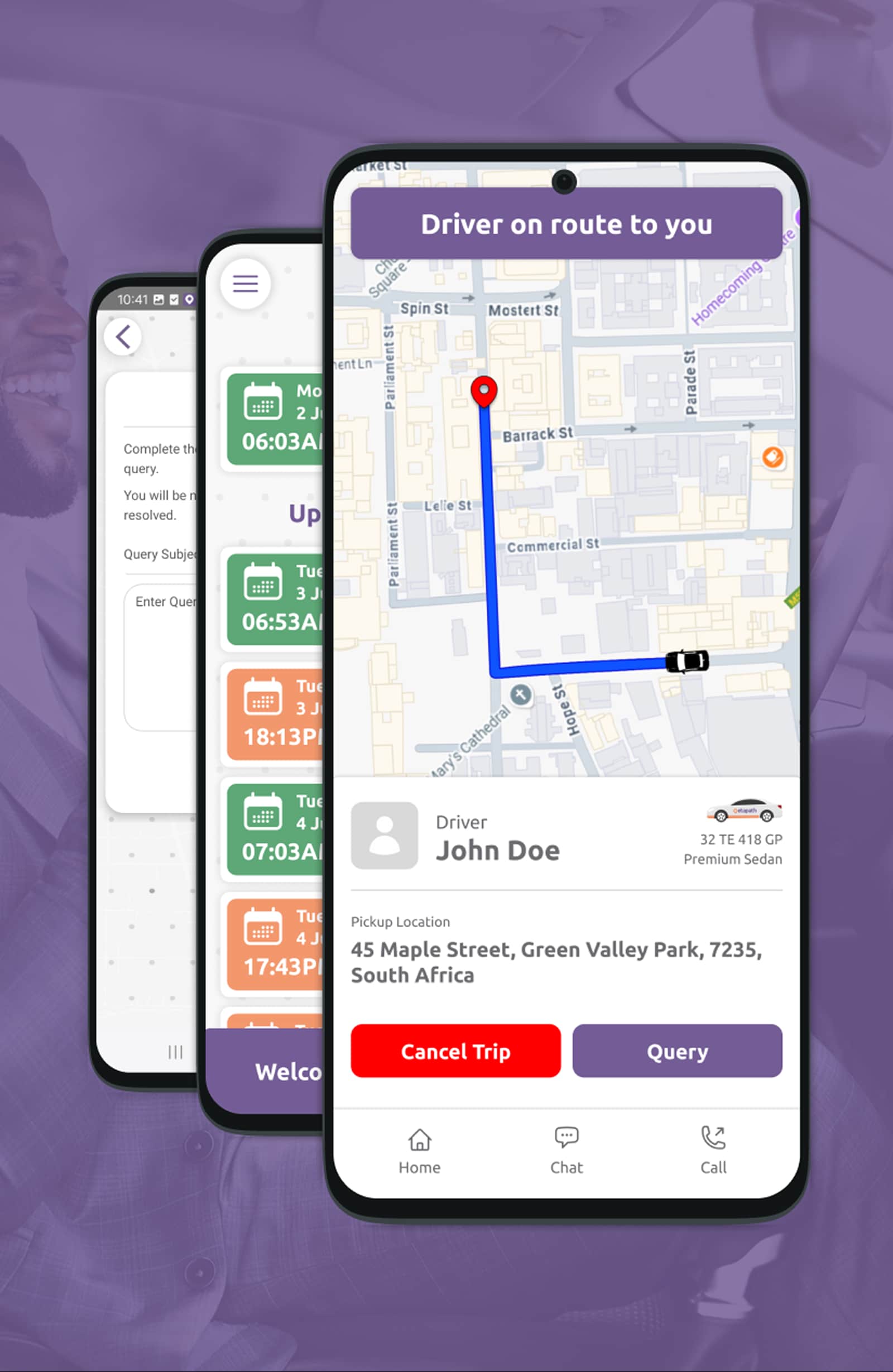
The solution uses the Routes API to group passengers into shared rides of four to 12 people per vehicle, while live tracking provides road-by-road visibility and accurate estimated arrival times. “The solution predicts which passengers can share rides, and creates the most efficient routes with turn-by-turn directions. Fleet tracking enables me to track the vehicle, know exactly who the driver is, see their registration plates, and provide an accurate time of arrival with a precise cost per head,” Gordon explains. “Employees download an app and have clear visibility over when their ride will arrive and how far they have to go.”
Our routing was nowhere near as accurate as it is now, and we were constantly having to check drivers’ routes and verify everything manually. Now, Google Mobility APIs do all the heavy lifting.
Benjamin Gordon
Co-founder, Etapath
Turning rideshares into workforce intelligence
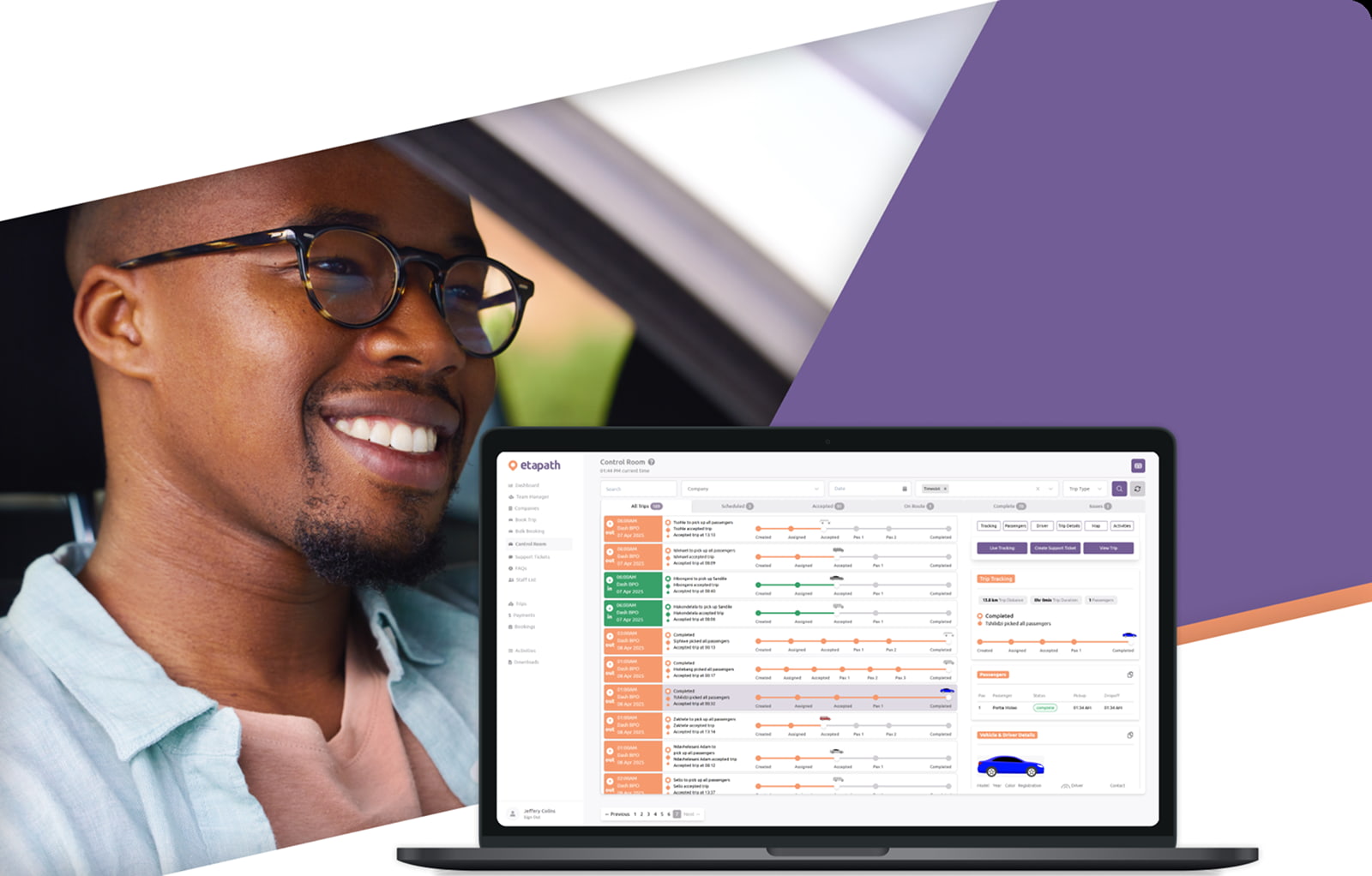
While many ridesharing services stop at transporting people efficiently, Etapath uses Google Mobility APIs to collect detailed trip data and convert it into workforce insights. Each trip generates a complete set of data, including pickup and drop-off times, delays, routes taken, and costs that Etapath transforms into actionable reports for its clients. “For example, we can use our data to advise companies to send employees to work in site A rather than site B, based on route complexity, traffic conditions, and where their workers are located,” Gordon explains.
The shift has also made billing more transparent and defensible. “Every region has its specific needs when it comes to transportation. In Africa, one of the most important factors is cost,” says Gordon. Per-head costing is now calculated from precise trip data such as distance and duration. Reports generated from Google Maps Platform Mobility data give employers a clear picture of where transport money is going and where efficiencies can be made.
In addition, the shift to Google Maps Platform Mobility has enabled Etapath to better control its own costs. The company’s previous setup meant that they were charged for a pickup and drop-off even if the trip was canceled. “Cancellations are common and being charged for trips that never happened was frustrating,” Gordon adds. “With Google Maps Platform Mobility, we only get charged for completed drop-offs, which has definitely lowered our costs and enabled us to stay competitive.”
Cancellations are common and being charged for trips that never happened was frustrating. With Mobility we only get charged for completed drop-offs, which has definitely lowered our costs and enabled us to stay competitive.
Benjamin Gordon
Co-founder, Etapath
Looking to the future with a shift to Google Cloud
The next step is fully automating operations through Google Mobility APIs, with grouping and driver assignment soon to be built into the system. This will reduce manual processes, cut costs, and allow the business to scale more rapidly. “Enabling full end-to-end automation will be a huge step forward for us,” says Gordon.
The company also plans to expand into the consumer market. Having refined its service through corporate clients, Etapath is preparing to launch a public-facing ridesharing app, designed specifically for the realities of African mass transport
Google Cloud has helped us evolve from a transport company to a trusted partner that helps customers work more efficiently and keep their people safer. It has been a true gamechanger.
Benjamin Gordon
Co-founder, Etapath
“Working with businesses is enabling us to fine-tune our offer and ensure that everything is perfect when we push to the public,” Gordon explains.
Data and analytics will continue to play a central role. A migration to Google Cloud will unify systems and open the door to advanced analytics using Looker and BigQuery. The vision is to give clients real-time dashboards and AI-powered queries, turning workforce transport into a source of intelligence for hiring, staffing, and cost control. “Google Cloud has helped us evolve from a transport company to a trusted partner that helps customers work more efficiently and keep their people safer. It has been a true gamechanger,” Gordon says.
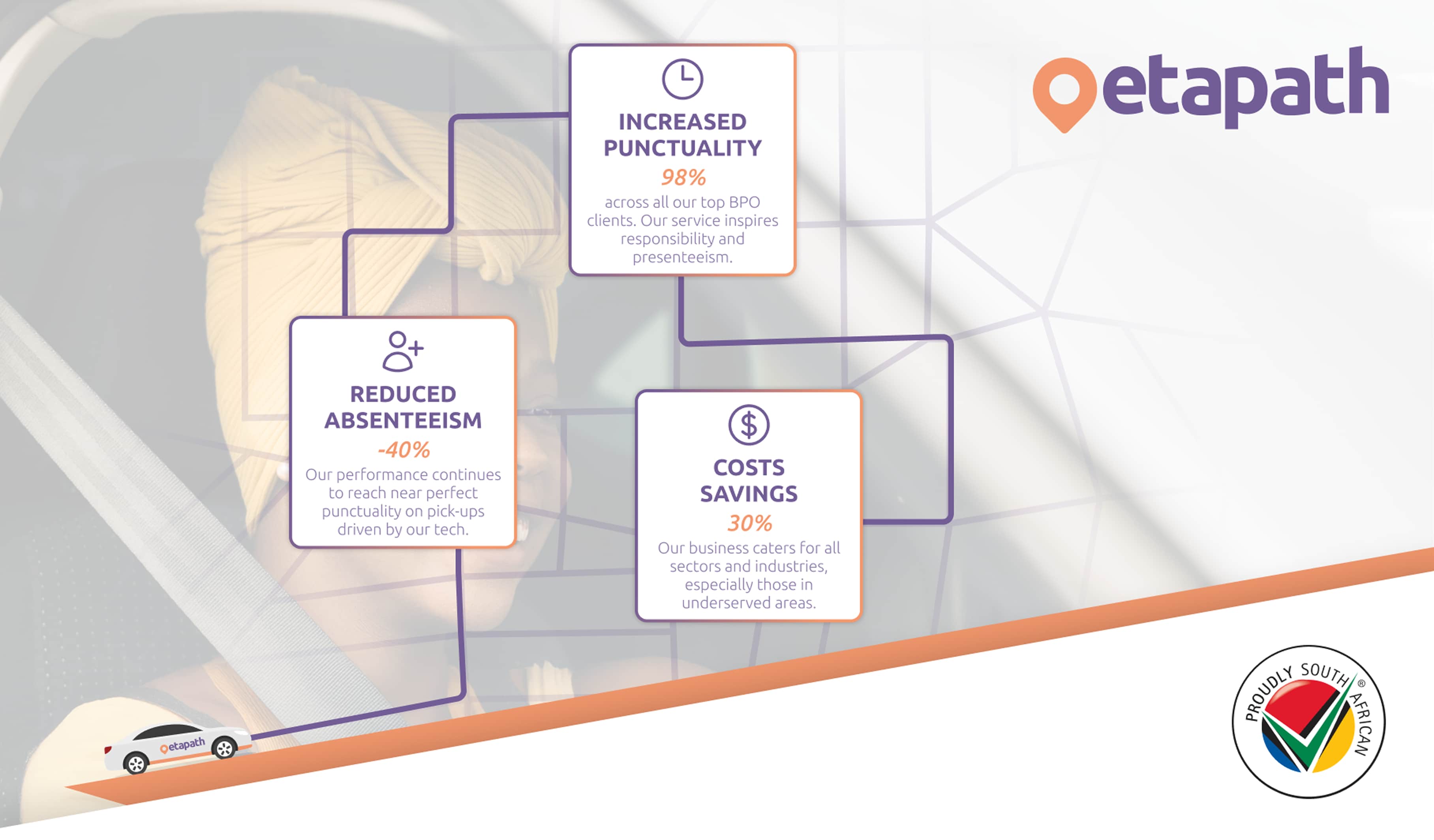
Etapath offers automated, safe, and transparent corporate transport. Headquartered in Johannesburg, it handles 5,000+ trips monthly, helping companies reduce absenteeism and cutting transport costs.
Industry: Travel and hospitality
Location: South Africa
Products: Google Cloud, Google Maps Platform Mobility, Routes API
About Google Cloud partner — OniGroup
OniGroup, a Google partner, helps 1,000+ clients in 50+ countries to build scalable, data-driven solutions powered by Google Maps, Google Cloud, and Workspace.