33% lower TCO, migrating 60+ apps and 30K cores
50% faster settlement times achieved for greater efficiency
85% reduction in disaster recovery time for critical SAP S/4HANA systems and 50% less latency for DAX® index engine: 13k+ indices, 30M ticks
10,000+ employees building and scaling AI, safely and securely
100+ agents deployed to automate workflows and data analysis
Deutsche Börse Group re-engineered critical systems on Google Cloud, boosting operational agility, resilience, and AI innovation.
Deutsche Börse Group re-engineered critical systems on Google Cloud, boosting operational agility, resilience, and AI innovation.
Modernizing mission-critical systems
For our core financial systems, we needed a platform that could match the performance of our existing environment while giving us the flexibility to innovate faster. Google Cloud provided that balance.
Daniel Besse
Chief Digital Transformation Officer, Deutsche Börse Group
Deutsche Börse Group is one of the world’s leading exchange organizations, providing the trading, clearing, and post-trade infrastructure that underpins global capital markets. Through Clearstream, its post-trade and custody business, the company acts as a central securities depository (CSD) that processes over one million daily transactions and safeguards trillions of euros in assets. Running systems at this scale across more than 60 markets requires exceptional reliability and low latency—and, of course, strict regulatory compliance.
For years, much of this critical infrastructure ran in on-premises environments.
While stable and battle-tested, this setup meant provisioning could take weeks or even months, and release cycles were constrained by hardware availability and complex operational dependencies. At the same time, the capital markets landscape was shifting rapidly as clients expected faster innovation, regulations evolved, and competitive pressures mounted.
To maintain its leadership position, the Group needed to evolve not only its applications but the underlying infrastructure powering its core financial systems. Achieving this transformation centered on a bold objective: bring its most critical workloads to the cloud, increasing agility, scalability, and resilience.
“We are always innovating. Moving core systems to Google Cloud was just the next step in evolving our infrastructure to become more scalable and faster in delivering new capabilities,” says Julia Blankenberg, Head of Cloud and Architecture Office at Clearstream.
Rather than a standard “lift and shift,” the Group pursued a “lift and optimize” approach to modernize—a strategy that demanded the right partner.
“For our core financial systems, we needed a platform that could match the performance of our existing environment while giving us the flexibility to innovate faster. Google Cloud provided that balance,” says Daniel Besse, Chief Digital Transformation Officer at Deutsche Börse Group. By leveraging a workload-optimized architecture, the leading provider now combines regulatory-grade security with the elasticity needed to handle sudden spikes in global trading volumes.
Forming the foundation for the
future business model
We were able to reduce to 33% our total cost of ownership compared to our on-prem setup. We were also able to accelerate our software development life cycle. We used to take 120 days and now we are at about 80, so we really sped up our time to market.
Julia Blankenberg
Head of Cloud and Architecture Office, Clearstream, a subsidiary of Deutsche Börse Group
To enhance resilience and overcome legacy infrastructure limits, Deutsche Börse Group moved Clearstream’s mission-critical systems to Google Cloud, transitioning dozens of core financial applications onto Compute Engine to support latency-sensitive databases and post-trade processing at scale.
Running on a combination of N-series and the latest generation of C-series machines, the new environment provides elastic capacity for peak market volatility. To support post-trade and settlement workloads, the team also implemented a highly resilient architecture, which runs latency-sensitive databases on high-performance C4D machines optimized for compute-intensive transaction processing, while C4/N4 instances support broader application services.
Hyperdisk Balanced and Hyperdisk Extreme underpin core database workloads, delivering the consistent performance required to process millions of financial transactions daily and dropping disaster recovery times (RTO) from hours to minutes.
This shift has unlocked significant gains in agility and performance. Settlement turnaround times improved by more than 50%, and provisioning times dropped from months to hours. The Group also runs OpenShift clusters on Compute Engine using Intel-based CPUs to maintain portability while standardizing on Google Cloud. Combined with technologies like Cortex, BigQuery, and AI, the move has accelerated innovation while simultaneously reducing costs.
“We were able to reduce to 33% our total cost of ownership compared to our on-prem setup,” Blankenberg explains. “We were also able to accelerate our software development life cycle. We used to take 120 days and now we are at about 80, so we really sped up our time to market.”
This foundation has paved the way for broader transformation, such as migrating the Group’s massive SAP S/4HANA environment—spanning critical CRM, HR, and finance tools—and the DAX® stock index calculation to the cloud. Now, Deutsche Börse Group can calculate more than 13,000 indices and nearly 30 million ticks a day, including the entire DAX family and EUROSTOXX50, cutting aggregation latency by more than half and significantly improving time to market for index reports.
With more than 75% of workloads now running in the cloud, Deutsche Börse Group is now pursuing a dual strategy: migrating traditional enterprise systems to Compute Engine while building new microservices-based applications on Compute Engine and Google Kubernetes Engine (GKE) to improve scalability and speed delivery across business lines.
“In our industry, standing still is not an option,” said Besse. “We have to evolve continuously. With Google Cloud, we’re building an infrastructure that allows us to adapt faster and support innovation without compromising resilience.”
Building an AI ecosystem for growth and innovation
DAISY is really the one roof under which we govern our AI agents and have central interoperability and observability. We are democratizing expert knowledge but on the other hand, it is our leverage to have a sustainable workforce going forward.
Lars Bolanca
Managing Director, Corporate IT, Deutsche Börse Group
Ultimately, the migration to Google Cloud has created a consistent platform for engineering teams to support continuous innovation in global capital markets. Standardizing on this infrastructure provides shared tooling and scalable environments to drive collaboration while maintaining strict compliance controls like customer-managed encryption keys, zone separation, and regional failover safeguards.
In addition, moving to the cloud has fast-tracked the ability to integrate AI intelligently, efficiently, and in a way that earns trust. At the heart of this journey is the Group’s internal AI platform, known as DAISY.
“DAISY is really the one roof under which we can govern our AI agents and have central interoperability and observability,” states Lars Bolanca, Managing Director, Corporate IT, Deutsche Börse Group. “We are democratizing expert knowledge but on the other hand, it is our leverage to have a sustainable workforce going forward.”
Gemini serves as the platform’s “front door,” giving employees access to AI capabilities, powerful out-of-the-box integrations with enterprise applications like SAP, and built-in security and governance features for the entire agent life cycle—all in one place.
Under the hood, Gemini enables integrating AI models to core data infrastructure, while Agent Developer Kit (ADK) provides a safe, controlled environment for teams to develop custom agents.
This architecture empowers employees to explore and build AI in a trusted and controlled environment, enabling innovation without compromising security or regulatory requirements.
DAISY has already become a catalyst for AI adoption across Deutsche Börse Group, resulting in more than 100 AI agents for a variety of use cases spanning everything from simple tasks like writing an email to complex operational workflows, such as data analysis or deriving policies for customers. Today, more than 10,000 colleagues across the organization actively use DAISY, making it one of the Group’s fastest-growing internal technology initiatives.
”The biggest theme of today's global financial markets is really agility and market volatility,” Blankenberg concludes. “This requires speed of delivery and constant transformation, and with Google Cloud, we have exactly the right partner.”
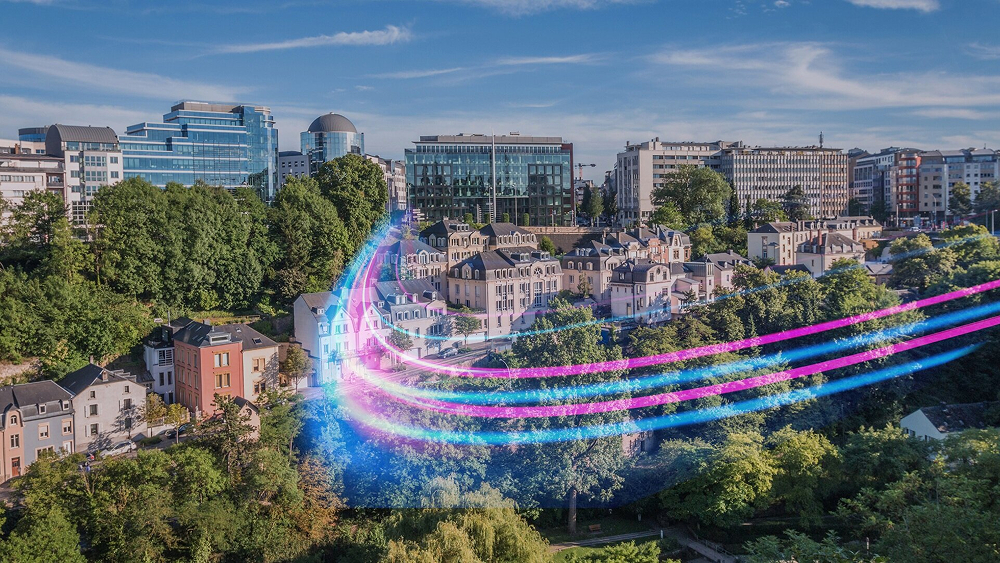
As one of the world’s leading market infrastructure providers, Deutsche Börse Group delivers secure, high-performance access to global capital markets for investors, financial institutions, and companies.
Industry: Financial services
Location: Frankfurt, Germany
Products: Gemini, Agent Development Kit, Compute Engine, Hyperdisk Balanced, Hyperdisk Extreme, OpenShift on Compute Engine