The digital dynasty: Inside the Golden State Warriors’ AI-powered back office
Matt A.V. Chaban
Senior Editor, Transform
Marcus Little
Contributing Editor
When it comes to informing line-up changes, assessing potential trades, or enhancing the fan experience, the Warriors count on their G.O.A.T.T: the greatest of all-time technologies.
The Golden State Warriors have become one of the most prolific dynasties in NBA history. Ultimately, it’s the players who decide championships, but a lot goes into getting there.
Some might call that doing the work. Some might see it as data points, millions upon millions of them.
You’ve got to assemble the right squad, help perfect their shots and defensive formations in practice, make the right coaching decisions in high-pressure situations, and so much more. For all the success of teams that came before, arguably no organization has mastered these off-court dynamics like the Warriors; a lot of credit for that belongs to a data and AI operations team that may just be the team’s G.O.A.T.T.: Greatest of all-time technologies.
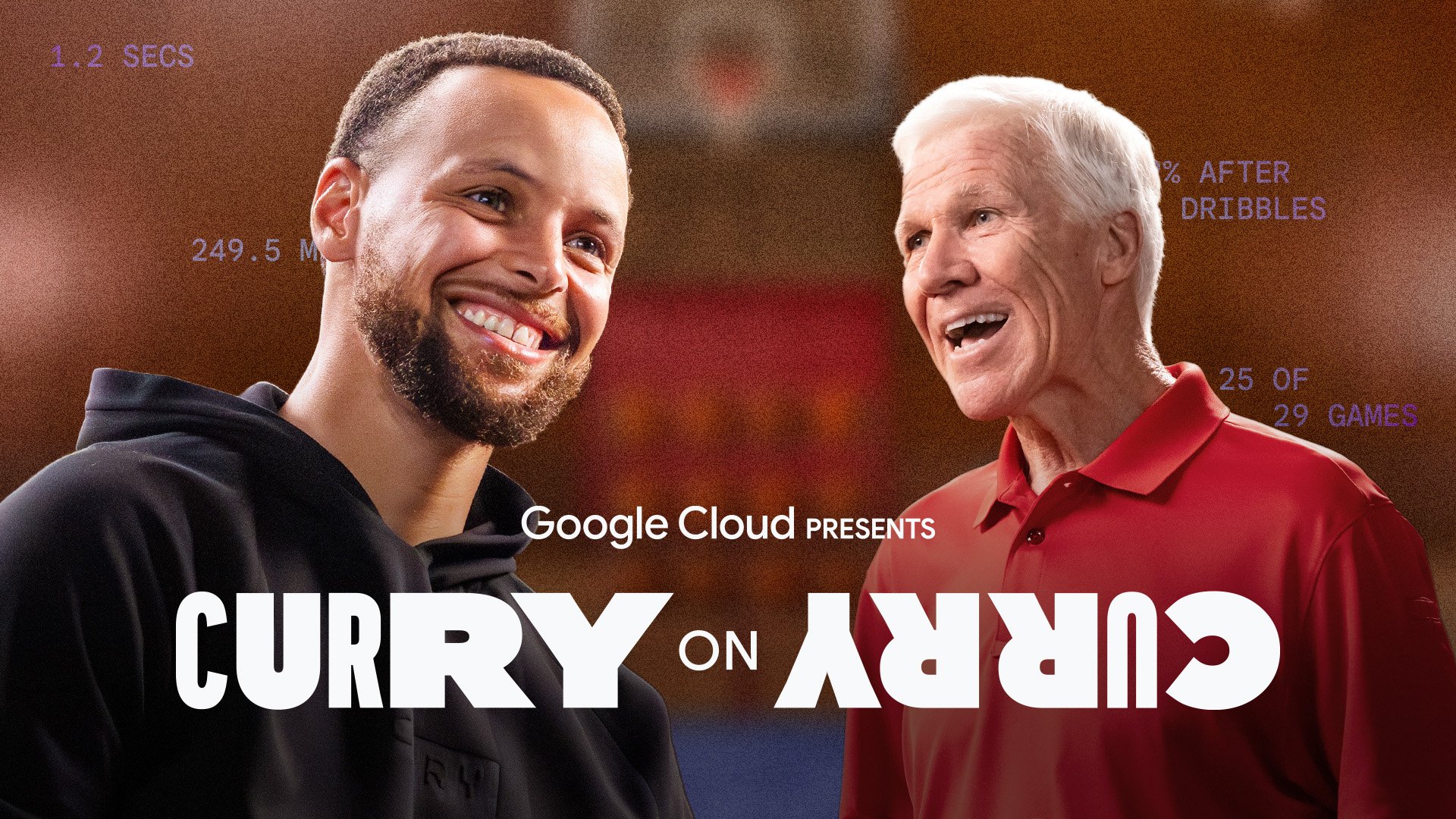
“It’s changed everything,” Kirk Lacob, executive VP of basketball operations, said in a recent Google Cloud interview. “In basketball operations we used to start with what we think we know or what we think we should do in terms of decision making, then we would try to prove it out. Now with Gemini and BigQuery, we start with data to help us pare down our decision tree and where we should focus our efforts based on what the data says.”
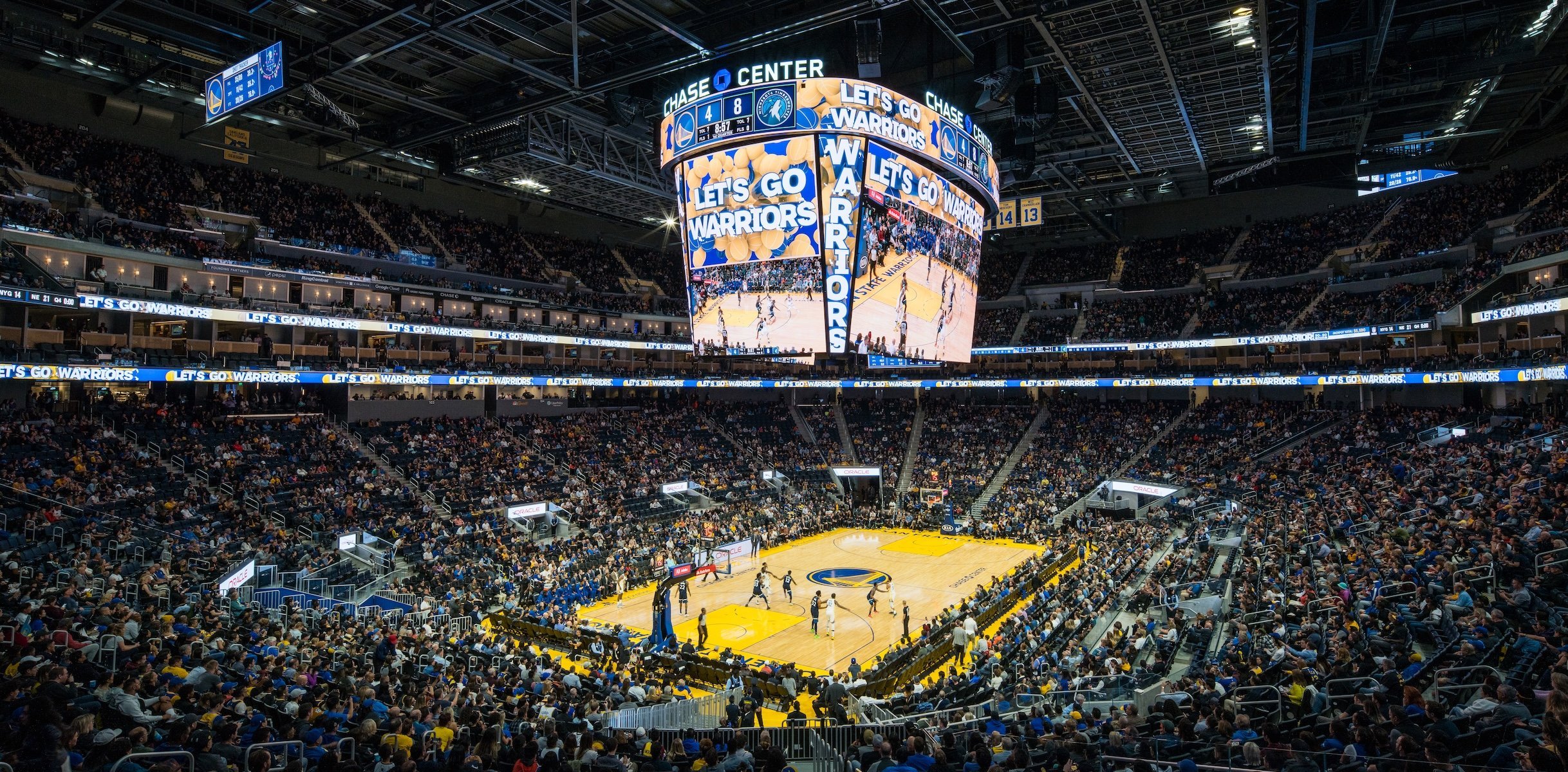
When it comes to data analytics, the team’s insights on three-point shots, and thus the potential of shooting star (and Google Cloud’s new performance advisor) Stephen Curry, has gotten the most attention over the years. But really, it’s the way Golden State analyzes everything, down to the efficiency of concession stands or what overseas fans see in the app compared to fans at the games, that not only sets the Warriors apart in the league but in business writ-large.
Their all-encompassing approach to data and AI shows what a modern organization can be.
To get a better understanding of that, we recently sat down with key technology leaders from the Warriors organization — Kirk Lacob, Executive VP of Basketball Operations; Pabail Sidhu, Senior Vice President of Basketball Analytics and Innovation; and Nick Manning, Senior Director of Consumer Products & Emerging Technology — to discuss how cloud technology is helping them build not just championship teams but a winning business and brand, too.
In the midst of a busy year, how do the Warriors use AI and machine learning to evaluate potential player trades and other line-up moves?
Pabail Sidhu: When I joined the Warriors eight years ago, we had no internal systems for analytics. Everything was with third parties. We knew with the growing amount of data that we needed to build something in-house. We called it our “digital brain.”
Our approach to using AI for player evaluation has evolved significantly. When we started, we had a very curious group in our front office. We began with basic regression models that were transparent so stakeholders could play with them and provide input. Once they built trust in these models, we moved to more sophisticated machine learning approaches that produced more accurate results, even though they functioned more like a black box.
For trade analysis, we run numerous simulations. We tell the system what we're looking for across the league, and the models generate different trade scenarios. We can run a model that produces 5,000 to 6,000 different trade options, and the top results may consistently show us a particular move that we should make to get a player. The models might indicate not only that a certain player would help our team but that he aligned with how we wanted to play.
Our models are crucial for helping to identify which players to pursue, but they also calculate probabilities of reaching championship level with different roster configurations. What makes our approach unique compared to other teams is that our models specifically account for team fit, not just individual player statistics.
Kirk Lacob: Pabail is probably underselling what his team does. When he first started here, our process was to decide what we wanted to do and then ask him, “How does that look?” Now we're much more analytics-first. Instead of saying, “We've decided this, what do you think?” we ask, “Where do you think we should focus our efforts?” The data helps us narrow our decision tree before we even start evaluating specific options.
So as the Warriors' approach to data analytics has evolved, how has it change the perspective on basketball strategy?
Lacob: It's been a journey — part of it was sports catching up, and part was technology catching up. Early on, we told Pabail when we hired him, we needed to build our infrastructure first, what he described as our digital brain.
One of my favorite examples of how far we've come involves three-point shooting. There was a story on ESPN a few years into my tenure questioning if the “three-point revolution” was real. We could only break shot profiles into three or four areas — was it from the corner or above the break? Was it catch-and-shoot? That was about it.
Fast forward to today, and we can tell you the shot quality of any shot taken in any NBA game at any point, with expected value based on the player, shot type, location, and much more. The league average for team three-point attempts has increased from around 28 to 43 per game.
Data has completely transformed how we understand the game, helping us iterate through strategies more effectively. We use the film to teach, but we use the numbers to influence what film we're watching and what we're looking for.
You mention film — really that’s the original data analysis, which players and coaches have been doing forever. Now that there’s so much more data, how is everyone approaching that?
Sidhu: There are multiple ways players engage with our data. First, we analyze opposing teams. Our coaches communicate these findings to players, but they don't just present numbers — they show the film.
For player development, we track specific key performance indicators for each player over time, typically looking at 20-game blocks. Again, this information is usually conveyed through film rather than spreadsheets, though some players do review the numbers directly.
But like you said, the common thread is film, film, film — that's what players are used to seeing. It's how they best retain and apply information. Raw numbers don't resonate as well as seeing themselves or opponents on video, with the data providing context for what they're watching.
Building this approach took time. When we first started, creating a pre-game scouting report would take me up to four hours. Once we migrated to Google Cloud, we automated these reports, saving enormous amounts of time across 82 regular-season games. This automation allows us to build trust with coaches through more face-to-face time, and it helps coaches build trust with the data because they can ask questions and get immediate responses.
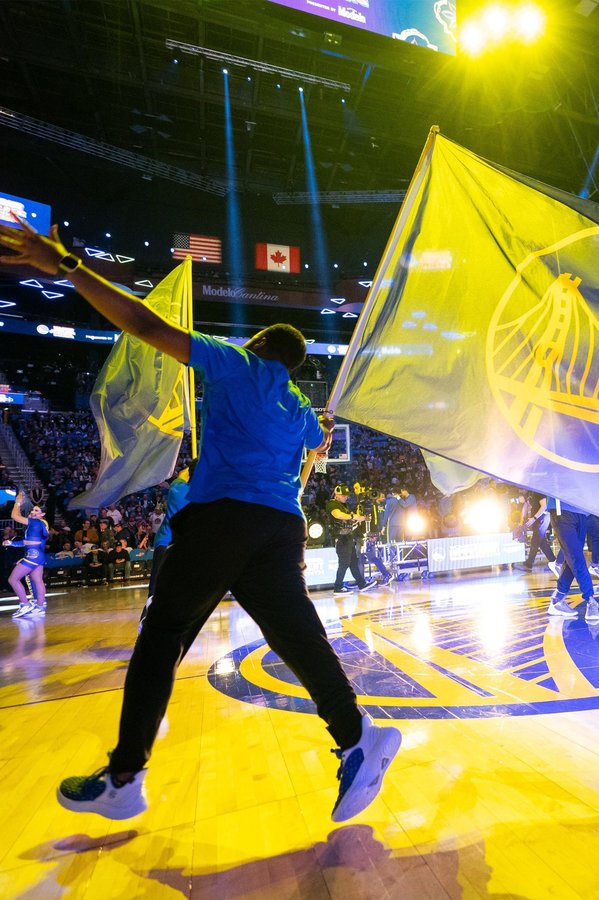
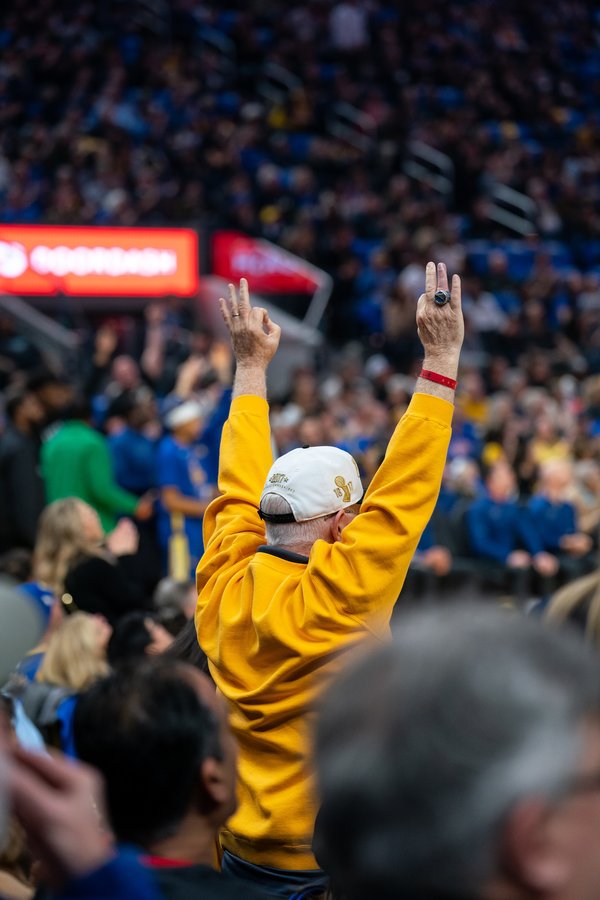
Creating a dynamic fan experience both at Chase Center and beyond it is an important priority for the team.
Lacob: It took years of trial and error to figure out how to effectively communicate data insights. Pabail needed to develop relationships with coaches so they would trust what he was saying. He might be 100% right, but if a coach doesn't believe him or doesn't understand what he's saying, the information is useless — it gets lost in translation.
That's the secret sauce: The data is extremely important, but ultimately, it's the people using the data who make the difference. As Pabail says, it's “people, process, technology.” And in that order, too.
Your trajectories with the team, have really mirrored the trajectory of big data over the past two decades. That brings us to today, the thing everyone is thinking about and working on: AI. What’s been your AI strategy so far?
Nick Manning: As we’ve said, it’s been quite a journey, and that goes for our work with AI, too. Over the course of a few years, we've refined our AI strategy into three specific buckets that address different aspects of our organization.
The first focuses on making us better as an organization, with an emphasis on internal productivity and efficiency. As someone who leads the Emerging Technologies side, I'm focused on how we can use technology to maximize what our employees can do daily. We've implemented Google Workspace with Gemini, for example, and standalone Gemini, and other tools to improve our internal operations.
The second bucket addresses the fan experience. We have amazing data in BigQuery, and we're using it to create more personalized experiences for every fan. Since 99% of our fans will never step foot inside Chase Center, we need to deliver meaningful experiences digitally.
The third bucket involves basketball operations. We're working closely with Kirk and Pabail to use the same technology stack across departments. What's unique is that we're pursuing very different outcomes on the business and basketball sides but using the same technology foundation. There's not a special basketball version of BigQuery — we've just built our implementation in a way that serves both sides of the organization effectively.
You mentioned the fan experience, which is continuously changing as teams become global brands. How is AI helping the Warriors create personalized experiences for their global fan base who may never visit Chase Center?
Manning: As we said, 99% of our fans will never step foot inside the arean, so, creating relevant personalized experiences is critical.
To do so, we've built a content recommendation engine using BigQuery ML and the Discovery API that helps us understand what content will resonate with different segments of our audience. For example, our fans in Japan don't need ticket offers, but they might be interested in specialized retail merchandise or content featuring particular players. By analyzing our data, we can determine whether to show an event announcement, article, news clip, or other content based on a fan's location, preferences, and behavior.
Technology is a massive enabler in this effort. We've built the infrastructure to store large amounts of data in BigQuery and the platforms to build applications on App Engine and Firebase. This technology backbone allows us to better understand our changing audience and deliver experiences that keep fans connected to the Warriors regardless of where they are in the world.
Part of it was sports catching up, and part was technology catching up.
Kirk Lacob, Executive VP of Basketball Operations, Golden State Warriors
What lessons can other business leaders learn from the Warriors' approach of balancing data-driven decisions with expertise and intuition?
Manning: We always talk about this internally as “art and science.” You can never reach a point where either humans or machines are making all the decisions. The sweet spot is finding that middle ground where intuition and data converge on the same conclusion.
One interesting development we've seen with AI implementation is that it's the first time I can remember where our employees are “voting with their thumbs” on technology. Typically, in IT roles, you make decisions at the top about which tech stack to use, and everyone falls in line. But with AI tools, our employees are coming to us saying, “I found this cool tool — can I use it?” or “I have this idea — what technology exists to help me?”
This shift has led us to create an à la carte menu of tools — the Gemini app, Gemini within Workspace, Vertex AI, Notebook LM — and we're finding that people approach us with ideas, and we now have the arsenal to execute against those ideas. That's drastically different from three to five years ago, when we had a fixed enterprise tech stack with limited ability to support custom solutions.
The bottom line is that while data helps us make better decisions, the human element remains essential. Technology augments our capabilities but doesn't replace the expertise and intuition that come from years of experience in basketball and business.