Fast forward: How Formula E is turbocharging 700 TB of archival tapes with AI

Justin Grayston
Director, Telco, Media, Entertainment, Gaming & Advertising, Google Cloud
Faris Abbas
Senior Staff Digitization Program Manager, Google
To unlock hundreds of terabytes from the Formula E archives on outdated LTO storage tapes, Google had to build a whole new system at its European digitization center.
In the high-speed world of global motorsport, operational efficiency and technological innovation are just as critical off the track as they are on it.
Formula E regularly takes pole position when it comes to driving the future of mobility, but behind the scenes of their thrilling electric-powered races lies a massive vault of proprietary broadcast footage and racing history. Going back to the first season in 2014, this valuable collection was housed in on-premises physical Linear Tape-Open (LTO) magnetic tape cartridges. This cold (meaning not readily connected to a network) storage presented risks of media degradation and obsolescence, with vital data locked in disconnected silos.
For all the advances Formula E has made in pushing the limits of mobility, innovation is still always grounded in experience and insights. With the current spread of AI, there could be so many highlights to be recut and reimagined, so many discarded or overlooked ideas waiting to be discovered on those tapes.
To fully harness the potential of its historic content and prepare for the future of AI-driven media, Formula E needed a robust solution to migrate their legacy physical archives into a globally accessible, digital-first ecosystem. It was no simple task, as there were hundreds of LTO cartridges of uncertain quality containing tens of thousands of hours of content to be scanned.
"Migrating over 700 terabytes of racing history from physical tape into Google Cloud was a vital milestone in safeguarding Formula E’s legacy,” said Laura Christmas, technology program director at Formula E. “Previous attempts with other providers proved too slow, but by uniting Google’s physical digitization expertise with cloud tools and Gemini, we transformed a prohibitive process into a high-speed success.”
It was also a pivotal project for Google and Google Cloud. For decades, the company has worked on collecting and organizing the world’s information, including millions of scanned books and, more recently, old videotapes for media projects. For the specialized Digitization Center in Germany, this was the first ever project with LTO tapes — but hopefully not the last.
A popular and longstanding storage format dating to the 1990s, LTO tapes present a huge opportunity to bring digitization to numerous industries at a time when data and media have never been more valuable.
A pitstop in Germany to digitize the archive
Migrating decades of physical media represents a formidable challenge. The project required securely moving hundreds of LTO-6 and LTO-7 cartridges to a facility equipped to process them at scale. The Google Cloud technical team supporting Formula E looked to the Digitization Center in Germany, an enterprise-grade, secure facility with modern automated archival infrastructure, to see what options were available for capturing the media on the tapes.
The center traces its roots back to the mid-2000s, when Google Books began scanning printed material; several years ago, the same team adapted their digitization techniques to videotapes, so broadcasters and other organizations could transfer their video content to readily accessible, streamable formats for use on services like YouTube and other media platforms.
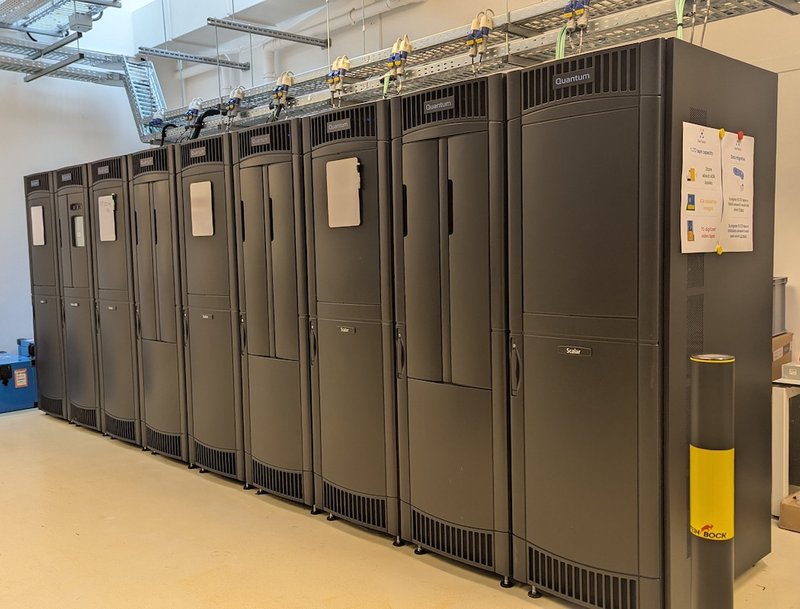
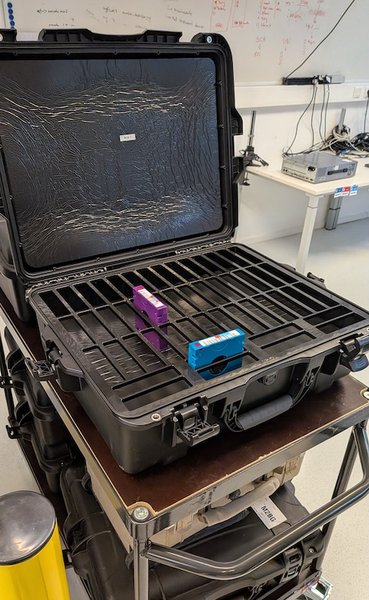
Google had to develop special machinery to digitize the hundreds of tapes brought to Germany from Formula E headquarters in the UK.
The team in Germany thought they could use similar tools to scan the LTO cartridges, though this presented its own challenges, given that some LTO formats can feature encryption or proprietary file formats. Fortunately in the case of Formula E, they used an open standard, so scanning was relatively straightforward once a new purpose-built LTO digitization platform was assembled and operational.
Here’s a look at the system they’ve built and refined, so organizations can bring their legacy media into the future, literally and figuratively.
End-to-end ingestion architecture
- Physical intake & manifest verification: Tapes received from Formula E were inventoried, barcoded, and reconciled against the customer inventory.
- Robotic tape staging: The tapes were ingested using automated tape libraries designed for high-throughput data processing.
- Google Cloud ingestion: Using Google Cloud Storage Transfer Service (STS), tape data was seamlessly ingested into the customer's Google Cloud Storage. STS ensured a fast, secure transfer with built-in integrity checks, ultimately enabling instant data access and unlocking advanced AI processing capabilities with Gemini.
The results: Unlocking 718 TB of previously inaccessible cold data
The migration proved highly successful, transferring roughly 718 TB of legacy broadcast assets directly into Formula E's Google Cloud environment.
- Volume & success rate: The team processed 205 LTO tapes across two bulk shipments, successfully migrating 201 tapes (4 partially) resulting in a 98% overall success rate.
- Validating the future: As a landmark pilot customer for this specific LTO data tape offering, Formula E has once again helped prove out new technology — helping to establish new digitization practices the same way it has helped mainstream e-mobility.
Racing Toward an AI-Powered Ecosystem with Gemini
By shifting from cold physical storage to “warm” always-on Google Cloud Storage buckets, Formula E has eliminated the risk of media obsolescence. But digital preservation is only the starting point.
Much like how Bell Media recently unlocked 60 years of cultural history by digitizing hundreds of thousands of tapes, Formula E is laying the groundwork to reactivate its "hidden history" using Google’s Gemini models. This downstream AI activation enables Gemini-powered multimodal search, structured metadata enrichment, and advanced cataloging capabilities.
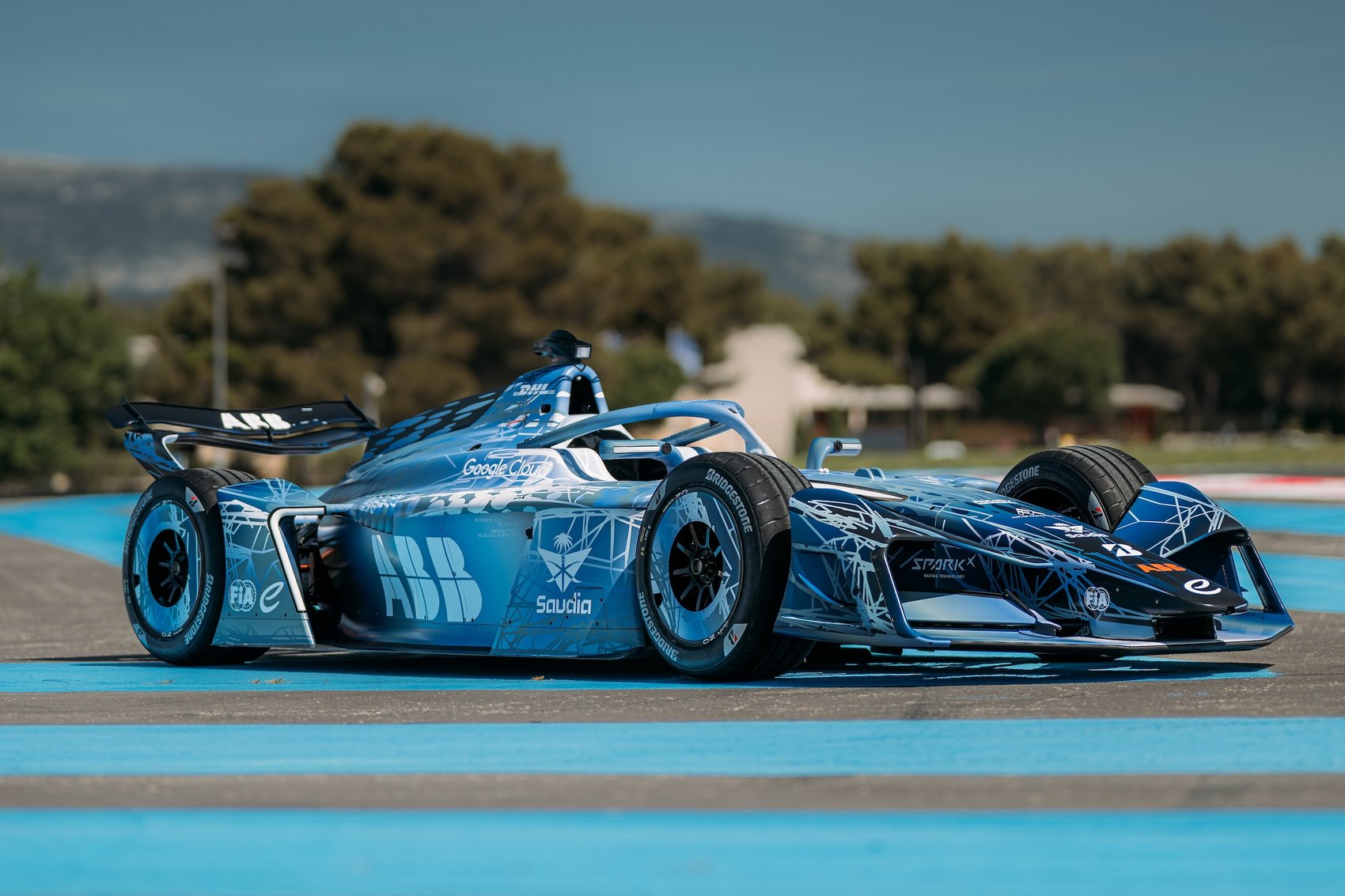
Formula E has undertaken its archival transformation in part to capitalize on the introduction of its new Gen4 race car, which is making its debut in the new season starting this fall.
These powerful tools are coming online at a pivotal moment, too, just ahead of the start of the new racing season in December, which will also see Formula E’s all-new GEN4 car in action. Now that Formula E has transformed its static media warehouse into a searchable, monetizable global resource, it can bring its next-gen car to life in even more ways by building on the sports’ rich history and innovative spirit.
“We've turned cold, siloed archives into a dynamic, AI-ready media ecosystem — ensuring our broadcast partners can access every high-octane moment instantly as we accelerate into the GEN4 era,” Christmas says.
And the opportunities go well beyond the track. Industries as varied as healthcare, financial services, design, government, education, and utilities could benefit from LTO and other digitization formats just as media and entertainment organizations now are. Data is the fuel for AI, but only if it's readily accessible in the cloud.
Formula E isn’t the only one ready to bring decades of high-octane history and insights to the world.