Unlocking enterprise data to accelerate agentic AI: How Ab Initio does it
Scott Studer
Head of Development, Ab Initio
Chai Pydimukkala
Product Lead, Google Cloud
Your AI agents are only as good as the data behind them. For enterprise teams building agentic AI, that's both the opportunity and the core question: How do you give Gemini and other AI models access to accurate, well-documented data when that data lives across dozens of systems, from modern cloud services to legacy mainframes?
It's a question many organizations are actively working through. Gemini and other AI models depend on large volumes of AI-ready data to support agentic workflows.
Most enterprises now store data in many places: different cloud providers, on-premises servers, and legacy systems. Pulling together the data and metadata necessary for effective AI agents requires connecting all of it.
To address the data challenges of the AI era, Google Cloud and Ab Initio are announcing a suite of products, including new data connectors, metadata connectors, and agents. Taken together, these can help build agentic AI experiences that enable autonomous actions and accelerated human-in-the-loop decisions. Ab Initio’s data integration, governance, active metadata, and agentic AI capabilities integrate directly with Google Cloud platform, notably BigQuery, Dataplex Universal Catalog, and Gemini.
How Google's Data Cloud powers agentic AI
Google's Data Cloud is built to deliver the data and context needed to power agentic AI. BigQuery provides data storage within Google Cloud along with scalable analytics and processing. Dataplex organizes data and AI assets and metadata across Google Cloud, acting as your catalog for AI to provide a dynamic system of record delivering discoverability and essential business context, including definitions, constraints, and relationships, required for AI to reason and act at scale.
Many organizations, though, operate in multi-cloud environments where data is distributed. Even when external data is available, it might lack the metadata that describes its origin, reliability, and business meaning. The partnership with Ab Initio overcomes hurdles like these.
A unified hub for the hybrid enterprise
Ab Initio serves as a neutral hub that creates a multicloud enterprise data fabric. In particular, Ab Initio extends Dataplex with a bi-directional metadata exchange across more than 500 sources. That range matters — it covers everything from modern cloud services to legacy mainframes.
The integration provides field-level, end-to-end lineage from over 100 extractors, including native converters for technologies that are both contemporary and that have long, often complex legacy systems, like COBOL, DataStage, Informatica, and SAS.
For Google Cloud customers, Ab Initio federates data from across on-premise and multi-cloud environments into a single unified layer, enabling agentic applications.
Here's how the components work together:
-
Ab Initio unifies access to data and metadata across systems while providing lineage and transformation context. This lineage history allows you to travel back in time to any point and answer questions about the state of metadata, supporting auditability and compliance.
-
BigQuery stores data and executes large-scale analytics and modeling, including on external distributed data. This means your analytics can span data wherever it lives.
-
Dataplex Universal Catalog extends its automated governance foundation to deliver trusted semantic context required to ground AI agents and accelerate data insights. By integrating with the Ab Initio Metadata Hub, you can manage metadata across the entire multi-cloud environment.
- Gemini consumes comprehensive data and metadata for grounded, explainable reasoning and agentic activity. The richer the context, the better the AI can reason about your data.
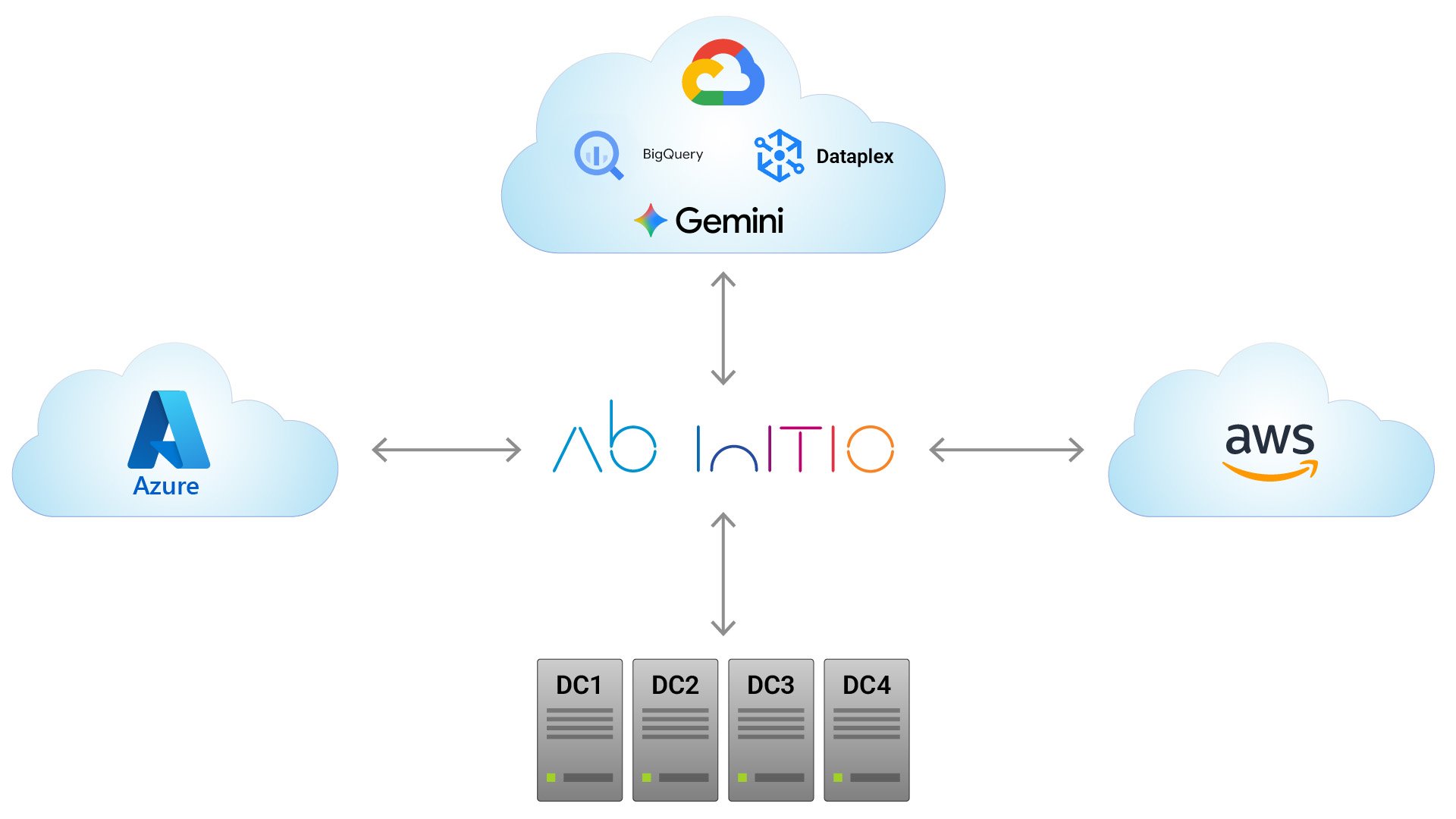
Figure 1. Ab Initio as the Hub for Hybrid and Multi Cloud Data and Metadata
Governance across the full data and AI lifecycle
In this model, data remains distributed and heterogeneous while metadata becomes unified and standardized. Ab Initio's architecture is proven in production in the world's largest enterprises.
Ab Initio comprehensively spans the full data engineering lifecycle: transformation, quality, lineage, governance, and orchestration all working together. This produces richer metadata that can support accurate and explainable Gemini reasoning.
Context as the foundation for agentic AI
Agentic AI requires trusted, AI-ready data and metadata. Understanding the origin, quality, and meaning of information matters as much as the data itself. Gemini serves as a key component of the agentic layer, using this context to make decisions that are explainable and auditable.
Ab Initio's integration with BigQuery, Dataplex, and Gemini helps create that understanding for multi-cloud enterprises. By using Ab Initio as a hub, you can deploy agents that work with distributed data while maintaining transparency and control. The hub supports explainability, compliance, and operational reliability.
Get started
As you expand your data capabilities and incorporate agentic AI into your workflows, maintaining connected context across data sources becomes essential. Ab Initio provides the data and context to enable Google Gemini agents to operate effectively across hybrid and multi-cloud environments.
To explore the integration, visit Ab Initio's Google Cloud partner page or contact your Google Cloud representative.
Ab Initio offers an agentic data platform for large-scale data processing and governance, trusted by the world's most demanding enterprises. It combines active metadata with transparent, high-performance data integration to support AI-driven analytics and automation — helping organizations modernize complex systems, reduce risk, and deliver trusted data products faster.