A developer's guide to production-ready AI agents

Kanchana Patlolla
Technical Solutions Manager
Anant Nawalgaria
Sr. Staff ML Engineer & Founder of Gen AI Intensive, Google
Try Gemini 3.1 Pro
Our most intelligent model available yet for complex tasks on Gemini Enterprise and Vertex AI
Try nowSomething has shifted in the developer community over the past year. AI agents have moved from "interesting research concept" to "thing my team is actually building." The prototypes are working. The demos are impressive. And now comes the harder question: How do we ship this?
That question turns out to be a multi-part one. Agents don't behave like traditional software. They reason, act, and adapt, which means they need different approaches to testing, memory, orchestration, and security. The patterns that served us well for deterministic code don't fully translate.
To help developers work through these challenges, we've published a collection of guides covering the full agent lifecycle. These resources first appeared during Kaggle’s 5 days of AI Agents Intensive, and they’ve proven so popular and useful, we wanted to make sure a wider audience had access, as well.
These guides offer practical frameworks and code samples you can adapt to your own projects. Below, we'll walk through the key concepts — from agent architecture to production deployment — so you can decide where to dig deeper.

What is an agent?
At its core, an agent is an autonomous entity that reasons, takes action, and improves over time. The agent's brain is a large language model — a cognitive engine that understands tasks, generates responses, and makes decisions based on context. Unlike a static tool, an agent adapts as it works. It follows a recursive loop: Think, then Act, then Observe. Each cycle moves the agent forward, refining its approach as it goes.
Surrounding this core is the orchestration layer — the nervous system that manages communication and data flow. Think of it as a conductor coordinating specialized tools and external services. These include short-term memory (Session State) for immediate recall, long-term memory (Memory Service) for retaining past interactions, information retrieval (RAG), and modules for executing actions in the outside world (Tool Use). A security framework ensures the agent operates safely and within its intended boundaries. The goal of this architecture is to create an intelligent, helpful, and trustworthy assistant.
For a deeper exploration of these foundational concepts, see the full Introduction to Agents guide.
Tools and interoperability
For agents to be truly useful, they need to interact with tools, data sources, and other agents. Two emerging protocols offer standardized approaches to these connections.
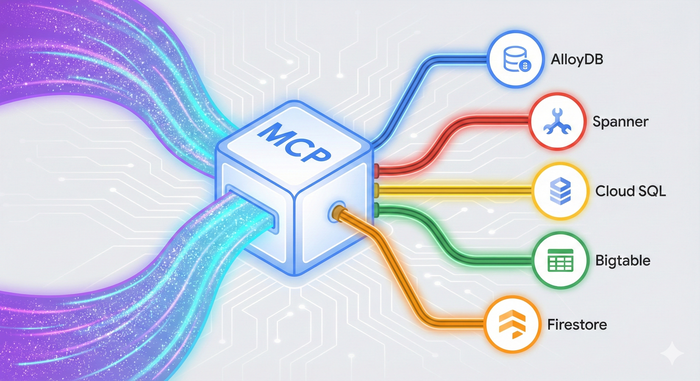
Anthropic's Model Context Protocol (MCP) gives agents a standardized way to connect with external data sources and stateless tools. Instead of building custom integrations for every service, developers can use MCP's standardized interface to simplify development and improve interoperability.
Google's Agent2Agent Protocol (A2A) takes this further by enabling agents to communicate directly with each other, regardless of their underlying frameworks. Agents using A2A can discover each other's capabilities, negotiate how they'll interact, and collaborate on tasks through a secure and structured exchange of messages.
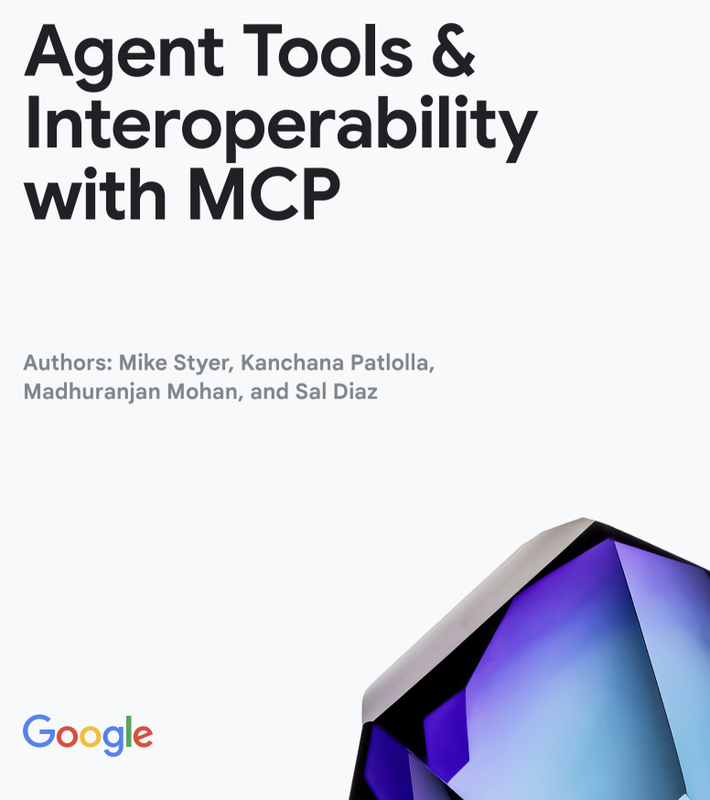
Together, these protocols create the foundation for agents that work within a broader ecosystem — connecting to tools, data, and each other. The Tools and Interoperability with MCP guide explains both protocols in detail with implementation examples.
Context engineering
If the LLM is the agent's brain, context engineering is the practice of feeding it the right information at the right time. This includes prompt design, retrieval mechanisms, tool selection, and conversation history — everything that shapes how the agent understands and responds to each request.
Context engineering transforms a generic model into a personalized assistant. It determines which memories to retrieve, which tools to offer, and how to frame each interaction. Effective context engineering creates agents that feel coherent and helpful across sessions. Without it, agents forget, repeat themselves, or miss the point entirely.
The Context Engineering guide covers context engineering frameworks and practical techniques for implementation.
Testing and evaluation
Autonomous agents require new approaches to quality assurance. When an agent makes its own decisions, success depends on sound judgment throughout the process, not just correct outputs.
Agent evaluation focuses on trajectories — the full sequence of decisions and actions an agent takes to reach a result, not just the final answer. Two agents might arrive at the same conclusion through very different paths, and understanding those paths matters. Good evaluation examines tool selection, reasoning quality, error recovery, and whether the agent asked clarifying questions when it should have.
A practical evaluation approach includes unit tests for individual components, trajectory analysis for multi-step decision sequences, and staged rollouts from sandbox to canary to production. Each stage validates different aspects of agent behavior before you expose it to more users.
For detailed evaluation frameworks and testing methodologies, see the Agent Quality guide.
Deploying agents to production
Moving from prototype to production requires infrastructure designed for agent-specific needs. Traditional deployment patterns need adaptation for systems that maintain state, use tools dynamically, and operate autonomously.
Production agents need session management to maintain context across interactions, persistent memory systems for long-term recall, tool integration with appropriate authentication and permissions, and real-time logging to trace agent decisions and actions.
Most teams deploy in stages: sandbox for internal testing, canary for limited real-world exposure, and production for full rollout. Each stage validates performance and catches issues before you expand access.
The Prototype to Production guide provides architectural guidance and code samples for building production-ready agent infrastructure.
Where to start
Your starting point depends on where you are in the journey. The Introduction to Agents guides covers foundational concepts, while Tools and Interoperability with MCP and Context Engineering address the practical challenges of building. When you're ready to validate and ship, Agent Quality and Prototype to Production will get you there.
The agents space is moving fast, but you don't have to figure it out alone. Pick the resource that matches your current challenge and start building.