A new gear: How startups are advancing robotics with Google AI
Darren Mowry
VP, Global Startups & Investor Ecosystem, Google
Pioneering robotics startups are leveraging Google Cloud's unified infrastructure and frontier AI models to accelerate the shift from digital intelligence to real-world physical deployment.
This week, we marked a major milestone in physical AI with the launch of Gemini Robotics Embodied Reasoning 2 (ER 2) on the Gemini platform and AI Studio, bringing Google DeepMind’s frontier multimodal reasoning and long-horizon task planning for robotics to Google Cloud.
But while foundation models provide the physical reasoning layer, the real transformation is happening where these models meet the physical world. Across the ecosystem, a surge of pioneering robotics startups are using Google Cloud not only for intelligence but also the computational backbone for simulation, model training, and fleet orchestration.
Let’s take a look at why, as well as the variety of work seven of these exciting startups are undertaking.
Why physical AI is hitting an inflection point
We are witnessing a surge in physical AI and robotics innovation. The category has seen a massive funding increase, jumping from $10 billion in 2024 to more than $50 billion by mid-September 2026. A few major shifts are coming together to drive this growth, including breakthroughs in multimodal reasoning and world models, rapid advances in high-speed physics simulation, and a new generation of smarter, more affordable sensors and AI-powered hardware. Taken together, these are making the deployment of robots more feasible across a wider spectrum of tasks.
Part of why venture capital is increasingly shifting in this direction is the structural durability of Physical AI startups. These hardware-integrated businesses are building highly stable, long-term portfolios that some predict could become a $50 trillion market over the next decade. Because of Google’s own extensive work in robotics, including with Google DeepMind, Waymo, and other venture, we are one of the few cloud providers to offer a single, unified development stack that simplifies the entire physical AI lifecycle.
We also have the experience of working closely with founders to navigate the unique challenges of physical AI. Startups face pressure from enterprise buyers to adopt robotics-as-a-service (RaaS) business models for recurring subscription revenue, which can strain their cash flows. At the same time, physical AI workloads — from physics simulation and model training to fleet inference — are compute-intensive, making rigid, underutilized infrastructure costly to carry.
To scale RaaS fleets with predictable cost and performance, founders are adopting dynamic capacity management on Google Cloud: scheduling planned training runs with Dynamic Workload Scheduler and automating multi-shape fallback lists and granular accelerator slicing on GKE.
Architectural shifts reshaping modern robotics
To see firsthand how founders are building through this shift, our team recently partnered with Long Horizon, Encord's physical AI summit in San Francisco dedicated to robotics and autonomy systems.
Throughout Long Horizon, three broader shifts stood out: 1) Founders are generating rich synthetic training environments with photorealistic real-to-sim world models; 2) they’re adapting general policies to new robot bodies in just hours; 3) they’re pairing tactile sensing with video failure detection so machines can self-correct mid-task.
One of the most significant technical shifts we observed is the move toward a two-tier architecture. While startups train heavy vision-language-action (VLA) models in the cloud, deployment separates planning from execution. Frontier embodied reasoning vision-language models (VLMs) — like Gemini Robotics ER 2 or Gemini 4 Argon — run in the cloud to handle spatial reasoning, task planning, and video progress tracking. These cloud models then orchestrate on-device VLAs or lightweight models (like Gemma) running directly on the robot for real-time motor control.
How startups are building in robotics
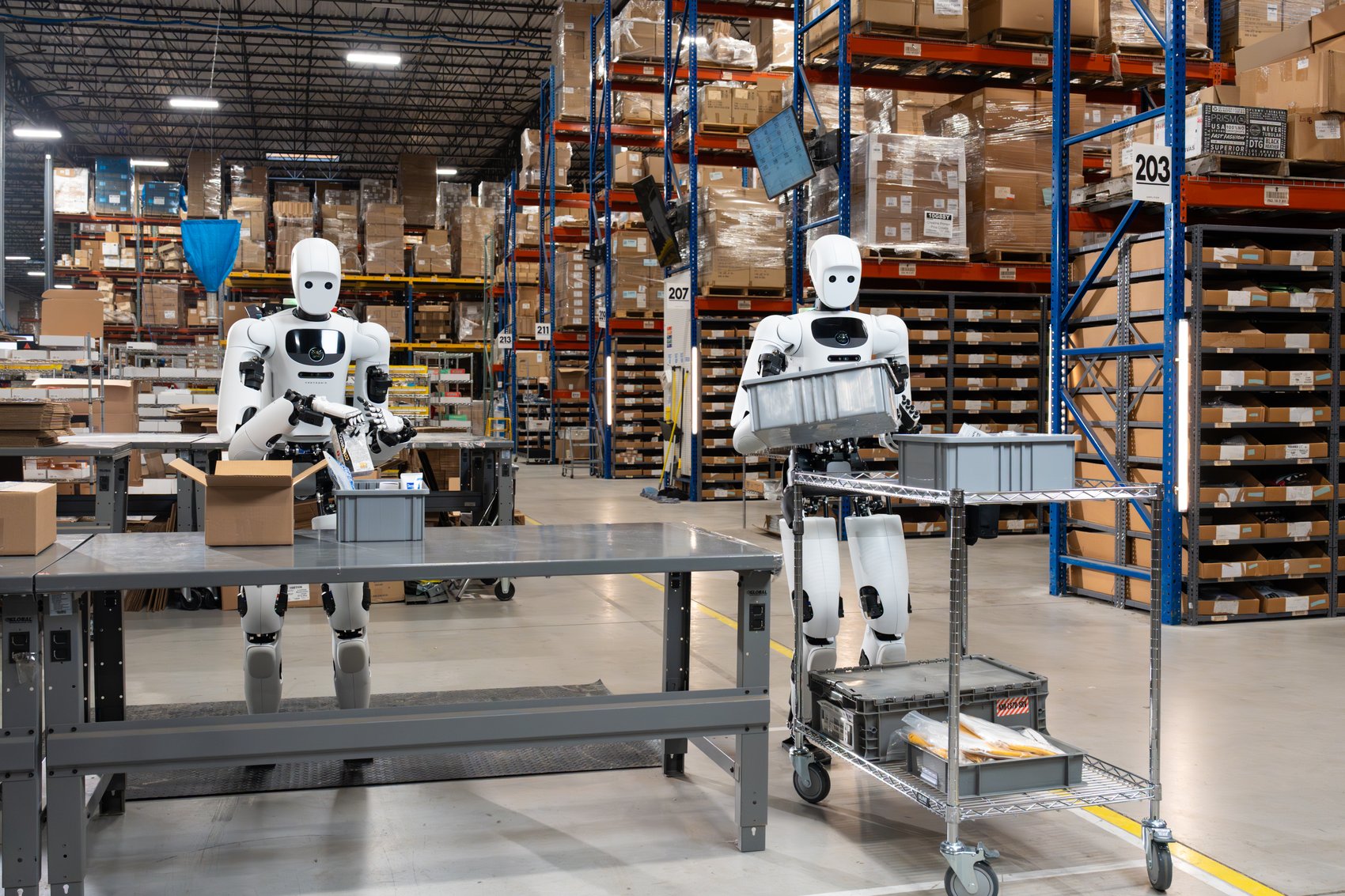
Apptronik builds general-purpose humanoid robots like Apollo, available in both legged and wheeled configurations, engineered with human-centered architecture to work safely alongside people on physically demanding tasks across manufacturing, logistics, and beyond. They have partnered with Google DeepMind to integrate Gemini Robotics visual-language-action models into Apollo. This allows the robots understand natural-language instructions, reason through complex multi-step workflows like picking and packing, and manipulate novel objects autonomously in dynamic physical environments.
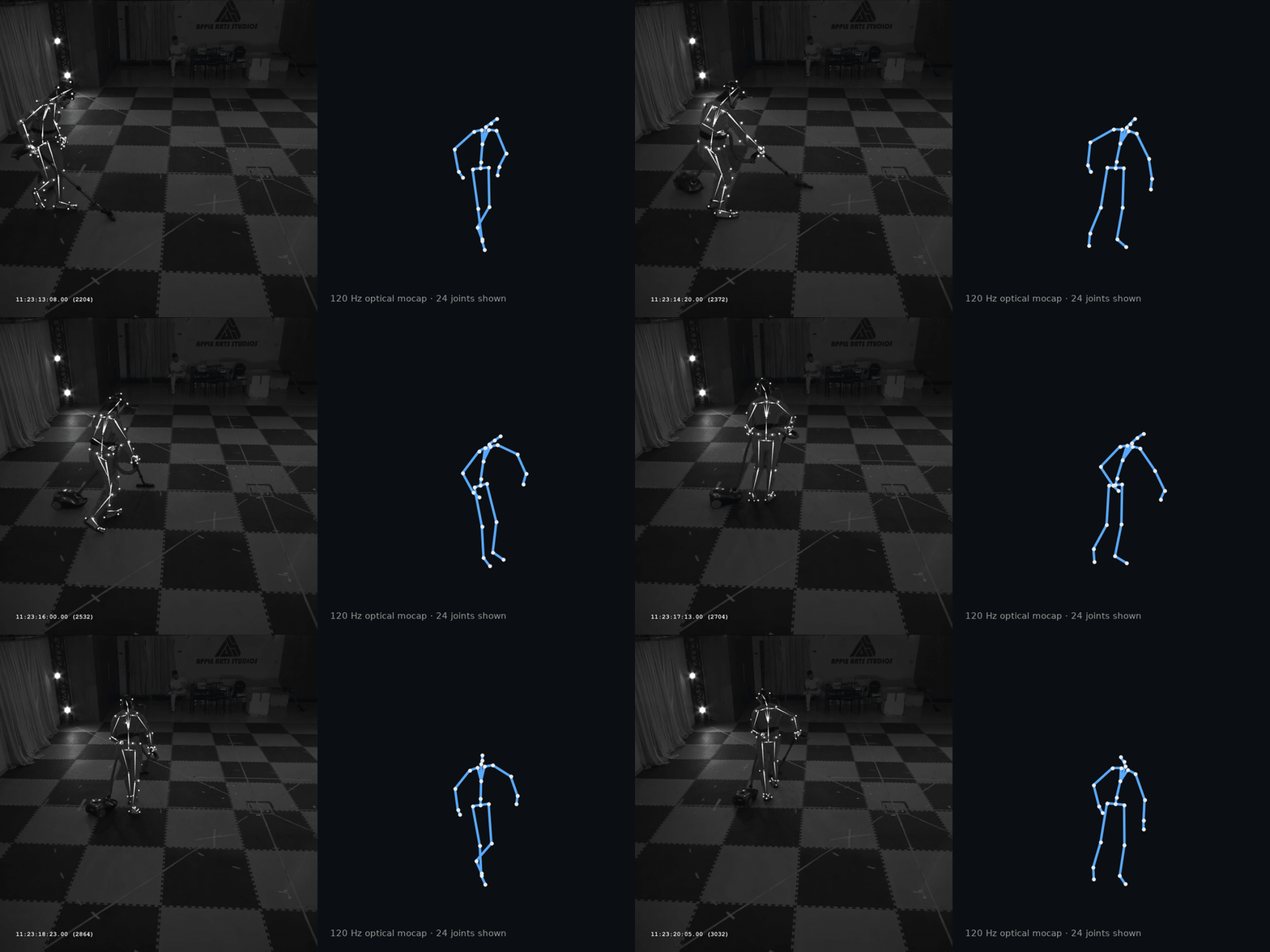
Deccan AI builds training data for robotics and physical AI: more than 45,000 hours of egocentric, multi-camera and motion-capture recordings from homes and factories. Gemini sits at the center of their pipeline. Gemini Robotics-ER turns each clip into a robot-ready instruction; Gemini 3 labels hands and objects frame-by-frame alongside their human annotators, and Gemini Flash curates thousands of hours of factory footage and helps identify idle footage. Fleets of A100 GPUs on Google Cloud run heavyweight models for de-identification, VLM-based annotation and retargeting.
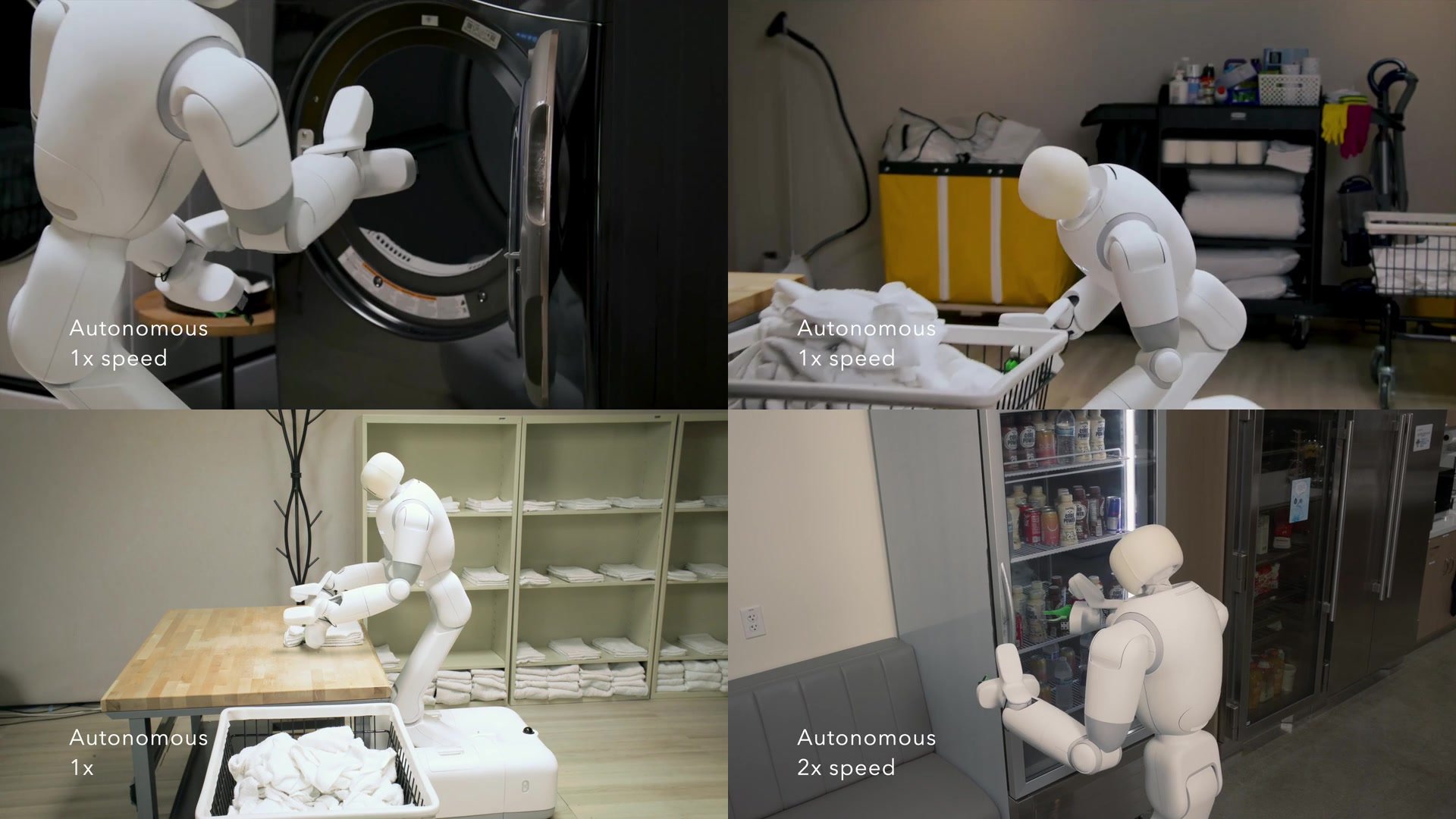
Dyna Robotics builds a full-stack robotics platform that combines general-purpose robot foundation models with production-ready hardware. This approach delivers high reliability during extended autonomous operation on challenging tasks. Their robots have been deployed across a range of industries, including hospitality, manufacturing, data centers, and logistics. Dyna trains its robot foundation models on Google Cloud GPU clusters, with Cloud Storage and BigQuery holding and indexing millions of hours of robot and human demonstration data for training. Google Cloud's mature full-stack infrastructure enables Dyna to train, evaluate, and ship updated models to production sites every day.
Hands On Robotics creates Pupper, an affordable, build-it-yourself robot dog that connects to any frontier AI model, designed to teach students AI robotics and to serve as a platform for human-robot interaction research. Pupper uses the Gemini Live API for real-time, low-latency voice and multimodal dialogue, and Gemini function calling to turn spoken requests into structured robot commands. The result is a robot that walks, follows you autonomously, and performs tricks on request while holding natural conversation in any personality you choose, matching your tone, in dozens of languages.

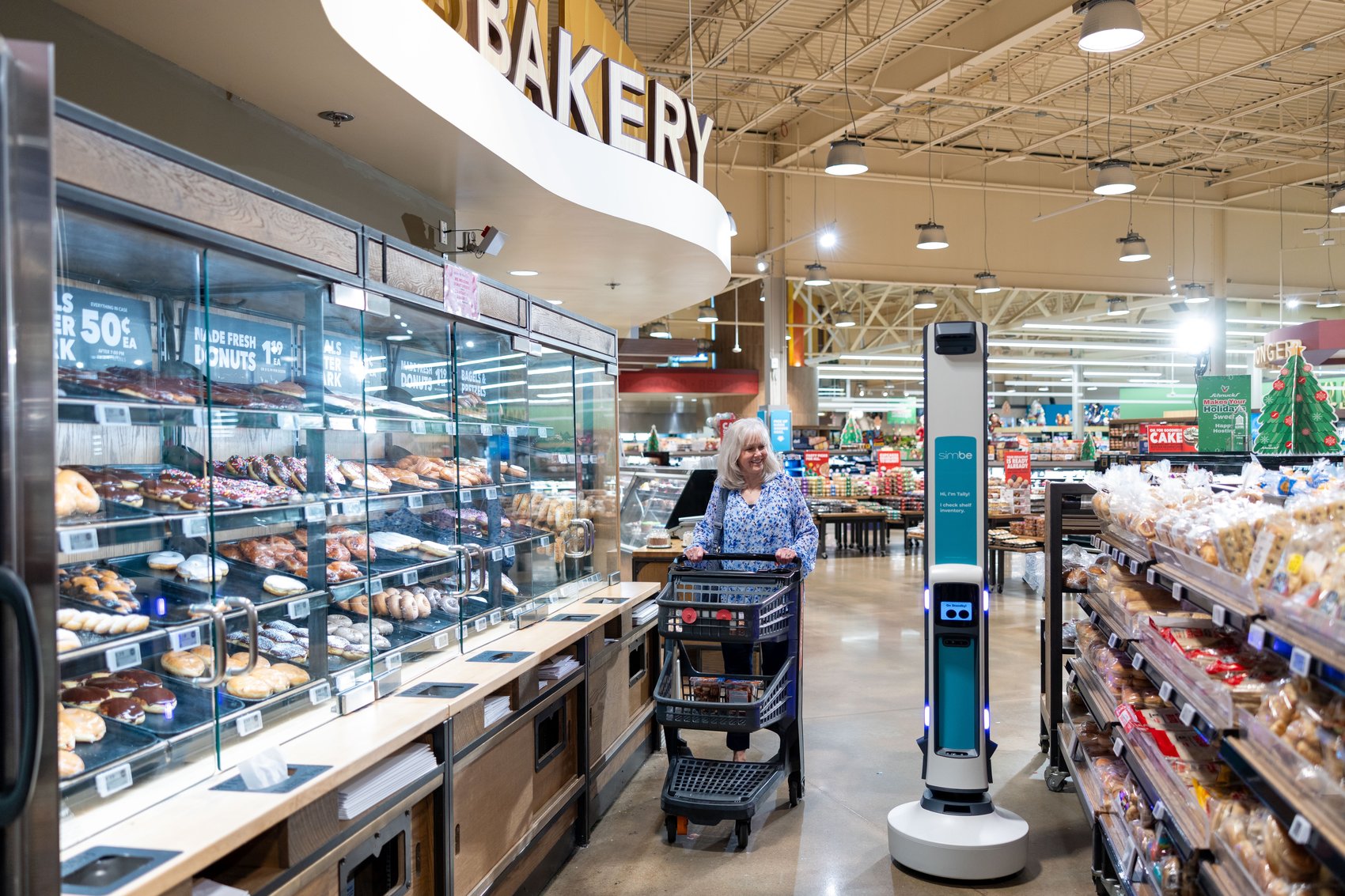
Simbe is developing a physical intelligence and orchestration layer for retail. Combining autonomous robotics, RFID, computer vision, and edge AI, Simbe captures real-time store conditions — from inventory to merchandising. Their platform integrates multimodal Gemini models to automate task management, while regional Compute Engine managed instance groups (MIGs) dynamically scale against Pub/Sub queues to process high-throughput batch inference on fleet shelf scans, powering autonomous store operations and actionable intelligence.
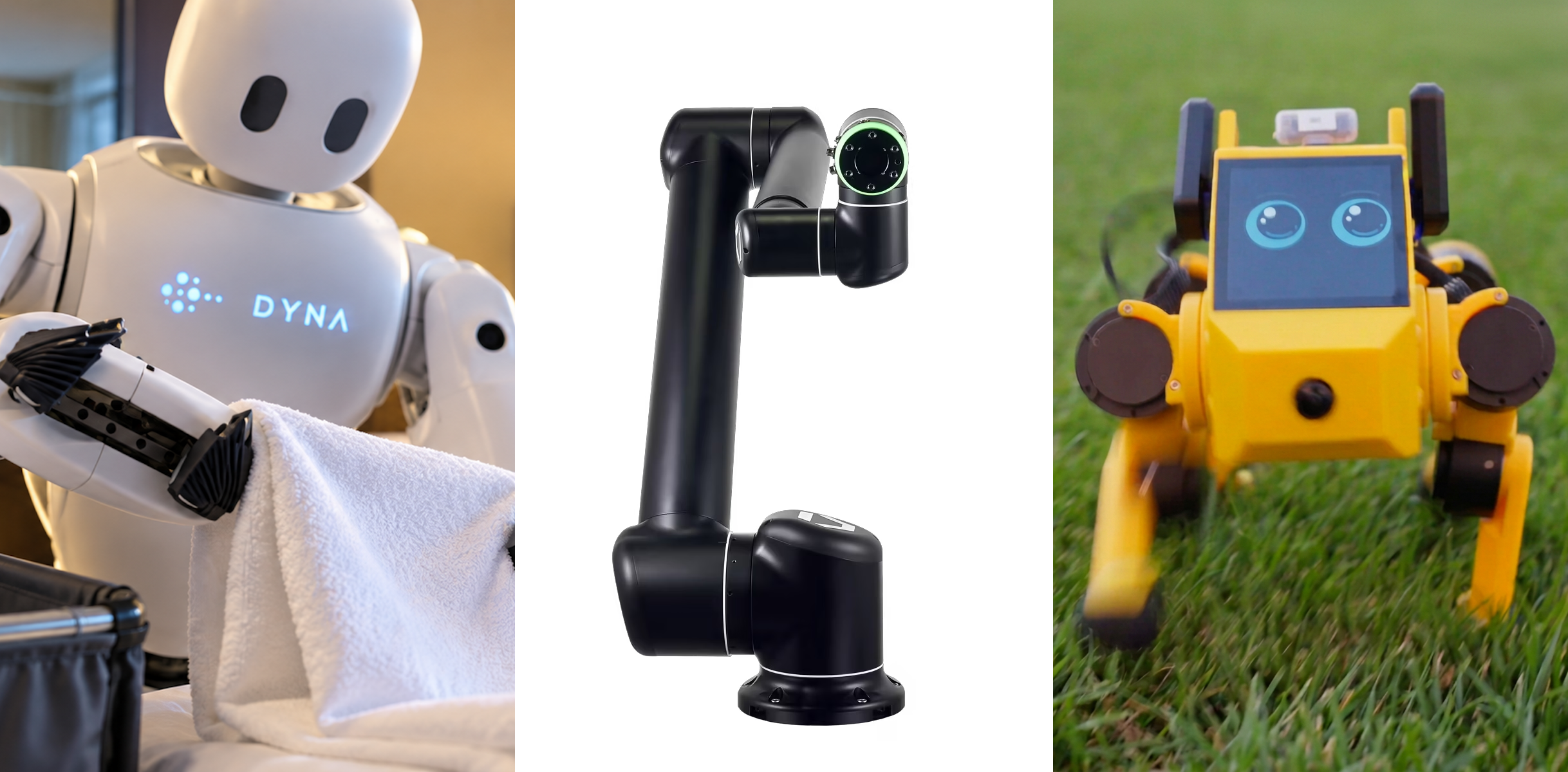
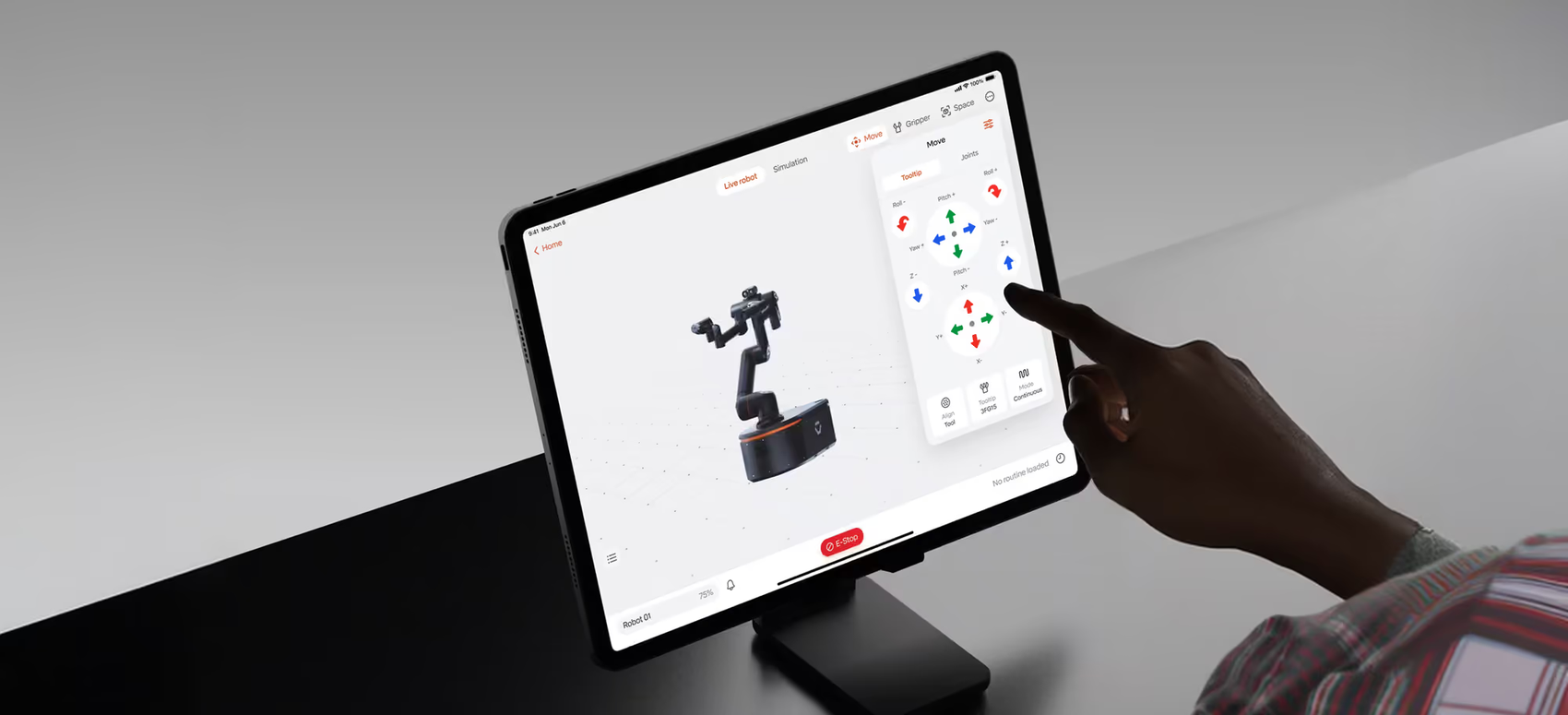
Standard Bots builds accessible, AI-native industrial robotic arms — designing and assembling the full stack of hardware, proprietary software, and AI in-house to automate manufacturing for companies as diverse as family-owned machine shops to Fortune 500 enterprises. They’re using Google Cloud’s AI Hypercomputer to power their robotics software stack.
This momentum is global — just last month in London, 15 European physical AI startups graduated from our inaugural Google DeepMind Accelerator: Robotics cohort, building everything from tactile QA systems to hardware-agnostic industrial manipulation with Gemini Robotics models and Google Cloud.
Bridging the cloud-to-edge stack for founders
Paige Bailey, Google DeepMind’s AI developer relations lead, believes we've reached the moment where “intelligence is crossing the physical threshold” into the messy space where bits and atoms collide. Rather than building massive, monolithic custom models from scratch for every task, developers are using frontier multimodal models as reasoning layers — mapping high-level intent into structured function and tool calls that orchestrate low-level controllers and on-device policies.
The real challenge isn’t just running an inference loop; it's dealing with the realities of the physical world, where unpredictable surface friction, strict latency budgets, and hardware safety constraints mean software policies have to operate under genuine physical consequences.
To help companies meet these challenges, Google provides a comprehensive full stack of solutions built for the entire physical AI development lifecycle. This ecosystem brings together Google DeepMind’s frontier models, Intrinsic's robotics control and orchestration software, and Google Cloud's high-speed data pipelines to support founders at every stage.
Supporting that cloud-to-edge loop requires a unified infrastructure that easily integrates simulation, training, and deployment software:
- Simulation: Google Cloud is helping startups achieve their simulation objectives by pairing Gemini Robotics ER 2 and the Gemini Live API on the Gemini platform with parallel physics simulation using MuJoCo-Warp and NVIDIA Isaac Sim on G4 VMs. Additionally, Intrinsic’s industrial-grade orchestration platform accelerates real-world trajectory planning, allowing physical devices to safely transition from simulation into production.
- Training: When it is time to train custom VLA or world models, AI Hypercomputer combines NVIDIA GPUs and Cloud TPUs orchestrated with GKE, Ray, and Cluster Director, while Cloud Storage, Dataflow, and BigQuery to turn fleet telemetry into continuous data flywheels.
- Deployment: At the edge, Google’s LiteRT and LiteRT-LM runtimes optimize on-device inference alongside Google Distributed Cloud for low-latency factory and warehouse deployments, helping ensure continuous, reliable, secure operations.
We’ve been amazed the past few years watching all the new capabilities unleashed by AI across the digital world. Now it’s even more incredible not only seeing this work come to the physical world but to be a part of building it. Join us in making it real.


