Diverse Threat Actors Exploiting Critical WinRAR Vulnerability CVE-2025-8088
Google Threat Intelligence Group
Google Threat Intelligence
Visibility and context on the threats that matter most.
Contact Us & Get a DemoIntroduction
The Google Threat Intelligence Group (GTIG) has identified widespread, active exploitation of the critical vulnerability CVE-2025-8088 in WinRAR, a popular file archiver tool for Windows, to establish initial access and deliver diverse payloads. Discovered and patched in July 2025, government-backed threat actors linked to Russia and China as well as financially motivated threat actors continue to exploit this n-day across disparate operations. The consistent exploitation method, a path traversal flaw allowing files to be dropped into the Windows Startup folder for persistence, underscores a defensive gap in fundamental application security and user awareness.
In this blog post, we provide details on CVE-2025-8088 and the typical exploit chain, highlight exploitation by financially motivated and state-sponsored espionage actors, and provide IOCs to help defenders detect and hunt for the activity described in this post.
To protect against this threat, we urge organizations and users to keep software fully up-to-date and to install security updates as soon as they become available. After a vulnerability has been patched, malicious actors will continue to rely on n-days and use slow patching rates to their advantage. We also recommend the use of Google Safe Browsing and Gmail, which actively identifies and blocks files containing the exploit.
Vulnerability and Exploit Mechanism
CVE-2025-8088 is a high-severity path traversal vulnerability in WinRAR that attackers exploit by leveraging Alternate Data Streams (ADS). Adversaries can craft malicious RAR archives which, when opened by a vulnerable version of WinRAR, can write files to arbitrary locations on the system. Exploitation of this vulnerability in the wild began as early as July 18, 2025, and the vulnerability was addressed by RARLAB with the release of WinRAR version 7.13 shortly after, on July 30, 2025.
The exploit chain often involves concealing the malicious file within the ADS of a decoy file inside the archive. While the user typically views a decoy document (such as a PDF) within the archive, there are also malicious ADS entries, some containing a hidden payload while others are dummy data.
The payload is written with a specially crafted path designed to traverse to a critical directory, frequently targeting the Windows Startup folder for persistence. The key to the path traversal is the use of the ADS feature combined with directory traversal characters.
For example, a file within the RAR archive might have a composite name like innocuous.pdf:malicious.lnk combined with a malicious path: ../../../../../Users/<user>/AppData/Roaming/Microsoft/Windows/Start Menu/Programs/Startup/malicious.lnk.
When the archive is opened, the ADS content (malicious.lnk) is extracted to the destination specified by the traversal path, automatically executing the payload the next time the user logs in.
State-Sponsored Espionage Activity
Multiple government-backed actors have adopted the CVE-2025-8088 exploit, predominantly focusing on military, government, and technology targets. This is similar to the widespread exploitation of a known WinRAR bug in 2023, CVE-2023-38831, highlighting that exploits for known vulnerabilities can be highly effective, despite a patch being available.

Figure 1: Timeline of notable observed exploitation
Russia-Nexus Actors Targeting Ukraine
Suspected Russia-nexus threat groups are consistently exploiting CVE-2025-8088 in campaigns targeting Ukrainian military and government entities, using highly tailored geopolitical lures.
- UNC4895 (CIGAR): UNC4895 (also publicly reported as RomCom) is a dual financial and espionage-motivated threat group whose campaigns often involve spearphishing emails with lures tailored to the recipient. We observed subjects indicating targeting of Ukrainian military units. The final payload belongs to the NESTPACKER malware family (externally known as Snipbot).
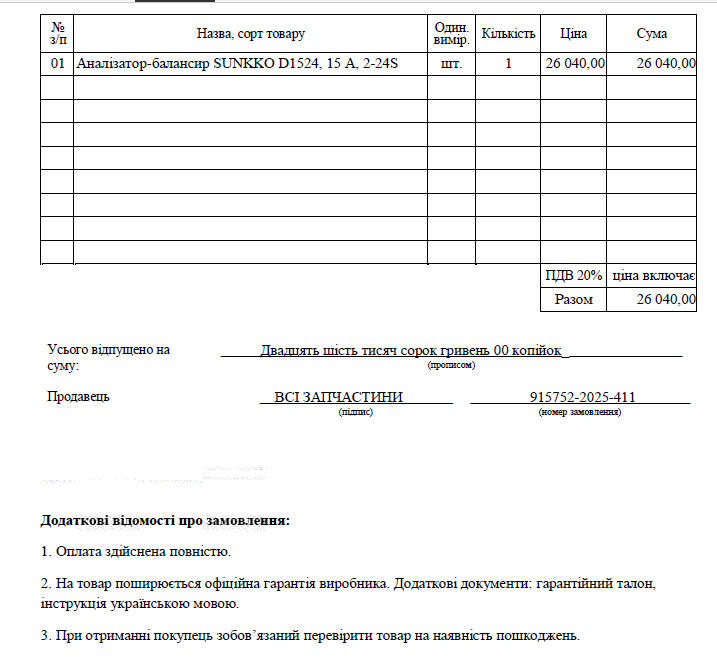
Figure 2: Ukrainian language decoy document from UNC4895 campaign
-
APT44 (FROZENBARENTS): This Russian APT group exploits CVE-2025-8088 to drop a decoy file with a Ukrainian filename, as well as a malicious LNK file that attempts further downloads.
-
TEMP.Armageddon (CARPATHIAN): This actor, also targeting Ukrainian government entities, uses RAR archives to drop HTA files into the Startup folder. The HTA file acts as a downloader for a second stage. The initial downloader is typically contained within an archive packed inside an HTML file. This activity has continued through January 2026.
-
Turla (SUMMIT): This actor adopted CVE-2025-8088 to deliver the STOCKSTAY malware suite. Observed lures are themed around Ukrainian military activities and drone operations.
China-Nexus Actors
-
A PRC-based actor is exploiting the vulnerability to deliver POISONIVY malware via a BAT file dropped into the Startup folder, which then downloads a dropper.
Financially Motivated Activity
Financially motivated threat actors also quickly adopted the vulnerability to deploy commodity RATs and information stealers against commercial targets.
-
A group that has targeted entities in Indonesia using lure documents used this vulnerability to drop a .cmd file into the Startup folder. This script then downloads a password-protected RAR archive from Dropbox, which contains a backdoor that communicates with a Telegram bot command and control.
-
A group known for targeting the hospitality and travel sectors, particularly in LATAM, is using phishing emails themed around hotel bookings to eventually deliver commodity RATs such as XWorm and AsyncRAT.
-
A group targeting Brazilian users via banking websites delivered a malicious Chrome extension that injects JavaScript into the pages of two Brazilian banking sites to display phishing content and steal credentials.
-
In December and January 2026, we have continued to observe malware being distributed by cyber crime exploiting CVE-2025-8088, including commodity RATS and stealers.
The Underground Exploit Ecosystem: Suppliers Like "zeroplayer"
The widespread use of CVE-2025-8088 by diverse actors highlights the demand for effective exploits. This demand is met by the underground economy where individuals and groups specialize in developing and selling exploits to a range of customers. A notable example of such an upstream supplier is the actor known as "zeroplayer," who advertised a WinRAR exploit in July 2025.
The WinRAR vulnerability is not the only exploit in zeroplayer’s arsenal. Historically, and in recent months, zeroplayer has continued to offer other high-priced exploits that could potentially allow threat actors to bypass security measures. The actor’s advertised portfolio includes the following among others:
-
In November 2025, zeroplayer claimed to have a sandbox escape RCE zero-day exploit for Microsoft Office advertising it for $300,000.
-
In late September 2025, zeroplayer advertised a RCE zero-day exploit for a popular, unnamed corporate VPN provider; the price for the exploit was not specified.
-
Starting in mid-October 2025, zeroplayer advertised a zero-day Local Privilege Escalation (LPE) exploit for Windows listing its price as $100,000.
-
In early September 2025, zeroplayer advertised a zero-day exploit for a vulnerability that exists in an unspecified drive that would allow an attacker to disable antivirus (AV) and endpoint detection and response (EDR) software; this exploit was advertised for $80,000.
zeroplayer’s continued activity as an upstream supplier of exploits highlights the continued commoditization of the attack lifecycle. By providing ready-to-use capabilities, actors such as zeroplayer reduce the technical complexity and resource demands for threat actors, allowing groups with diverse motivations—from ransomware deployment to state-sponsored intelligence gathering—to leverage a diverse set of capabilities.
Conclusion
The widespread and opportunistic exploitation of CVE-2025-8088 by a wide range of threat actors underscores its proven reliability as a commodity initial access vector. It also serves as a stark reminder of the enduring danger posed by n-day vulnerabilities. When a reliable proof of concept for a critical flaw enters the cyber criminal and espionage marketplace, adoption is instantaneous, blurring the line between sophisticated government-backed operations and financially motivated campaigns. This vulnerability’s rapid commoditization reinforces that a successful defense against these threats requires immediate application patching, coupled with a fundamental shift toward detecting the consistent, predictable post-exploitation TTPs.
Indicators of Compromise (IOCs)
To assist the wider community in hunting and identifying activity outlined in this blog post, we have included indicators of compromise (IOCs) in a GTI Collection for registered users.
