Agentic Future Ready With BigQuery: Continually Improving Price-Performance, Zero Effort
Joe Yong
Product Manager
Manan Goel
Group Product Manager
In the modern data landscape, query performance tuning and managing system price-performance is challenging, especially as the number of agentic workloads increase. Even for experienced developers and DBAs, constantly analyzing query execution plans, tweaking schemas, and adding query hints with ever exploding volume, variety, and velocity of data is a never-ending cycle that drains business velocity.
While performance tuning is a common practice, a modern data platform should do more. As data platforms evolve from systems of intelligence to systems of action, and analytics workloads shift from humans running a few queries per day to countless agents running many thousands of queries per minute, the old way of manual query tuning doesn’t work. When queries are generated by agents and applications automatically based on user actions, manual optimization becomes practically impossible.
BigQuery has evolved from a data warehouse to the primary engine for the Agentic AI era. Building on a unique, truly disaggregated storage and compute architecture, serverless processing, and fine grained compute management, BigQuery continues to push the boundaries of autonomous query processing. Our North Star is an autonomous query processor powering both humans and agents for hands-free optimum price-performance regardless of query, schema, data, or workloads. Just in 2025, we delivered up to 35% better query performance and as much as 40% reduction in query processing costs (slot usage).
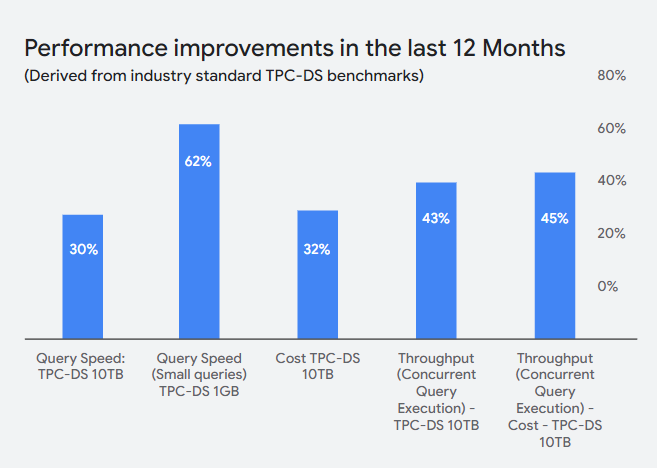
Figure 1. Summary of BigQuery price-performance improvements throughout 2025 based on industry standard benchmarks.
The following are some of the major innovations contributing to these improvements in performance and total cost of ownership (TCO), including the built-in guardrails against regression.
BigQuery’s Self-Learning Engine: History-Based Optimizations (HBO)
One of the foundational capabilities of BigQuery’s autonomous query processor is history-based optimizations.
Traditional query optimizers rely on static statistics, metadata and cardinality estimates, which can be wildly inaccurate when faced with highly complex, multi-table joins and rapidly growing/changing data. Managing these is part of the critical path for administrators and automation has to be tailored to individual workloads to be effective and efficient. Even when everything is up-to-date and correct, queries can still have vastly different behavior due to natural data skew or changes in available compute resources. History-based optimizations change the paradigm: in addition to BigQuery’s already adaptive query execution that can change plans and resource allocations while a query is running, it learns from past executions and automatically applies additional optimizations for future executions.
It tracks runtime statistics of past queries to "remember" which optimizations were beneficial and continue to apply them, and learn from prior mistakes to ensure they are not repeated. When the same or similar query runs again, BigQuery automatically applies any additional optimization technique that is known to be beneficial and avoids those that can cause regressions.
No User Action Required & Built-in Safety Guardrails
History-based optimizations require no application rewrites, SQL modifications, or schema changes. Users literally do nothing, and their recurring dashboards, ELT pipelines, agentic workloads, or line of business modules run faster.
Crucially, this is a self-maintaining, self-improving closed-loop system with built-in safety guardrails. History-based optimizations only apply an optimization when there is high confidence it will improve performance. What if an optimization makes the wrong decision? This capability is inherently self-correcting. When an optimization is applied, the system measures the result. If the expected improvement is observed, the optimization is accepted. If it does not significantly improve performance—or worse, regresses or leads to failure—the optimization is immediately rejected, revoked, and never tried again for that query. This includes detecting data skew so queries that have parameter sensitive plans do not run into major performance issues when just a single parameter (aka WHERE clause) is changed.
The result? A decrease in execution times and a reduction of slots. One enterprise customer reported P90 execution times drop by up to 50%, with slot usage falling by up to 15% resulting in substantial price-performance improvements and no regressions.
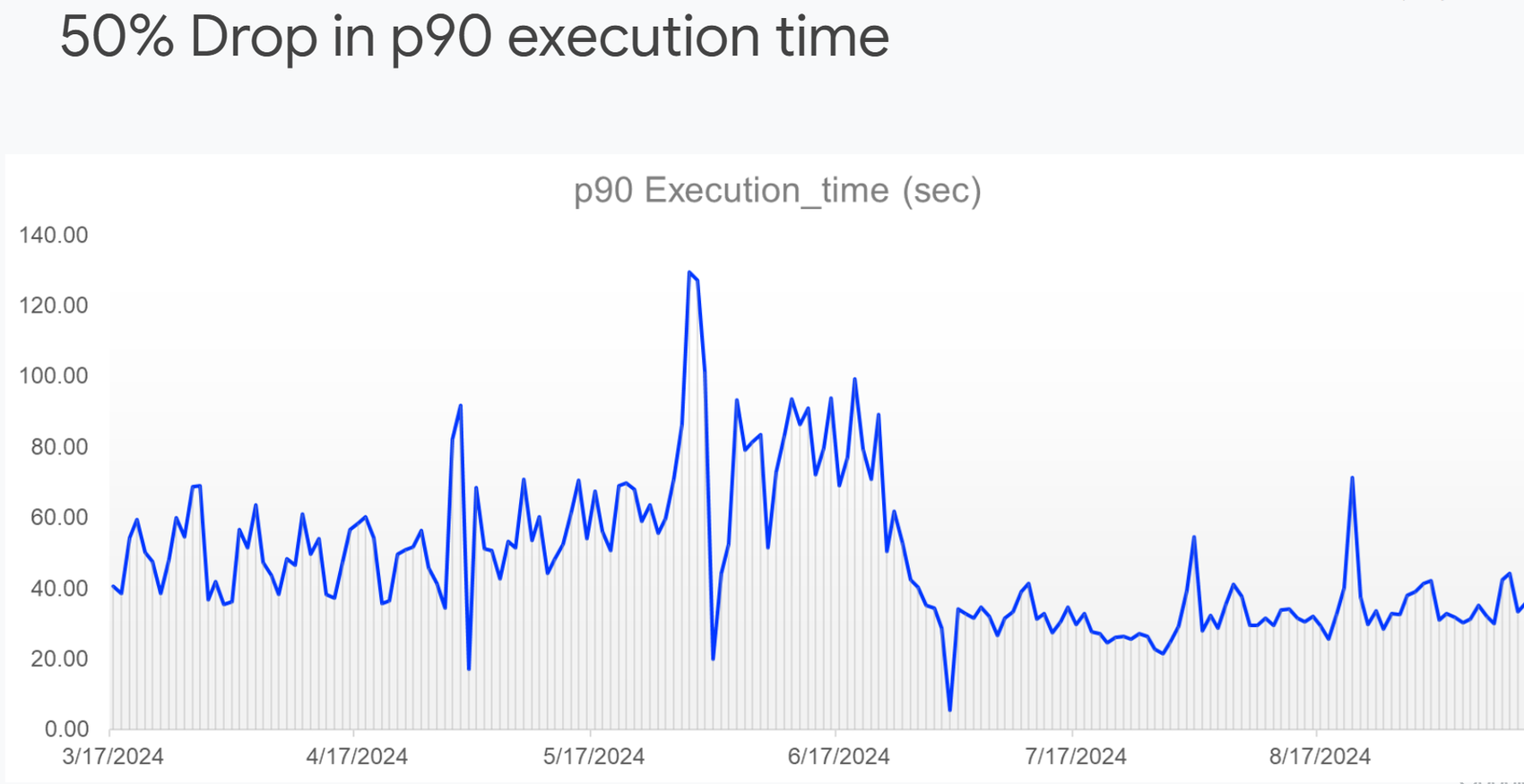
Figure 2. One example of History Based Optimization performance improvement reported by an enterprise customer.
Teaching the BigQuery execution engine newer tricks: Advanced runtime
BigQuery’s autonomous capabilities extend deep into the execution layer with BigQuery advanced runtime. This engine upgrade automatically determines the best physical execution path for a query without any manual knob-turning.
1. Enhanced vectorization
While vectorized execution is not a new concept, BigQuery enhanced its implementation by taking advantage of the newer processor efficiencies in Single Instruction Multiple Data (SIMD) instructions. The engine autonomously identifies opportunities to avoid duplicate computations, processing data in dictionary and run-length encodings natively. It couples with state-of-the-art parallel algorithms and is applied at eligible query stages to increase the opportunities for acceleration. The Impact: Fully automated, safely accelerating qualifying queries by up to 10x, yielding up to a 40% overall slot time reduction.
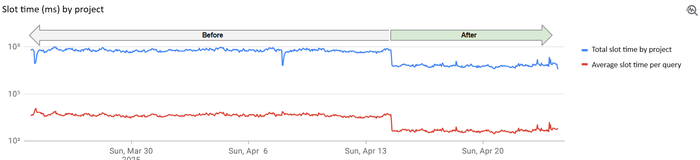
Figure 3. Advanced runtime - Enhanced vectorization
2. Short query optimizations
For high-concurrency and low latency BI dashboards or agentic applications generating thousands of queries that require sub-second latency, distributed processing overhead can be a bottleneck. BigQuery now autonomously accelerates eligible "short" queries without impacting other queries running concurrently. By reducing the number of stages hence reducing data shuffling, BigQuery improves overall query latency and resource efficiency. BigQuery has effectively implemented an efficient symmetric multi-processing (SMP) query path transparently within a scalable massively parallel processing (MPP), distributed databases. The Impact: up to 10x lower slot usage for short queries, with P99 sub-second query latencies. Because each query uses slots for shorter periods, we observed some customer workloads having up to 3x higher throughput—all completely transparent to the end-user.
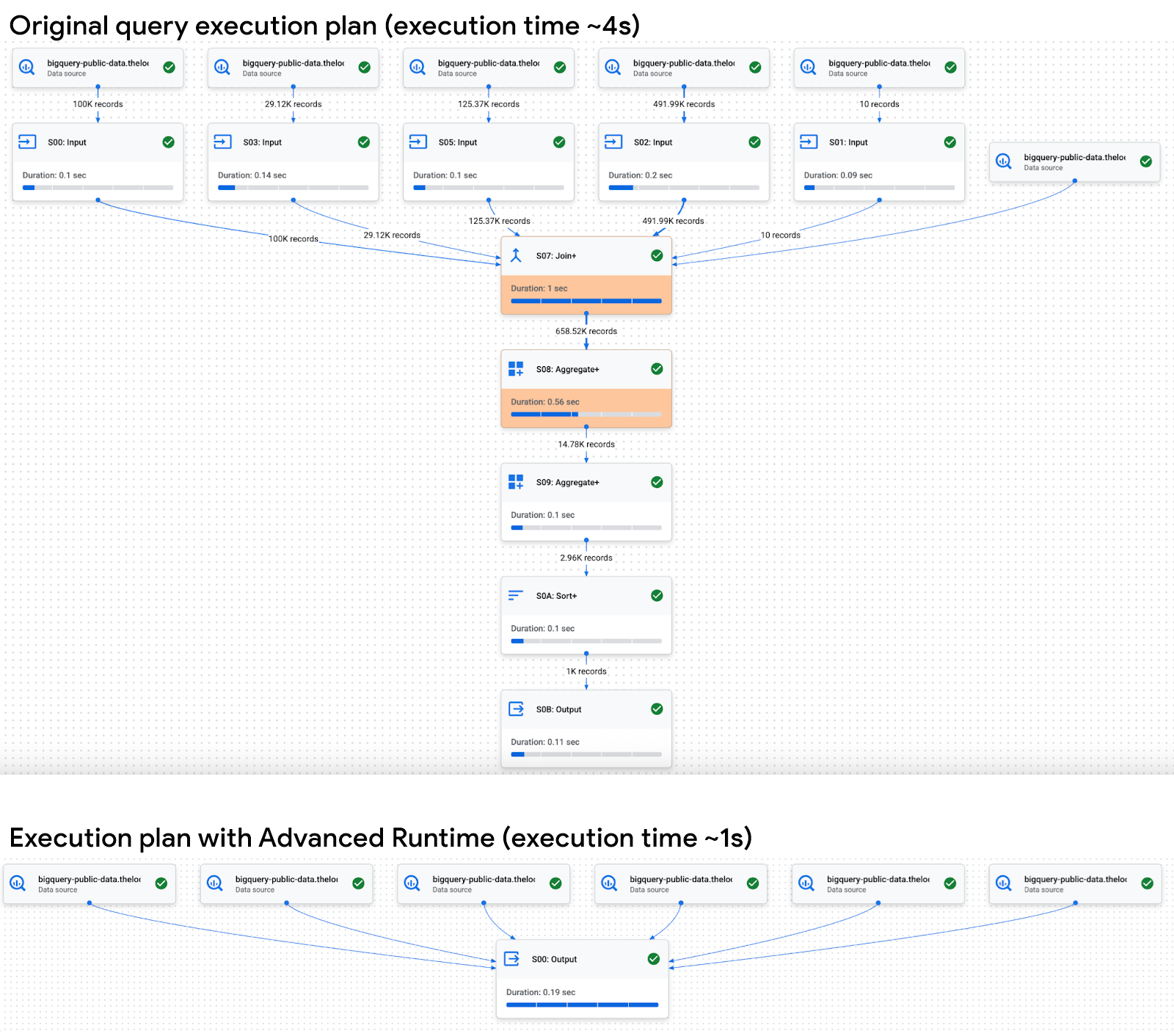
Figure 4. Advanced runtime - Short query optimizations
Same Benefits Regardless of Data Formats
We believe you shouldn't have to sacrifice autonomous performance when adopting open lakehouse architectures using open table formats like Apache Iceberg. BigQuery performance improvements work the same regardless of the underlying table or data format. That means you still get the same benefits whether you’re using BigQuery’s native capacitor storage format or Iceberg tables where the underlying data is in parquet format.
Whether it’s automatically pushing down filters, employing Column Metadata Index (CMETA) pruning, and optimizing the I/O layer with page skipping and asynchronous read or employing the same enhanced vectorization, open formats benefit from the same hands-free acceleration as native tables.
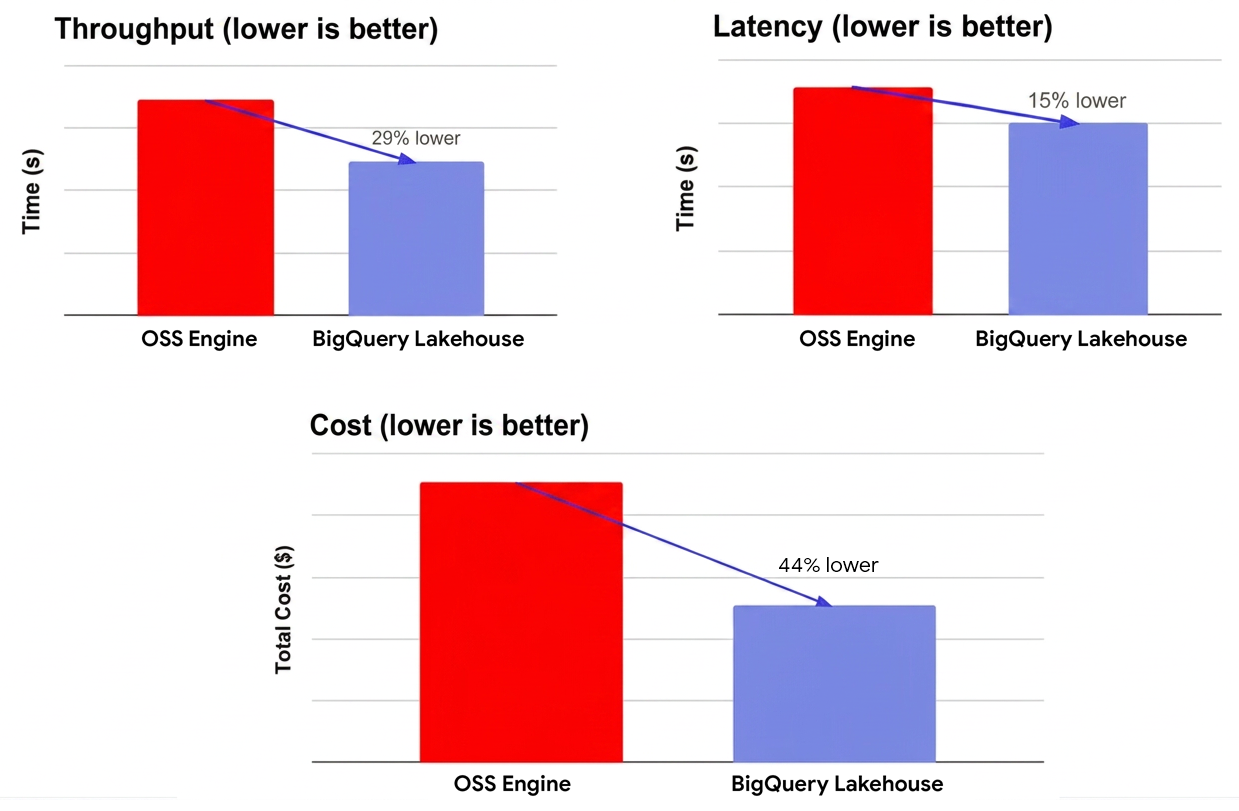
Figure 5. BigQuery on Lakehouse Iceberg tables performance and costs tested internally against a popular open source, distributed SQL query engine using a benchmark derived from TPC-DS (10TB)
Fluid Scaling: The True Only-Pay-For-What-You-Use Autoscaler
Because BigQuery’s compute models are tied directly to slot-seconds consumed rather than a slice of nodes or clusters, autonomous performance gains can translate directly to cost savings. BigQuery autoscaler enhanced with fluid scaling enables you to run any mix of highly variable workloads with a premier autoscaling model that does not require a cost-and-performance trade-off. Fluid scaling in BigQuery enables true per-second billing for compute resources (slots) consumed and lowers costs by up to 34% on average for autoscaling workloads.
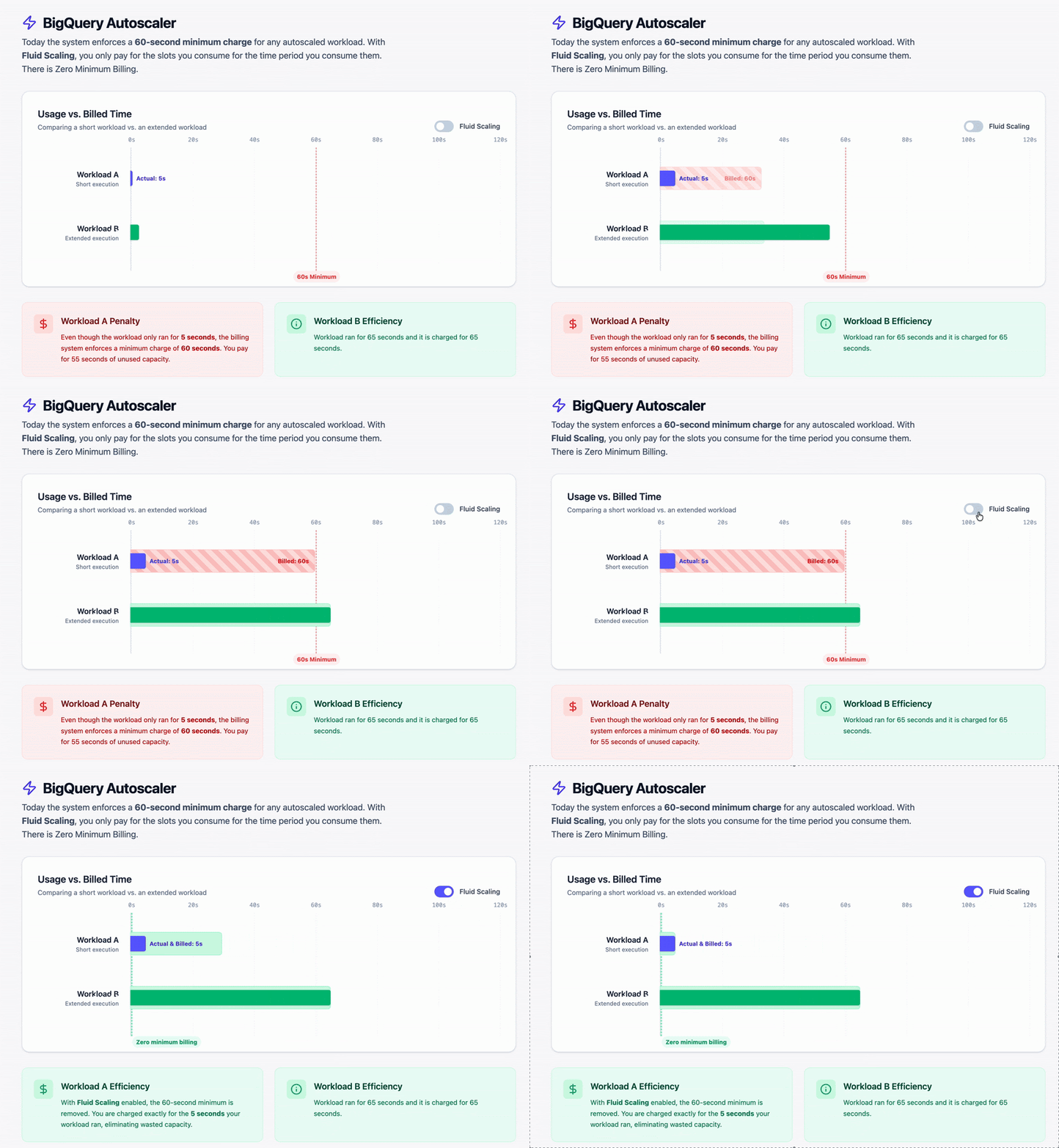
Figure 6. Fluid scaling enhanced autoscaler
On the price-performance benefits of fluid scaling, Chen Shalit, the CEO and Co-Founder at RISE, a leading AdTech company that processes 1 PB+ data per day and manages 3 trillion+ monthly bids across publishers and advertisers, summed it best. “In the high-stakes world of advertising, every cent counts. BigQuery’s Fluid Scaling has reduced our infrastructure cost by 25% allowing us to scale our slot consumption and accelerate our entire workflow. By delivering faster model results and increasing our hourly data processing throughput, we’re providing our customers with the 'freshest' data possible.”
The foundation for the agentic future
These autonomous capabilities are not just about making today's business intelligence dashboards and analytics queries run faster; they are foundational to the future of modern data platforms. As organizations rapidly deploy AI and machine learning, they are shifting toward agentic workloads.
AI agents do not interact with data the way humans do. Their query latency and concurrency (QPS) requirements are orders of magnitude more demanding than what human users generate—which is the limit of what most traditional analytics platforms were designed for. When autonomous agents are firing off thousands of distinct queries per second to make real-time decisions, human-in-the-loop query tuning is simply impossible.
BigQuery's differentiated abilities in a self-tuning and self-learning system include built-in safety guardrails against regression. With this standard of autonomy, you can spend your time and effort where it truly matters: delivering the best experiences for your users with advanced agentic applications, rather than wasting critical engineering cycles on manual infrastructure management, reactive query optimization, or trying to rein in spiraling compute costs.
BigQuery’s aggregate TCO impact: Faster and more cost-effective price-performance
When you combine a self-learning history-based optimizer with an auto-scaling advanced runtime engine supported by a highly scalable metadata platform (CMETA), you can see real impact on performance and total cost of ownership (TCO).
Conclusion
Our goal is for BigQuery to automatically and safely optimize queries without user action so our users can “just come in to work and BigQuery is faster than it was the day before."
You no longer need to worry about data skew or stale statistics causing performance regressions. No more trying to figure out which plan guide works best for which queries at what time of the day or month. No more hoping you won’t run out of budget because there aren’t enough low priced spot instances. Just focus on your organization’s goals, and your BigQuery data platform can deliver optimized price-performance for both agent and human workloads autonomously; it just works.
Learn more about BigQuery’s data and AI capabilities and get started with a free trial.