Streamlined microscope setup and calibration time 8x from 90+ minutes to 13 minutes using Gemini
Reduced manual microscope focusing steps by 96% with agent workflows
Boosted instrumental navigation and imaging efficiency 50x using agent execution
Enabled 12+ hours of automated testing after hours on Gemini
Sharpened research decisions by applying multimodal reasoning to live operational data
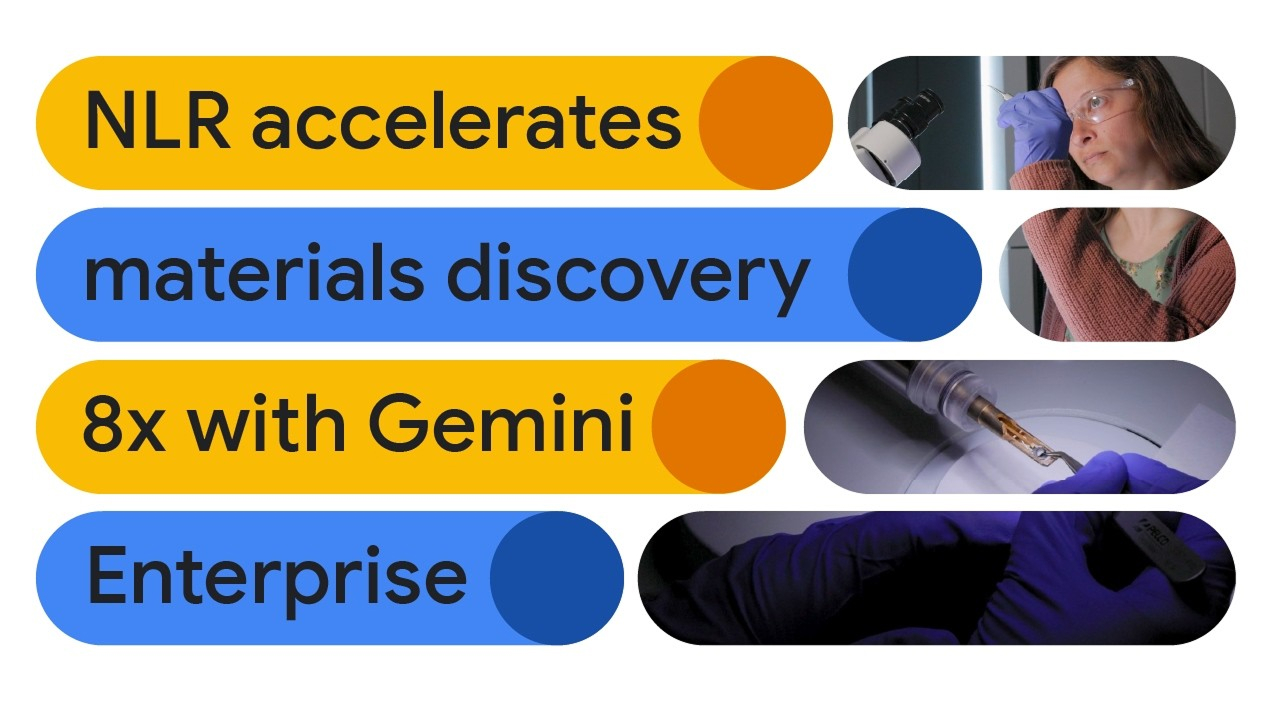
The Department of Energy’s National Laboratory of the Rockies built an autonomous AI system on Gemini, cutting instrument calibration 8x to help accelerate materials discovery.
The Department of Energy’s National Laboratory of the Rockies built an autonomous AI system on Gemini, cutting instrument calibration 8x to help accelerate materials discovery.
Breaking the cognitive bottleneck in advanced materials discovery
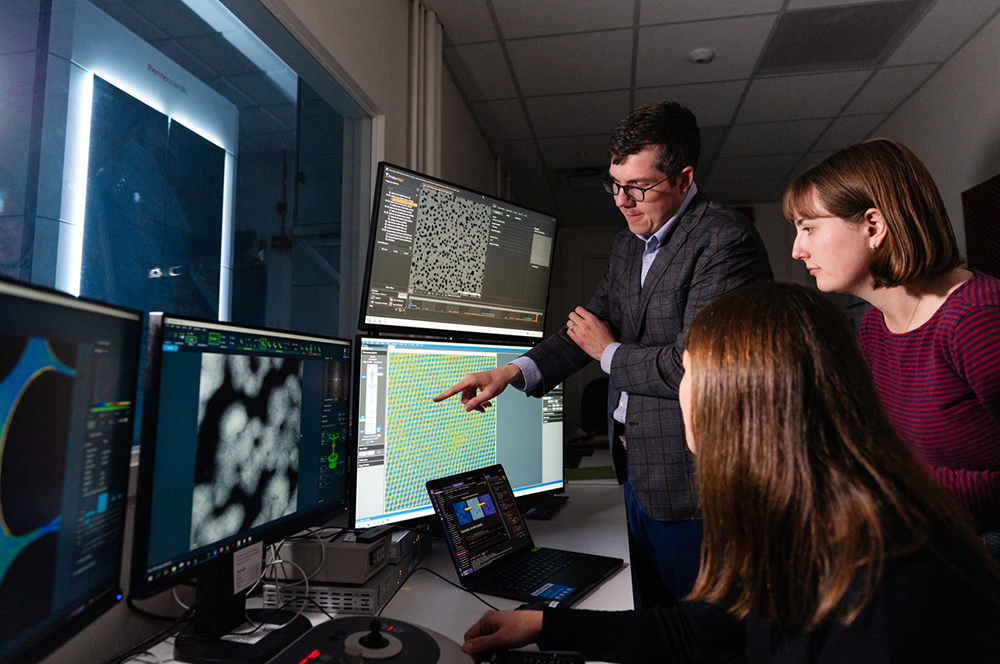
Functional materials are critical for the future of advanced energy storage, power electronics, and quantum computing. What makes them hard to develop is that their performance at the device level is controlled by single atomic-scale features—a missing atom can determine whether a power device holds up under stress or fails entirely. The fundamental challenge lies in bridging the gap between what scientists can measure at the atomic scale and what they need to know to build reliable devices.
At the Department of Energy’s National Laboratory of the Rockies (NLR), researchers faced a persistent hurdle when evaluating these materials. Crucial signals were getting missed—not due to a lack of expertise—but because human attention naturally degrades over long, repetitive experimental runs.
“Getting data is one bottleneck, but making sense of it is another. AI addresses both; it works faster and maintains consistent attention across an entire experiment,” said Steven Spurgeon, Senior Materials Data Scientist at NLR.
Before deploying Google AI, calibrating a single transmission electron microscope could take more than 90 minutes, requiring dozens of manual lens and beam adjustments with no objective standard for completion. Diagnosing an imaging issue could stall research for a full day.
“The bottleneck we kept running into was cognitive, not mechanical,” said Spurgeon. “Our instruments could act faster than a researcher could decide what to do next.”
To expand the design space of materials, the laboratory needed a secure, intelligent solution capable of reasoning through complex visual inputs and physical actions alongside scientists.
The bottleneck we kept running into was cognitive, not mechanical. Our instruments could act faster than a researcher could decide what to do next. We needed something that could reason about what it was seeing.
Steven Spurgeon
Senior Materials Data Scientist, National Laboratory of the Rockies
Translating natural language intent into
physical laboratory action
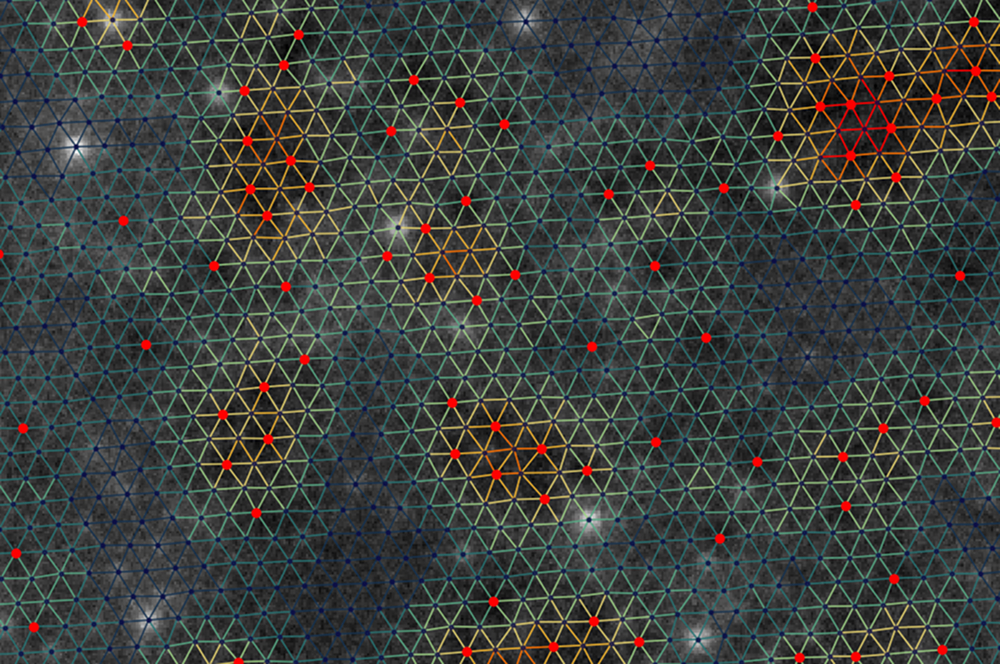
Instead of a scientist guessing whether an image looks sharp, the AI calculates a precise clarity score at every step. That turns focusing from a subjective opinion into a repeatable, measurable number—which is exactly what reliable science requires.
Steven Spurgeon
Senior Materials Data Scientist, National Laboratory of the Rockies
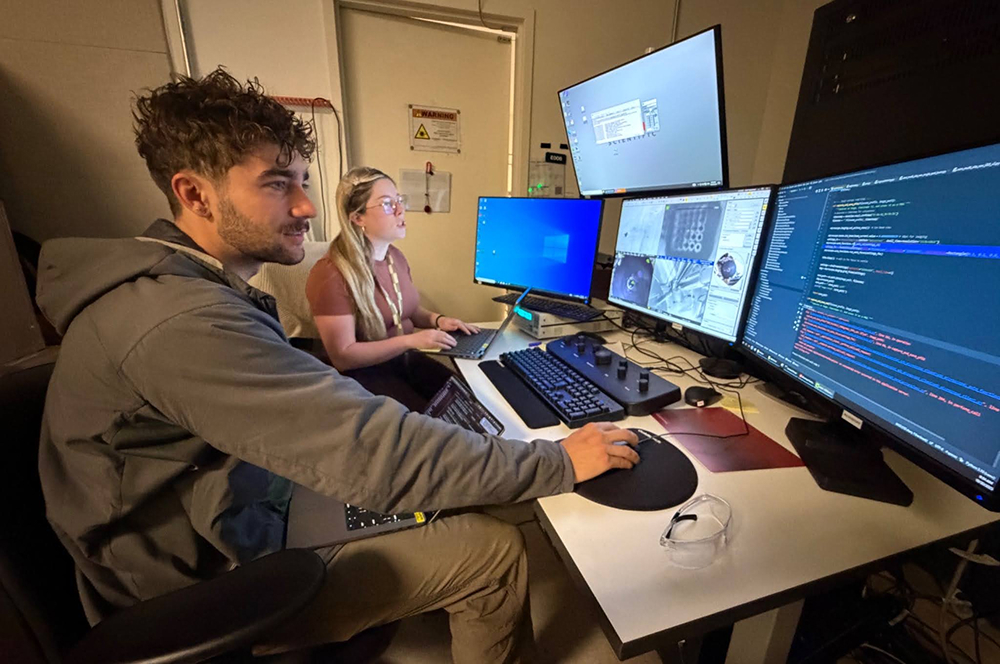
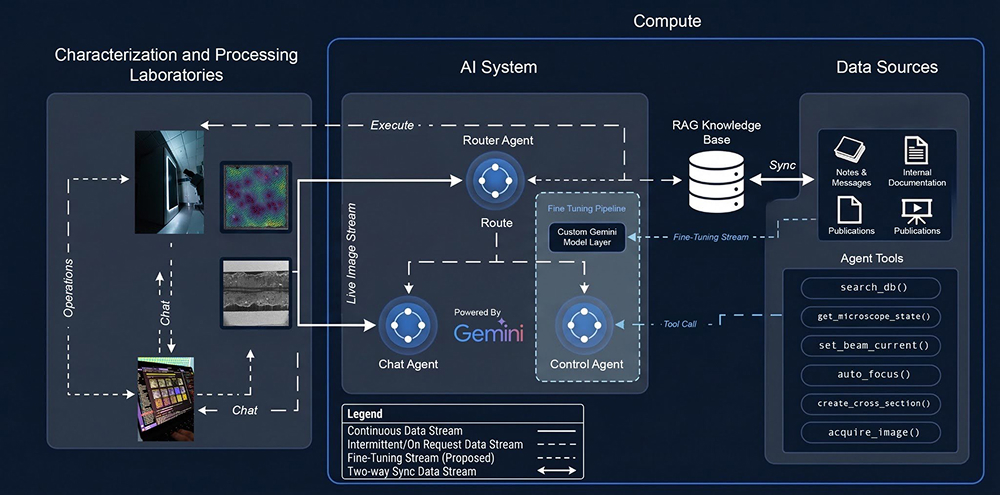
To eliminate these constraints, NLR deployed agentic workflows built on Gemini. The platform enables scientists to direct complex laboratory equipment using natural language prompts in Gemini, transforming AI into an agentic system that executes physical tasks.
When a researcher inputs an instruction, the platform determines whether the prompt requires a question-and-answer response or a physical action. For hardware operations, a specialized control layer takes over, operating strictly within a defined set of approved instrument commands. Built on an agentic stack that prioritizes trust and governance, the platform grounds its decisions in the laboratory's internal documentation, instrument manuals, and past experimental results.
“With Google Gemini, a researcher states what they want in plain language,” said Spurgeon. “To inform every decision it makes for anything that moves, the system proposes a plan, shows its reasoning, and waits for the researcher to approve.”
Instead of relying on subjective human judgment for qualitative tasks—such as deciding if a microscopic image looks sharp—the platform evaluates computed metrics at every step.
“Our system replaces the visual judgment,” said Spurgeon. “A measurement becomes a reproducible number instead of an opinion. And that's what reproducible science requires.”
This autonomous workflow expands what researchers can achieve in practice:
- Sample calibration: Replaces subjective visual opinions with calculated metrics for exact, reproducible science.
- Autonomous runs: Enables 12 to 15 hours of continuous, unattended operational runs overnight and on weekends.
- Multimodal analysis: Simultaneously interprets images, spectra, instrument parameters, and scientific literature in real time.
Accelerating materials discovery and advancing scientific discovery
By transitioning from manual instrument adjustments to autonomous workflows, NLR achieved immediate, measurable performance gains:
- Instrument calibration time dropped from more than 90 minutes per condition to approximately 13 minutes—an eightfold speed increase.
- For focusing tasks, operator inputs dropped from up to 55 manual adjustments down to just two, representing a 96% reduction in manual steps while maintaining high image quality.
- For instrument navigation and imaging, operators achieved a 50-fold efficiency gain by executing interactions through the platform.
“The net result is that the researcher's attention moves from the instrument to the science,” said Spurgeon. “Something fundamentally different is emerging, where the scientists and the system reason together, and the human stays at the center of every decision that matters.”
By executing routine hardware adjustments and analyzing multimodal data streams simultaneously, the system allows researchers to move away from tedious manual operations and focus on high-level analysis. Grounding the models on Gemini using ground-truth experimental data generated directly at the instrument ensures the platform remains highly accurate and reliable for physical research.
“What we bring to that mission is ground truth—experimental data generated at the instrument,” said Spurgeon. “That data validates and improves the underlying AI, so the relationship is mutual. We celebrate our science and the models get better because of it.”
By placing AI directly at the physical instrument—giving scientific hardware the intelligence to observe, calculate adjustments, and run unattended experiments—the laboratory is creating a blueprint for the science laboratories of the future. This shift inverts the traditional dynamic between researchers and their tools, transforming scientific experimentation from a manual task into an autonomous, collaborative process.
While initially accelerating discovery for the functional materials that power energy storage and quantum systems, this agentic approach is directly transferable across scientific disciplines—bridging the gap between atomic-scale research and real-world impact to advance discovery across the nation.
With Google Public Sector, the National Laboratory of the Rockies is building a new era of American innovation by closing the gap between atomic scale discovery and real world impact, putting AI at the instruments so the materials that underpin our economy and critical industries can get here faster.
Steven Spurgeon
Senior Materials Data Scientist, National Laboratory of the Rockies
NLR is a premier U.S. Department of Energy’s national laboratory for critical minerals, energy innovation, and energy security.
Industry: Government
Location: Golden, CO
Product: Gemini